
Prophecy & End Times
What Is the Abomination of Desolation?
Jesus pointed His disciples back to a phrase from Daniel and told them to run the moment they saw it. Here is what it actually is.
Daniel named this horror three times, and his first readers watched it happen once.
When Jesus warned His disciples about "the abomination of desolation," He was not coining a phrase. He was sending them back to a book they already knew.
The words appear three times in Scripture, all in Daniel (9:27; 11:31; 12:11), and nowhere else in the Old Testament. Daniel 11:31 sits inside a long prophecy about a coming king who would turn against God's people.
And arms shall stand on his part, and they shall pollute the sanctuary of strength, and shall take away the daily sacrifice, and they shall place the abomination that maketh desolate.
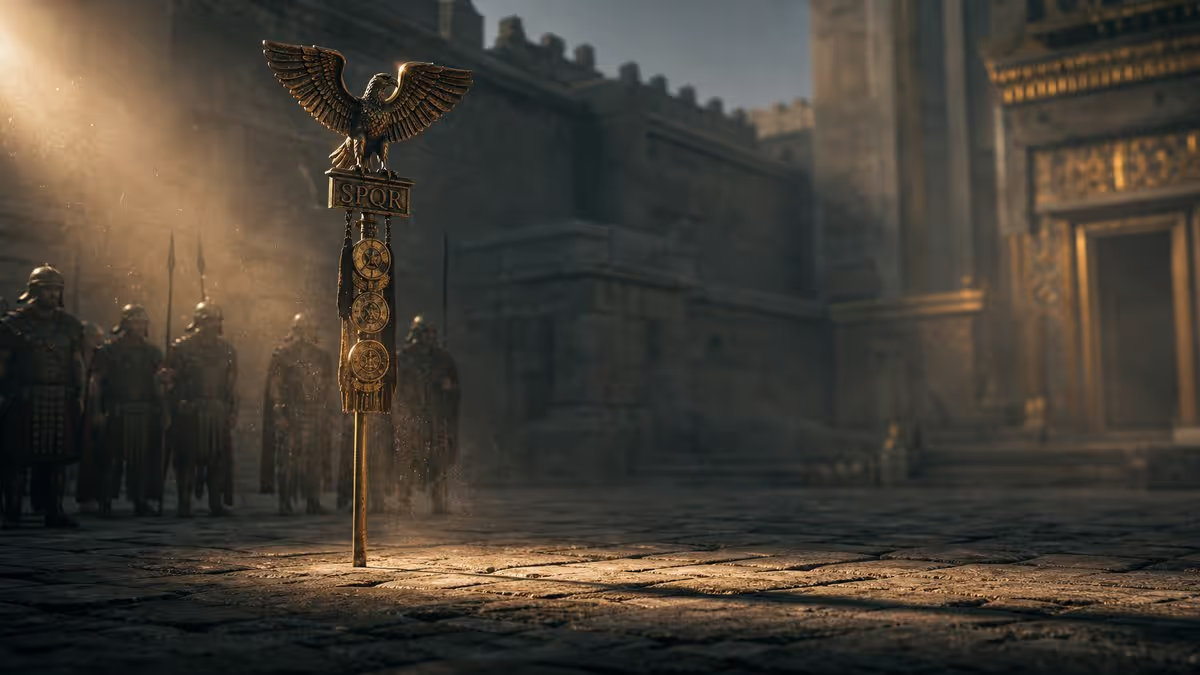
Daniel's first readers did not have to guess who this was. A Seleucid king named Antiochus IV Epiphanes did exactly this. In December of 167 BC he ended the daily sacrifice in the Jerusalem temple, set up a pagan altar over God's altar, sacrificed a pig on it, burned the Torah scrolls he could find, and put to death anyone who circumcised a son. He called himself Epiphanes, "god manifest."
The desecration ran three years. Judas Maccabaeus retook the city, and the temple was purified and the daily sacrifice restored on the very same date, three years later.
Daniel 12:11 gives the clock for it: "there shall be a thousand two hundred and ninety days" from the taking away of the sacrifice to the abomination's end, and 12:12 adds a blessing for the one who waits another forty-five. Those numbers belonged to Daniel's readers and to history's bookkeeping. They are not ours to spend guessing a date.
Jesus took the phrase out of Daniel's past and set it in front of His own disciples.
Two hundred years after Antiochus, Jesus sat on the Mount of Olives and used Daniel's own words, but He moved them forward.
When ye therefore shall see the abomination of desolation, spoken of by Daniel the prophet, stand in the holy place, (whoso readeth, let him understand:) Then let them which be in Judea flee into the mountains:
He did not say "when you read about it." He said "when ye shall see." Something still future to His listeners would stand in the holy place, and they would recognize it.
Mark's account is blunter: "the abomination of desolation... standing where it ought not" (Mark 13:14). The Greek is worth a moment. "Abomination" is a neuter noun, but "standing" is a masculine singular participle — a figure standing where he has no business standing. Whatever else this is, it is not only a thing. It can be a person.
Jesus does not tell His people to calculate. He tells them to move. Housetop, field, pregnant mother, nursing mother, winter weather, Sabbath day travel — He names every excuse someone might make to stay, and answers each one with the same command: go.
Luke tells us what the sign looks like from the ground.
Matthew and Mark keep Daniel's phrase. Luke, writing for readers who had never opened a Hebrew scroll, drops the code and gives the picture plain.
And when ye shall see Jerusalem compassed with armies, then know that the desolation thereof is nigh.
Soldiers around the walls. That is what the abomination of desolation looks like when you are standing in the street instead of reading a scroll.
Luke gives the same urgent instructions — flee to the mountains, do not go back inside, woe to those who cannot move quickly — and then tells us what the desolation produces: "great distress in the land, and wrath upon this people... led away captive into all nations" (Luke 21:23-24), and Jerusalem "trodden down of the Gentiles, until the times of the Gentiles be fulfilled."
One discourse. Three inspired writers. Matthew keeps Daniel's name on it. Mark sharpens the grammar. Luke tells a Gentile reader what it will feel like to be standing in the city when it happens. The Spirit let each one put the weight where his own readers needed it.
Where sincere Christians differ
Daniel 9:27 is the verse the argument turns on: a covenant confirmed for one week, sacrifice stopped in the middle of it, abominations that make desolate "until the consummation."
Preterists and partial preterists read this as already finished — fulfilled in the Roman armies, the failed sacrifice, and the burning temple of AD 70, and they read the Olivet Discourse as chiefly about that judgment.
Historicists read the abomination as a pattern that recurs through church history, climaxing in a corrupted system of worship rather than a single moment.
Futurist premillennial readers, and this ministry among them, hold that Daniel's seventieth week is still future. The covenant in view is the Antichrist's. The breaking of that covenant in the middle of the week is the final abomination. AD 70 was real, and it was judgment, but it was a foretaste, not the last word. We hold this because Jesus describes a sign followed by tribulation "such as was not since the beginning of the world," and because Paul and John both place a single blasphemer in the temple at the end — Paul's man of sin who "as God sitteth in the temple of God, shewing himself that he is God" (2 Thessalonians 2:4), and John's false prophet who gives breath to an image and orders it worshiped (Revelation 13:14-15).
We say this plainly without pretending the matter is closed for every believer who loves this book. No date, no candidate — the text does not give us one, and neither do we.
So what is the abomination of desolation?
A detestable thing, set up where God alone is to be worshipped.
An altar, under Antiochus. Armies, under Rome. An image that speaks, in the Revelation still ahead.
It leaves the holy place desolate until God Himself ends it.
It happened once, under a king who called himself a god. It happened again in judgment, when the temple fell. It is still ahead in its final form, when the man of sin takes his seat and demands the worship that belongs to God alone.
We do not need to find the man. We need to know the sign. And when we see it, Jesus has already told us what to do with it.
Do not go back for your coat.
Continue the Story
Prophecy & End Times
Israel and Bible Prophecy
Israel: The Key to Understanding Prophecy No nation on earth holds a more significant place in Bible prophecy than Israel. Understanding God's plan for Israel is essential to rightly interpreting Scripture.
Prophecy & End Times
The Role of Babylon in Scripture
Babylon: The Bible's Symbol of Rebellion From the Tower of Babel in Genesis to the fall of Babylon in Revelation, this name echoes throughout Scripture as a symbol of human rebellion against God.