
People of the Bible
Who Was Caleb?
Caleb was one of the two faithful spies who trusted God to give Israel the Promised Land, and he lived to see its conquest.
What does it take to stand alone for what you believe, even when everyone around you is against you? Caleb, one of only two faithful spies sent to explore the Promised Land, shows us the courage of wholehearted trust in God.
Who He Was
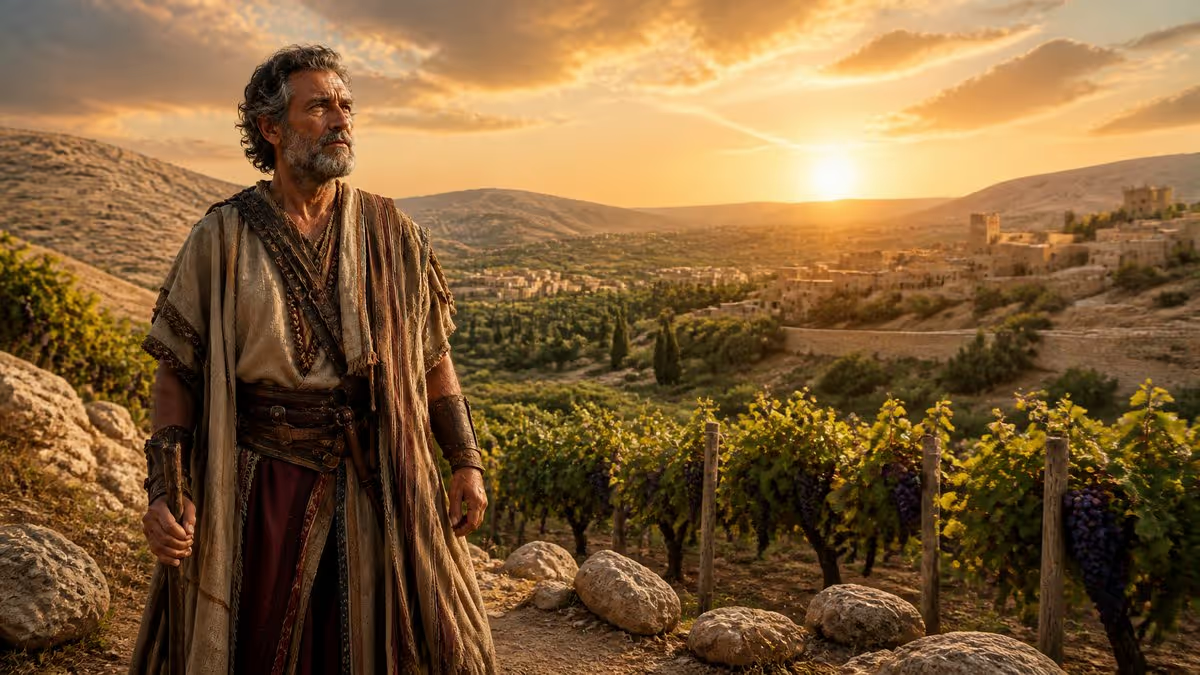
Caleb was a member of the tribe of Judah, the son of Jephunneh (Numbers 13:6). He first appears in the biblical narrative as one of the twelve spies Moses sent to scout out the land of Canaan, the land God had promised to the Israelites. His story unfolds during the wilderness wandering, after the Exodus from Egypt, likely around the 15th century BC.
Caleb is best known for his partnership with Joshua, another faithful spy. Together, they were the only two among the twelve who believed God would give Israel victory over the inhabitants of Canaan. While the other ten spies spread fear and discouragement, Caleb and Joshua urged the people to trust God and take the land (Numbers 13:30).
After the wilderness generation died off, Caleb remained faithful. He later received his inheritance in the land, specifically the city of Hebron (Joshua 14:13-14). His life is a testament to God's promise that those who follow Him wholeheartedly will be rewarded.
His Story
The defining moment of Caleb's life comes in Numbers 13-14. When the spies returned from Canaan, they reported that the land was indeed fruitful, but the people were powerful and the cities fortified. Caleb silenced the people and said, "Let us go up at once, and possess it; for we are well able to overcome it" (Numbers 13:30). But the other spies spread a bad report, and the people rebelled, wanting to return to Egypt. Because of their unbelief, God declared that the entire generation would die in the wilderness—except Caleb and Joshua, who had followed Him fully (Numbers 14:24).
Forty-five years later, after the conquest of Canaan under Joshua's leadership, Caleb reminded Joshua of God's promise to him. At the age of eighty-five, Caleb declared, "As yet I am as strong this day as I was in the day that Moses sent me: as my strength was then, even so is my strength now, for war, both to go out, and to come in" (Joshua 14:11). He asked for the hill country of Hebron, the very region where the giant Anakites lived, and he drove them out (Joshua 14:12; 15:14). Caleb's faith never wavered; he trusted God to give him victory even in his old age.
Key Verses
Numbers 14:24 – "But my servant Caleb, because he had another spirit with him, and hath followed me fully, him will I bring into the land whereinto he went; and his seed shall possess it." (See this verse on BibleGateway.)
Joshua 14:11 – "As yet I am as strong this day as I was in the day that Moses sent me: as my strength was then, even so is my strength now, for war, both to go out, and to come in."
Why He Matters
Caleb's life challenges us to examine our own hearts. Do we follow God wholeheartedly, even when the majority says otherwise? Caleb stood firm when ten spies spread fear, and he was willing to wait 45 years for God's promise to be fulfilled. His story reminds us that faith is not about immediate results but about persistent trust in God's character.
In our everyday lives, we face situations where trusting God seems risky or unpopular. Caleb encourages us to remember that God honors those who follow Him fully. Whether it's in our families, workplaces, or churches, we can choose to be people of faith who see possibilities instead of obstacles.
Closing Thought
Caleb's legacy is summed up in one line of Scripture: "he wholly followed the Lord God of Israel" (Joshua 14:14). May that be said of us, too.
Continue the Story
People of the Bible
Who Was Naphtali?
Naphtali was the sixth son of Jacob and the forefather of one of Israel's twelve tribes, whose territory in Galilee later became the setting for Jesus' ministry.
People of the Bible
Who Was Hur?
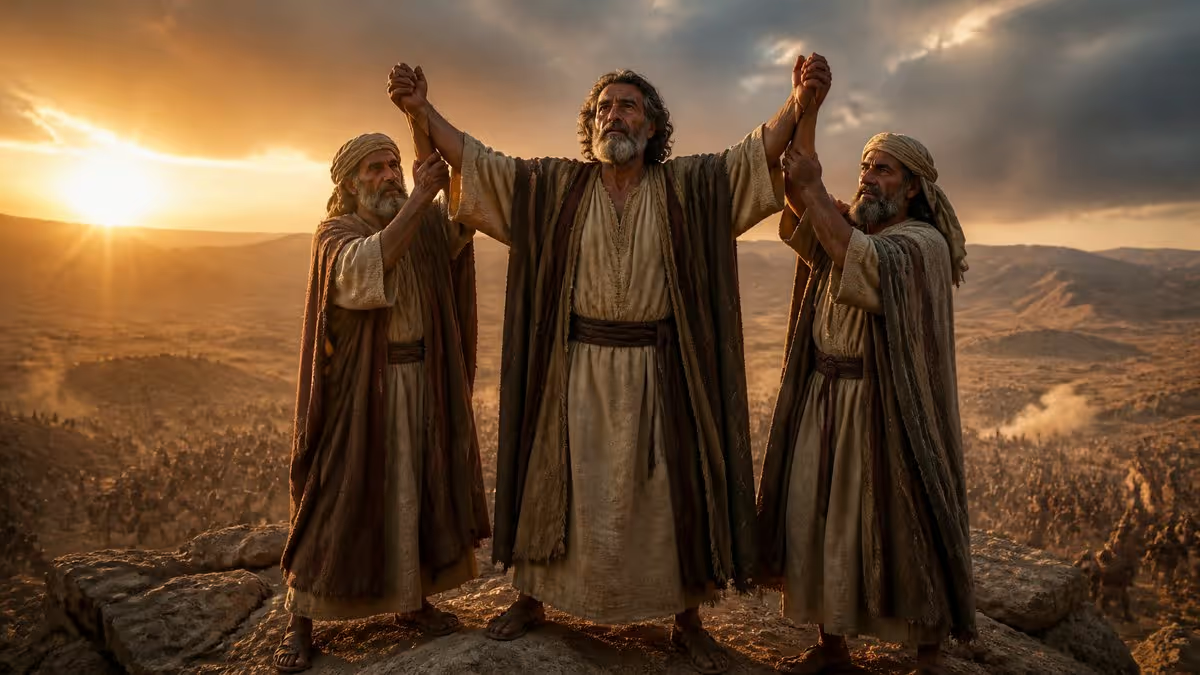
Hur was a trusted companion of Moses and Aaron who helped hold up Moses' hands during the battle against the Amalekites, ensuring Israel's victory.