
People of the Bible
Who Was Ezekiel?
Ezekiel was a priest and prophet among the Babylonian exiles, known for his dramatic visions of God's glory and the valley of dry bones, calling Israel to repentance and hope.

Opening Hook
Imagine receiving a vision of God so overwhelming that you fall face down, speechless, for seven days. That was Ezekiel's calling—a priest turned prophet whose life became a living sign of hope for exiles.
Who He Was
Ezekiel was a priest, the son of Buzi, among the first wave of Judeans deported to Babylon in 597 BC. He lived with fellow exiles by the Chebar canal, and in the fifth year of his exile, he received his prophetic call (Ezekiel 1:1-3). He was married—his wife's death became a sign to Israel (Ezekiel 24:15-24). His ministry spanned at least 22 years, from about 593 to 571 BC, and his messages were dated, giving us a unique timeline.
Ezekiel was both a pastor to the exiles and a bold prophet. He confronted their false hopes and idolatry while offering visions of restoration. He used dramatic sign-acts—lying on his side for 390 days, eating rationed bread, packing his bags—to act out Jerusalem's siege and coming judgment (Ezekiel 4-5).
His Story
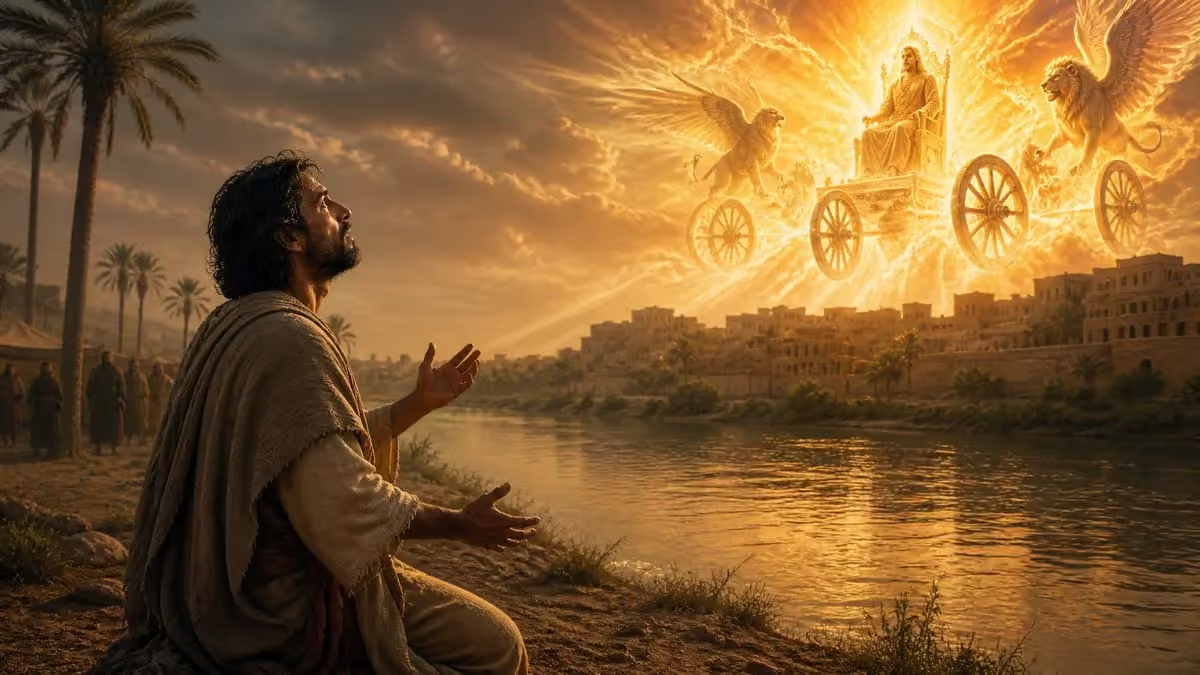
The defining moment was his call: a vision of God's glory on a chariot-throne, with living creatures and wheels within wheels (Ezekiel 1). He saw the likeness of a man on a throne, surrounded by fire and radiance, and fell face down. God told him to stand and speak to a rebellious house (Ezekiel 2:1-3). The Spirit lifted him, and he sat stunned for seven days (Ezekiel 3:14-15).
God appointed him a watchman (Ezekiel 3:16-21). He warned that Jerusalem would fall—a message no one wanted to hear. He performed sign-acts, including lying on his left side for 390 days and his right side for 40 days, symbolizing Israel and Judah's years of sin (Ezekiel 4:4-6). When his wife died, God told him not to mourn, as a sign that the exiles would not mourn Jerusalem's destruction (Ezekiel 24:15-24).
After Jerusalem fell in 586 BC, Ezekiel's message shifted to hope. He saw the valley of dry bones and prophesied life into them, picturing Israel's restoration (Ezekiel 37:1-14). He described a future temple and a restored land (Ezekiel 40-48), and gave the promise of a new heart and a new spirit (Ezekiel 36:26-27).
Key Verses
Ezekiel 37:4-6: "He said to me, 'Prophesy to these bones and say to them, Dry bones, hear the word of the LORD! This is what the Sovereign LORD says to these bones: I will make breath enter you, and you will come to life. I will attach tendons to you and make flesh come upon you and cover you with skin; I will put breath in you, and you will come to life. Then you will know that I am the LORD.'" (See Ezekiel 37 on BibleGateway).
Why He Matters
Ezekiel reminds us that God is present even in exile. His visions of God's glory and the dry bones give hope that no situation is beyond God's power to revive. His life shows that faithfulness sometimes means doing hard, unpopular things—and that God's Spirit empowers us to speak and live for Him. For everyday faith, Ezekiel assures us that God sees our dry places and can breathe new life into them.
Closing Thought
Ezekiel's name means "God strengthens." In a world that often feels like exile, his story invites us to trust that the same Spirit who raised dry bones can strengthen and restore us.
Continue the Story
People of the Bible
Who Was Philemon?
Philemon was a wealthy Christian in Colossae who hosted a house church and was challenged by Paul to forgive and welcome back his runaway slave, Onesimus, as a brother in Christ.
People of the Bible
Who Was Cleopas?
Cleopas was a disciple who walked with the risen Jesus on the road to Emmaus, recognizing Him only when He broke bread.