
Church & History
What is the difference between Catholic and Protestant?
Short Answer
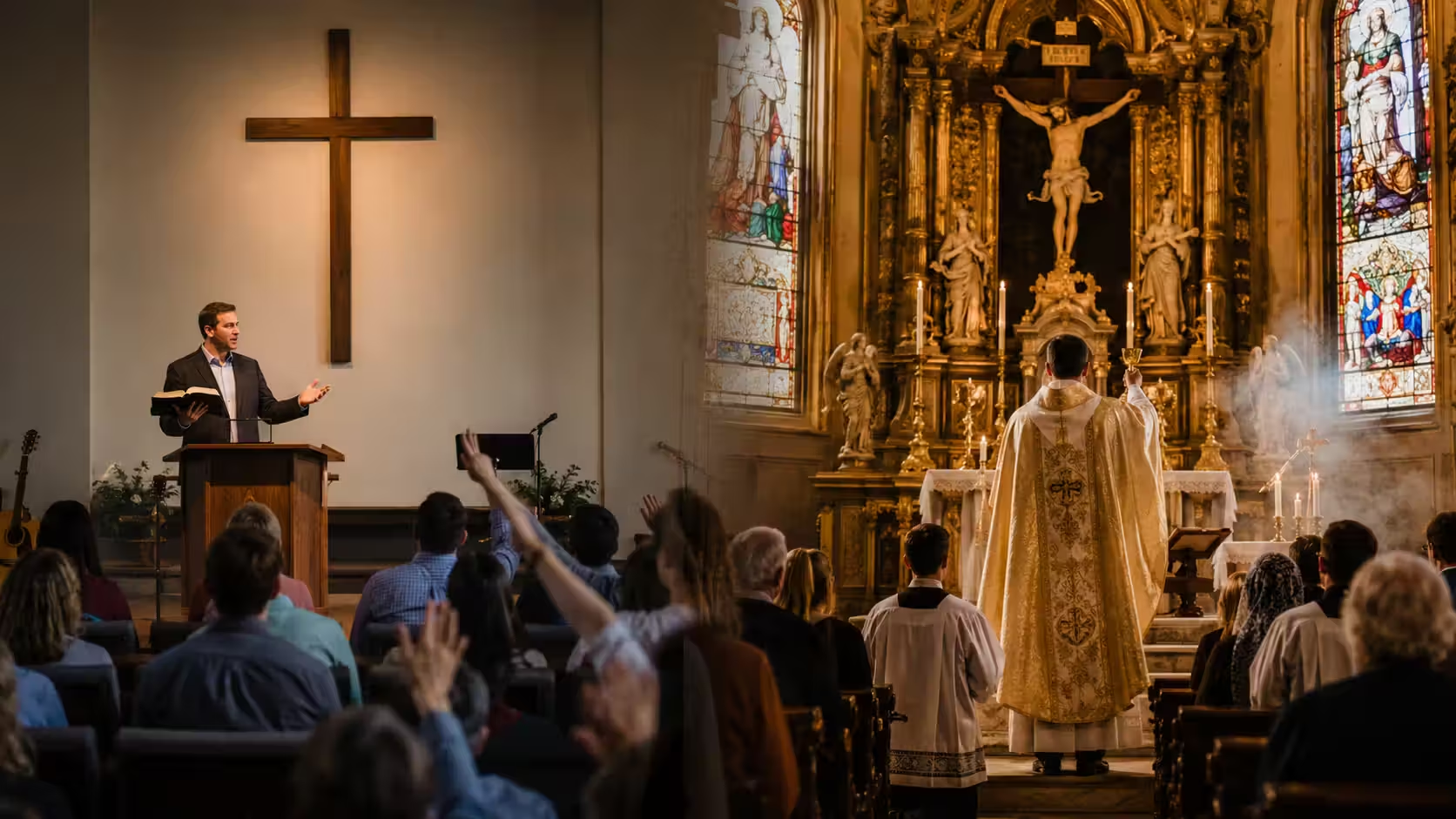
The central difference is authority. Protestants hold to sola scriptura—Scripture alone is the final authority for faith and practice. The Catholic Church teaches that Scripture and church tradition, interpreted by the teaching office (magisterium) under the Pope, together carry authority. From this root flow other differences: salvation by faith alone versus faith plus sacraments, the role of Mary and the saints, purgatory, and the nature of the Lord’s Supper.
Where they agree
Catholics and Protestants share the essentials: the Trinity, the full deity and humanity of Christ, His virgin birth, His atoning death, and His bodily resurrection. Both affirm the Bible as God’s Word. The divide is real, but it is not over whether Christ is Lord.
The root difference: authority
The Protestant Reformation of the 1500s was, at bottom, a debate over authority. The Reformers asked one question: who has the final say?
Protestants answer: Scripture alone (sola scriptura). The Bible is the supreme and final authority for what Christians believe and how they live.
Scripture · 2 Timothy 3:16
“All scripture is given by inspiration of God, and is profitable for doctrine.”
The Catholic Church answers: Scripture plus sacred tradition, interpreted authoritatively by the teaching office (magisterium) under the Pope. Tradition and the church’s teaching carry binding weight alongside Scripture.
Everything else flows from that fork in the road.
How one is saved
Protestants hold that salvation is by grace through faith in Christ alone, not by works:
Scripture · Ephesians 2:8-9
“For by grace are ye saved through faith; and that not of yourselves: it is the gift of God: not of works, lest any man should boast.”
The Catholic Church teaches that grace is received and maintained through faith and the sacraments, and that justification involves a cooperation with grace that includes good works.
Other differences
From the authority question flow the rest:
Mary and the saints — Catholics venerate them and ask for their intercession; Protestants honor them but pray to God alone through Christ alone.
Purgatory — Catholics teach a place of post-death purification; Protestants find no such place in Scripture.
The Lord’s Supper — Catholics teach transubstantiation (the bread and wine become Christ’s literal body and blood); most Protestants see Christ’s presence as spiritual or symbolic.
Priesthood — Catholicism has an ordained priesthood; Protestants teach the priesthood of all believers.
One mediator
The Protestant objection to several of these teachings reduces to one verse:
Scripture · 1 Timothy 2:5
“For there is one God, and one mediator between God and men, the man Christ Jesus.”
That is the heart of the matter: Christ is enough. Scripture is enough. Grace is enough.
Bottom line
The divide between Catholic and Protestant comes down to authority, and from it, how one is saved. The Protestant conviction is that Scripture alone is enough, and that salvation is by grace through faith alone.
Continue Exploring
- Church & HistoryDid Constantine Invent Christianity?No. Constantine legalised Christianity in the fourth century and called the Council of Nicaea, but every central Christian claim was being taught, written down, and died for long before he was born. Nicaea did not invent the deity of Christ or decide the New Testament; it settled the wording of what the church already confessed.Read answer →
- Faith & SalvationWhy is Jesus the only way to God?Jesus is the only way to God because sin has separated every person from a holy God, and only Jesus can bridge that gap. He alone is fully God and fully man, the one mediator able to offer a perfect, sinless sacrifice. No amount of good works, sincerity, or religion can reconcile a guilty sinner to God. Jesus said, “I am the way, the truth, and the life: no man cometh unto the Father, but by me” (John 14:6).Read answer →
- Prophecy & End TimesWhat does the Bible say about Israel?The Bible presents Israel as God’s chosen nation—a people He called through Abraham, delivered from Egypt, and gave the land of Canaan. God made an unconditional covenant with them, and though they were scattered for disobedience, the prophets promised a future restoration. Paul insists God has not cast away His people. In this reading, the church and Israel are distinct, and God’s promises to Israel will be literally fulfilled.Read answer →
Still have a question?
Send it in and we will research it and write an answer.