
Answers
All Answers
Every published answer, newest first. Short enough to read in full — the link is for the depth behind it.
- Bible & ScriptureWhat does it mean that the Bible is inspired?When Christians say the Bible is “inspired,” they mean God breathed it out—that the Holy Spirit moved human authors to write exactly what He intended, in their own language and style, without error. The key verse is 2 Timothy 3:16, which literally says Scripture is “God-breathed.” This means the Bible is both fully divine and fully human: the genuine words of real men, superintended by God so that what they wrote is His Word.Read answer →

- Bible & ScriptureWhy are there four Gospels?The four Gospels—Matthew, Mark, Luke, and John—are four inspired accounts of the same Jesus, each written for a different audience and purpose. Matthew wrote to a Jewish audience, emphasizing Jesus as the promised King. Mark wrote a fast-moving account focused on action. Luke wrote an orderly history for a Gentile audience. John wrote so readers would believe Jesus is the Son of God. Together they give a fuller picture than any one could.Read answer →

- Faith & SalvationWhy is Jesus the only way to God?Jesus is the only way to God because sin has separated every person from a holy God, and only Jesus can bridge that gap. He alone is fully God and fully man, the one mediator able to offer a perfect, sinless sacrifice. No amount of good works, sincerity, or religion can reconcile a guilty sinner to God. Jesus said, “I am the way, the truth, and the life: no man cometh unto the Father, but by me” (John 14:6).Read answer →
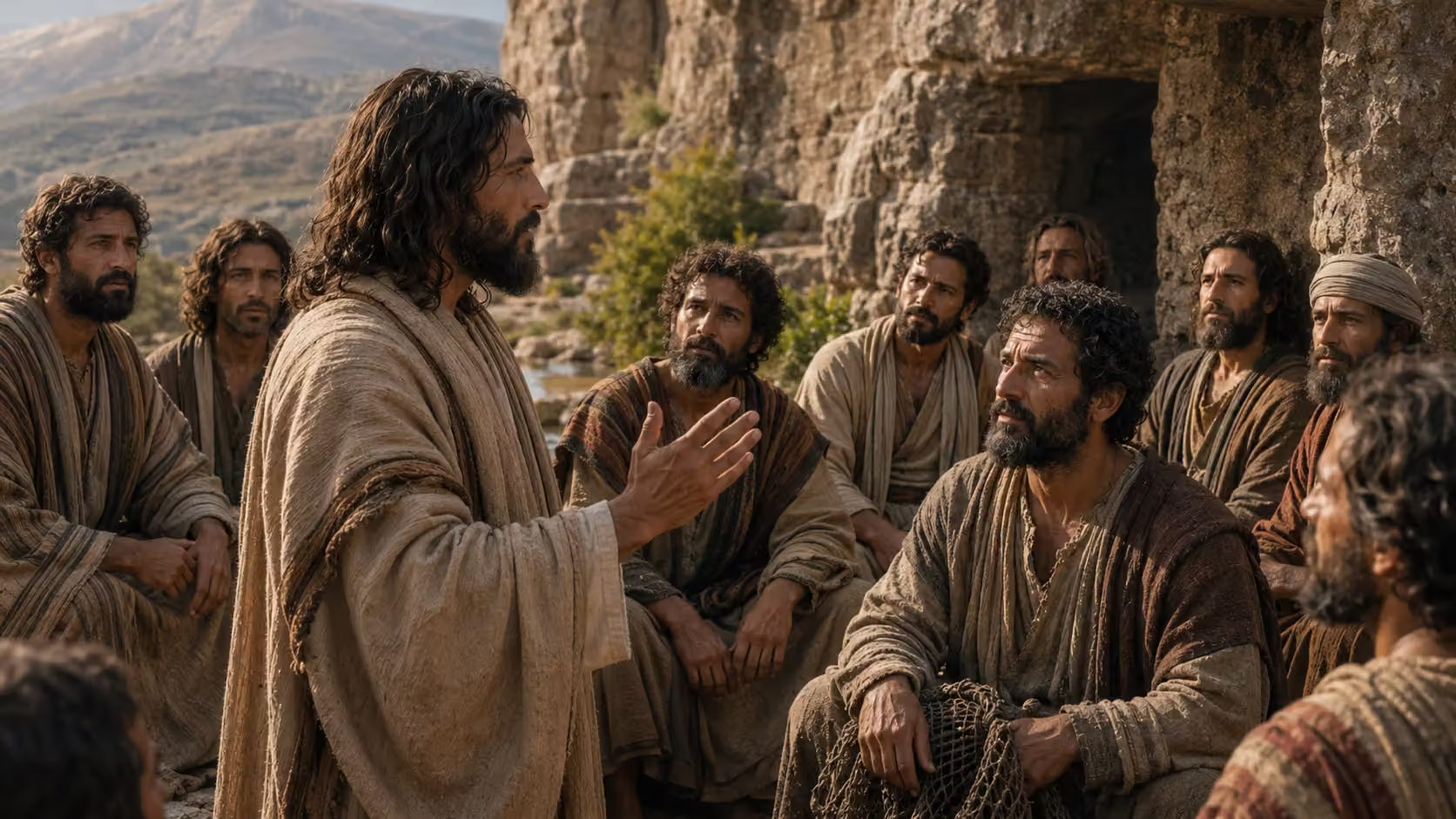
- Doctrine & TheologyCan Christians be possessed by demons?No. The New Testament gives no example of a believer being demon-possessed, and Scripture teaches that the Holy Spirit dwells in every Christian. A demon cannot inhabit a body where the Holy Spirit already lives. Believers can, however, be tempted, oppressed, attacked, and harassed by the enemy—but that is not the same as possession. The Christian is sealed, indwelt, and kept by God.Read answer →
- Doctrine & TheologyIs Satan real?Yes. Scripture presents Satan not as a myth or a symbol but as a real, personal, created being who fell through pride and now opposes God and deceives the world. Jesus spoke of him as a real adversary and called him “a murderer from the beginning” and “a liar.” The Bible describes his origin, his work, and his final defeat. Denying his existence plays into his deception, because a hidden enemy is the most dangerous kind.Read answer →
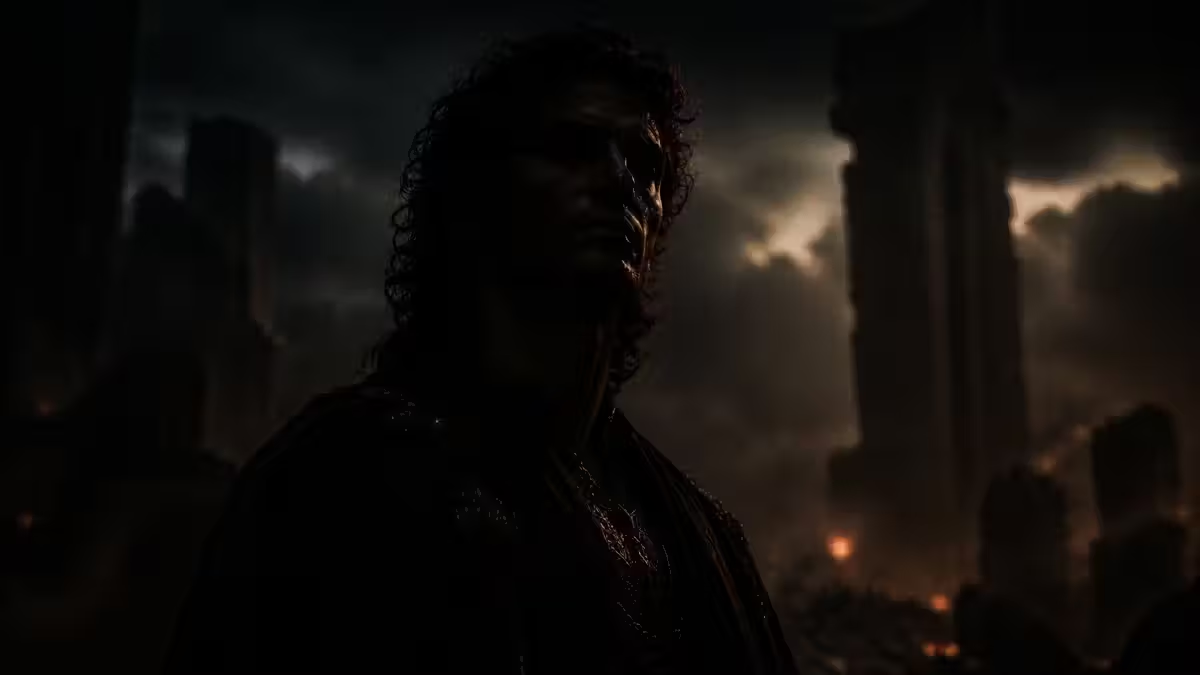
- Church & HistoryWhat is the difference between Catholic and Protestant?The central difference is authority. Protestants hold to sola scriptura—Scripture alone is the final authority for faith and practice. The Catholic Church teaches that Scripture and church tradition, interpreted by the teaching office (magisterium) under the Pope, together carry authority. From this root flow other differences: salvation by faith alone versus faith plus sacraments, the role of Mary and the saints, purgatory, and the nature of the Lord’s Supper.Read answer →
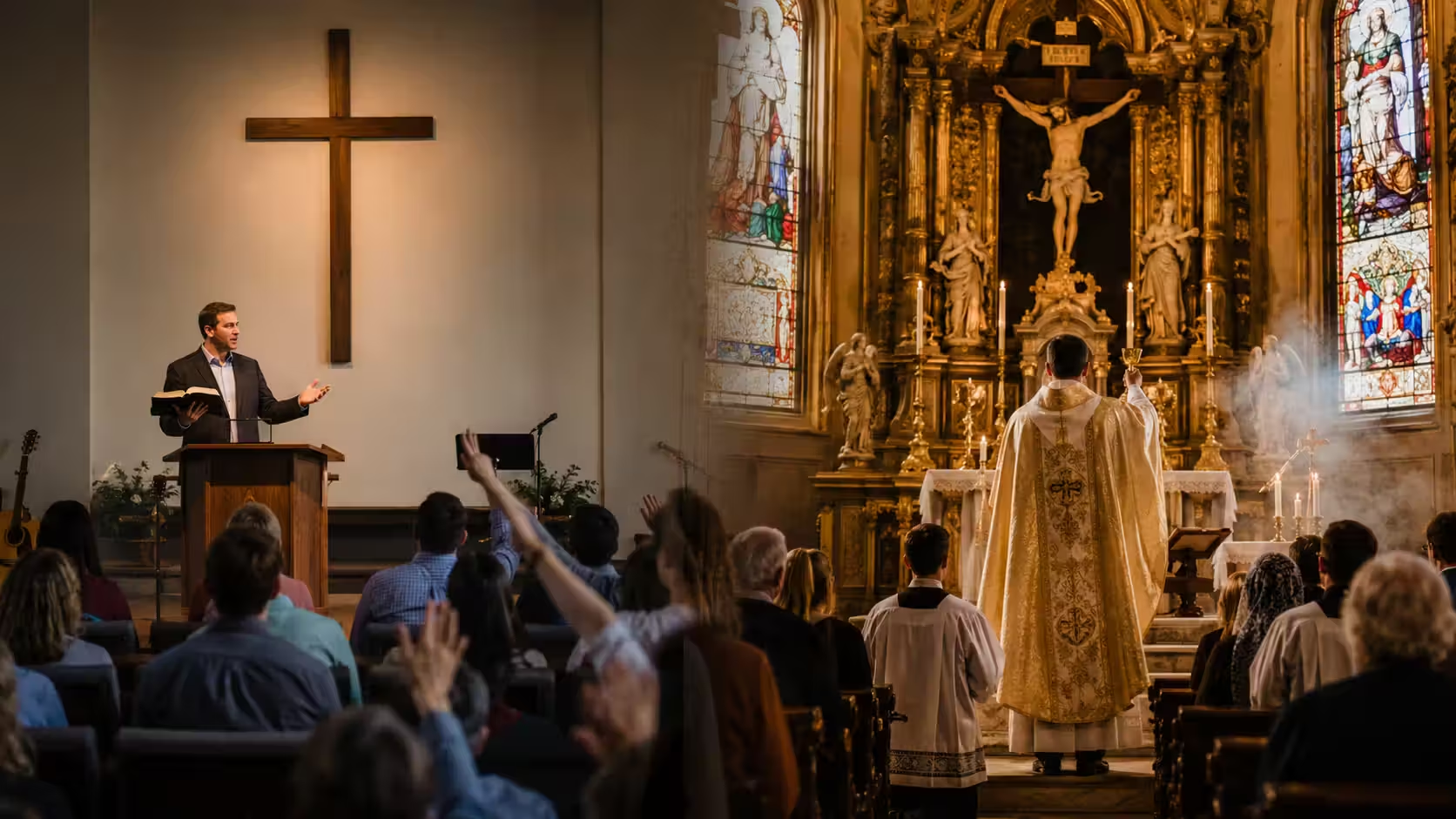
- Doctrine & TheologyWhat does the Bible say about women pastors?Scripture reserves the office of pastor/elder—the role of authoritative teaching and oversight of the church—for qualified men. Paul grounds this not in culture but in creation order: “I suffer not a woman to teach, nor to usurp authority over the man” (1 Timothy 2:12). This says nothing about a woman’s worth, gifts, or usefulness; women taught, served, and led in vital ways throughout Scripture. The question is the office, not the value.Read answer →
- Prophecy & End TimesWhat does the Bible say about Israel?The Bible presents Israel as God’s chosen nation—a people He called through Abraham, delivered from Egypt, and gave the land of Canaan. God made an unconditional covenant with them, and though they were scattered for disobedience, the prophets promised a future restoration. Paul insists God has not cast away His people. In this reading, the church and Israel are distinct, and God’s promises to Israel will be literally fulfilled.Read answer →
- Doctrine & TheologyAre angels watching over us?Yes. Scripture teaches that angels are real, created spirit beings who serve God, and part of their work is ministering to and guarding believers. Hebrews 1:14 calls them “ministering spirits, sent forth to minister for them who shall be heirs of salvation.” Psalm 91:11 says God commands His angels to guard His people. This is God’s care at work—the angels do His bidding, and the worship belongs to God alone.Read answer →
- Faith & SalvationWhy did Jesus shed His blood?Jesus shed His blood because sin brings death and forgiveness requires a sacrifice that truly deals with guilt. His death was not an accident or merely an example of love. As the sinless Lamb of God, Jesus took the penalty sinners deserved so that everyone who trusts Him can be forgiven and reconciled to God.Read answer →
- Bible & ScriptureWho were the Nephilim?The Nephilim were extraordinary offspring produced when rebellious heavenly beings—the “sons of God”—took human women and fathered children through them (Genesis 6:1–4). They became powerful figures remembered as mighty men and giants. Rather than describing marriages between Sethites and Cainites, Genesis presents a supernatural rebellion in which divine beings crossed a God-ordained boundary between the heavenly and human realms.Read answer →
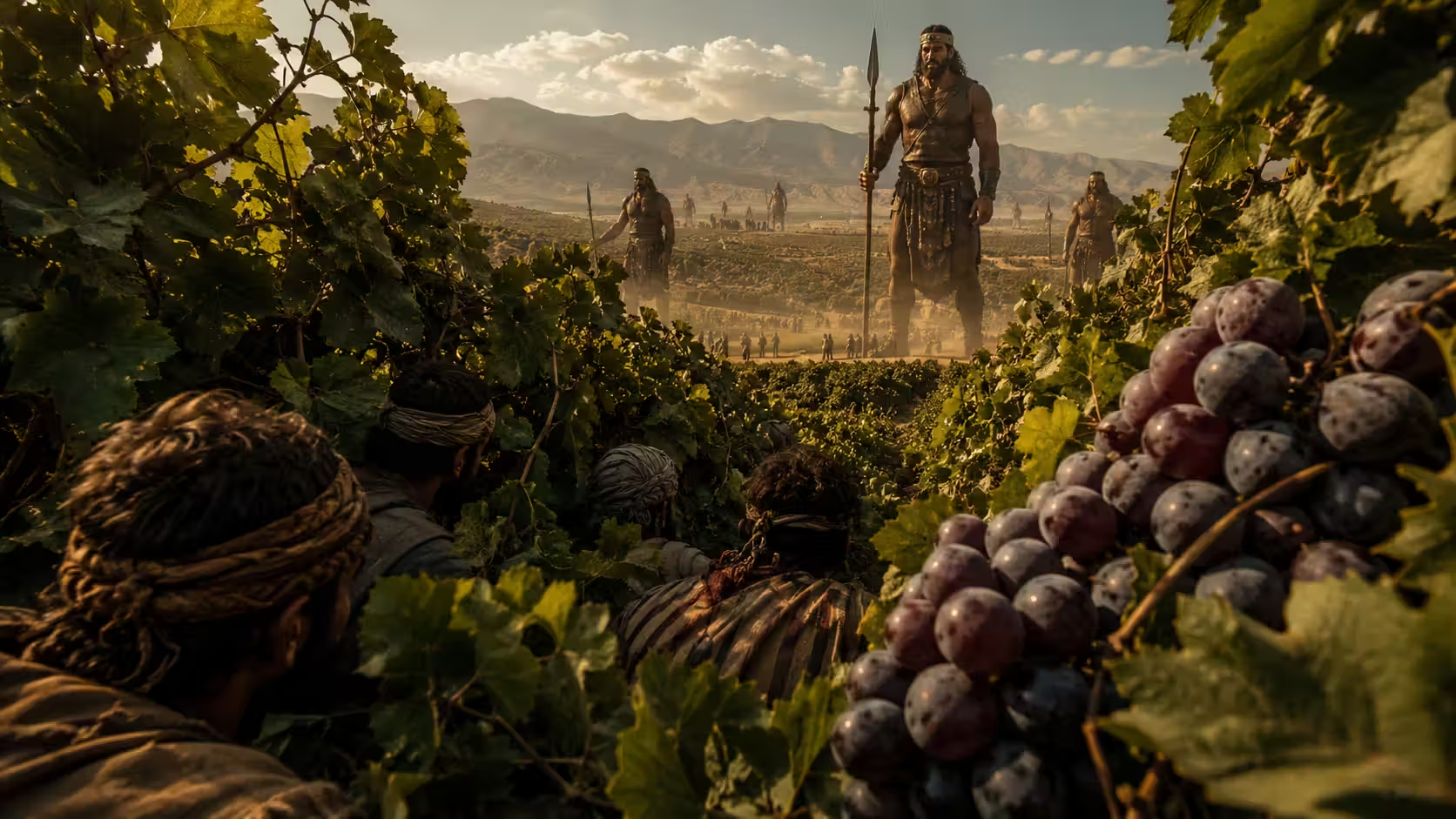
- Morality & CultureIsn't It Arrogant to Say One Religion Is True?The objection assumes something it has not established — that no religion could be true, which is itself an exclusive claim about God. The world religions genuinely contradict each other, so they cannot all be right. Christians did not invent the exclusivity either; Jesus stated it about Himself.Read answer →

- Morality & CultureWhat Does the Bible Say About Sex and Marriage?Scripture treats sex as God's own idea and marriage as its setting: one man and one woman, permanently joined. It calls everything outside that a departure from the design, and it says so without apology. It also insists in the same breath that no sexual sin is beyond forgiveness in Christ.Read answer →
- Morality & CultureIs Morality Just a Matter of Opinion?Almost nobody actually lives as though it were. We treat cruelty as genuinely wrong rather than merely unpopular, and we expect others to agree. Scripture says that reaction is not conditioning but a standard God has written into human beings, and that He will hold people to it.Read answer →
- Science & FaithDo Miracles Contradict Science?No. Science describes what normally happens; a miracle is a claim that on one occasion the One who set that order in place acted within it. That is not a broken law but an Author intervening in His own work. The real question is not whether miracles are possible but whether a particular one happened.Read answer →

- Science & FaithCan a Christian Believe in Evolution?Christians who hold Scripture as God's word disagree about this, and they have for well over a century. What Scripture does not leave open is that God created deliberately, that humanity bears His image rather than arriving by accident, and that sin entered through real human rebellion. The mechanism and the timescale are where the argument is.Read answer →
- Science & FaithDoes Science Disprove God?No, and it is not the kind of question science is built to settle. Science describes how the physical world behaves. Whether that world has an Author is a different question, and no measurement can reach it. Christianity has never asked anyone to choose between the two.Read answer →
- Church & HistoryDid Constantine Invent Christianity?No. Constantine legalised Christianity in the fourth century and called the Council of Nicaea, but every central Christian claim was being taught, written down, and died for long before he was born. Nicaea did not invent the deity of Christ or decide the New Testament; it settled the wording of what the church already confessed.Read answer →
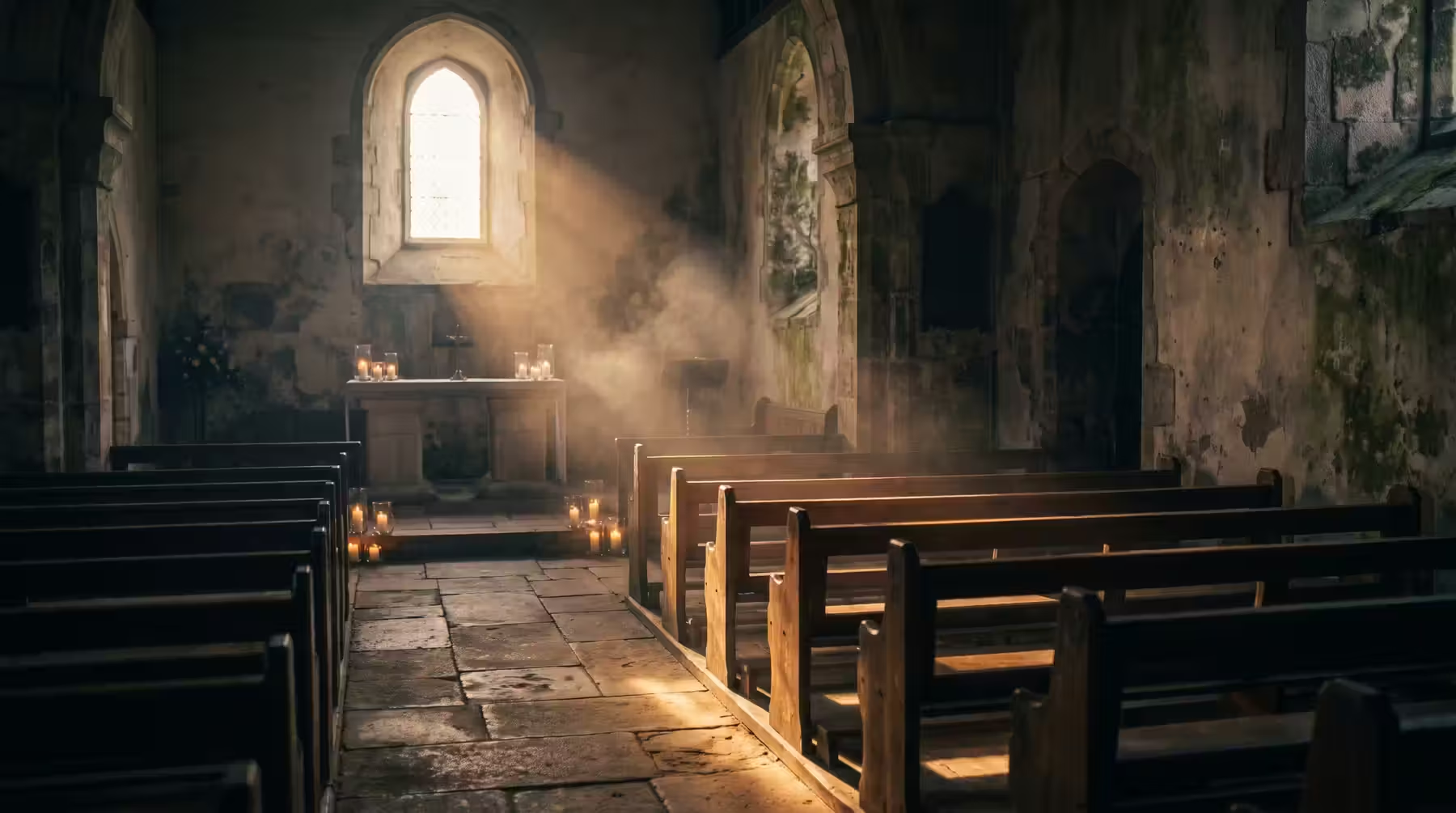
- Church & HistoryDo I Have to Go to Church to Be a Christian?You are not saved by attendance. But the New Testament has no category for a Christian who belongs to no congregation. Scripture describes believers as parts of one body, commands them not to abandon meeting together, and assumes a life shared with other Christians rather than practised alone.Read answer →
- Church & HistoryWhy Are There So Many Christian Denominations?Denominations came from a mix of genuine doctrinal conviction, historical and national accident, and plain human sin. Scripture treats division as a scandal, not a feature. But the disagreements are not evenly weighted: the historic core of the faith is shared across almost all of them.Read answer →
- Prophecy & End TimesCan Anyone Know When Jesus Will Return?No. Jesus said the day and hour are known to the Father alone, and He said it about Himself as well as about angels and men. Every date that has ever been set has failed. Scripture replaces the calendar with a command: watch, and live ready.Read answer →

- Prophecy & End TimesWill Christians Go Through the Tribulation?Christians disagree, and they have disagreed for a long time. Scripture teaches both that believers are kept from God's wrath and that they should expect trouble in this world. Where the church is at the moment of a final tribulation is genuinely disputed; that Christ will keep His people through whatever comes is not.Read answer →
- Prophecy & End TimesWhat Does the Bible Say About the End Times?Scripture is confident about what is coming and reserved about when. Jesus will return personally and visibly, the dead will be raised, every person will be judged, and creation will be restored. The timetable and the sequence are where Christians have always disagreed.Read answer →
- Faith & SalvationWhat am I being saved from?Salvation is not only rescue from a bad destination after death. Scripture describes God rescuing people from sin itself: from its guilt and penalty, from its power over daily life, and finally from its presence altogether. It is also rescue toward something. The end of salvation is reconciliation with God, resurrection, and a restored creation where sin and death are gone.Read answer →
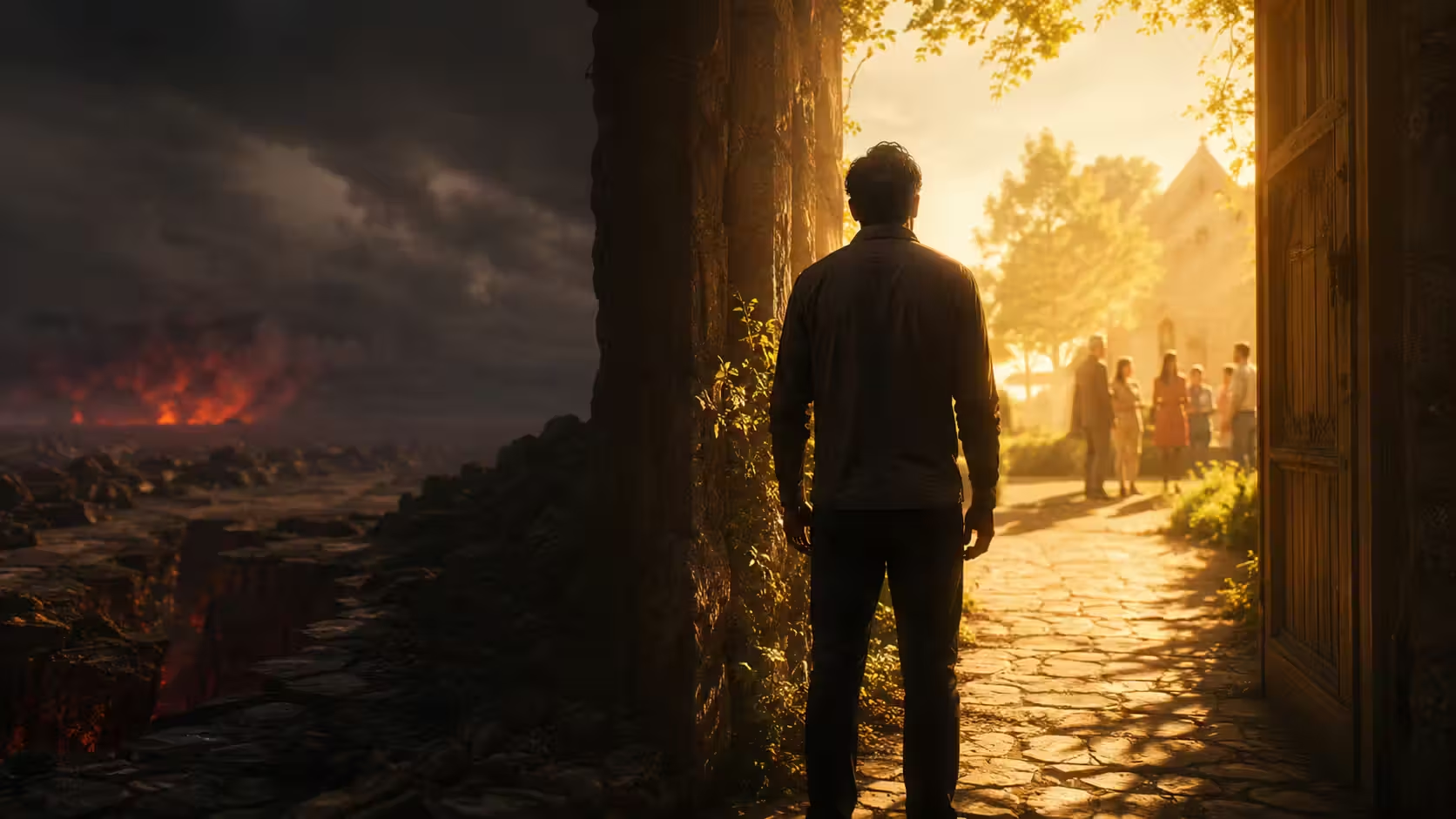
- Difficult QuestionsWhy do bad things happen to good people?Strictly speaking, the Bible says none of us are truly “good” by God’s perfect standard; all have sinned and live in a world broken by sin. Bad things happen because creation itself is fallen. Yet God is never defeated by suffering or evil. What Satan intends for destruction, God can redeem, using even our deepest trials for His purposes, our growth, and ultimately His glory.Read answer →

- Faith & SalvationWhat does the resurrection prove?The resurrection demonstrates that Jesus is who He claimed to be, that His sacrifice for sin was accepted by the Father, and that death does not have the final word. It confirms the gospel and assures believers of their own future bodily resurrection. Christianity stands on this event because it declares Christ's victory over sin, death, and Satan.Read answer →
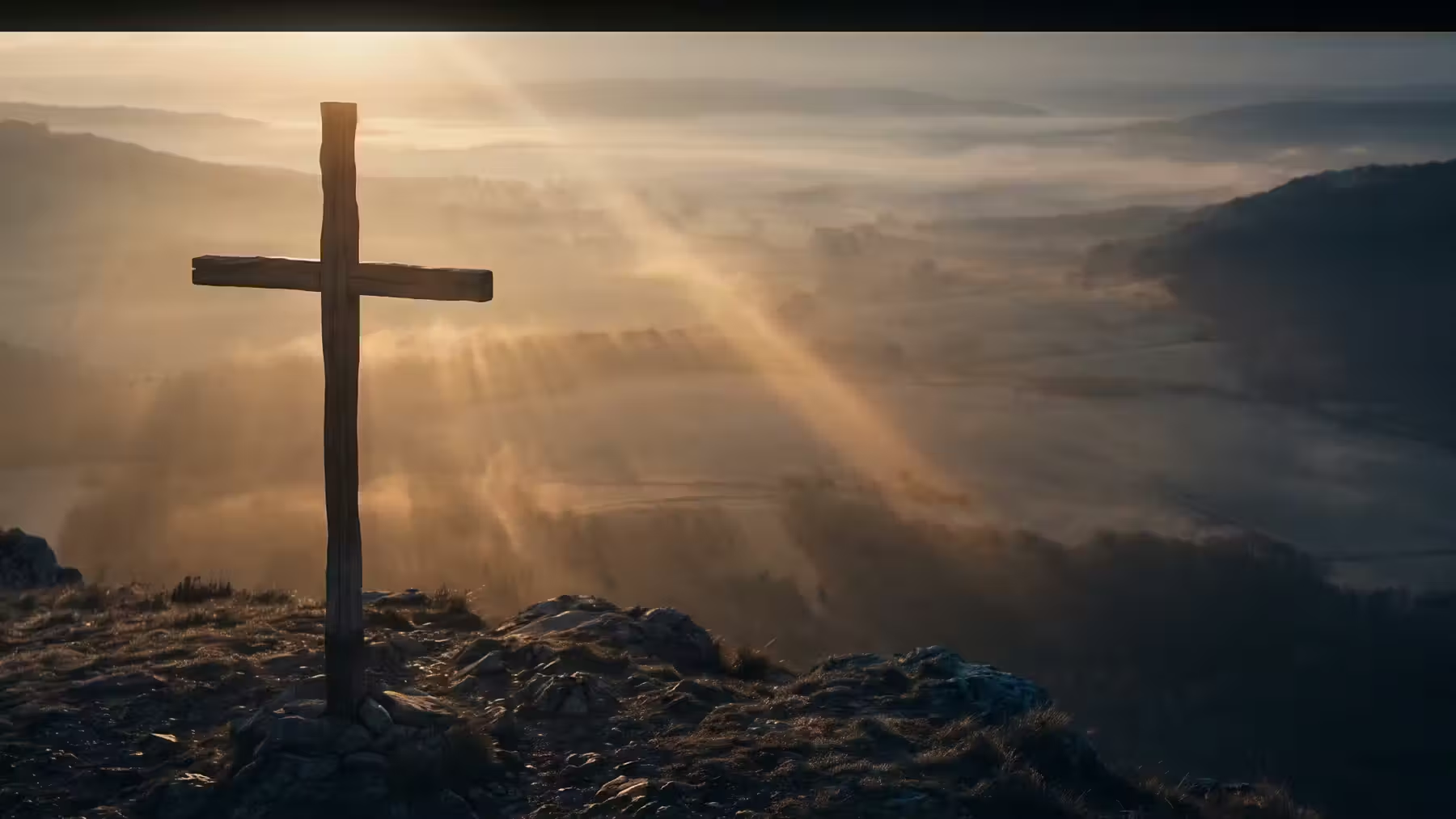
- Faith & SalvationWhat is grace?Grace is God's undeserved favor toward sinners. It means God gives what people cannot earn: forgiveness, righteousness, adoption, strength, and eternal life through Jesus Christ. Grace does not excuse sin or make obedience irrelevant. Instead, it frees believers from condemnation and empowers them to live in thankful, loving obedience to the God who saved them.Read answer →
- Faith & SalvationCan a Christian lose salvation?Salvation rests on Christ's finished work and God's faithfulness, not on a believer's ability to perform perfectly. Genuine Christians can stumble seriously and require discipline, repentance, and restoration, but Jesus promises to keep His own. A persistent life of unbelief should bring honest self-examination. Assurance is grounded in Christ's promise and the Spirit's transforming work.Read answer →
- Prayer & Spiritual GrowthWhy does God not answer every prayer the way I want?God hears the prayers of His children, but His answers may be yes, no, wait, or something different than expected. He sees the entire picture while people see only part. Scripture calls believers to pray in faith and according to His will. Unanswered desires can hurt deeply, yet God remains good, present, wise, and trustworthy.Read answer →

- Christian LivingWhy do Christians still struggle with sin?At salvation, believers receive new life and the Holy Spirit, but they still live in fallen bodies and face pressure from the world, the flesh, and Satan. Spiritual growth is therefore lifelong. Christians fight sin through Scripture, prayer, fellowship, confession, obedience, and dependence on the Spirit. The struggle can reflect spiritual life rather than spiritual failure.Read answer →

- Faith & SalvationWhy did Jesus have to die?Jesus died because God is perfectly holy and perfectly loving. Sin deserves judgment, but God provided a substitute in His Son. On the cross, Jesus willingly bore sin's penalty, satisfying divine justice and displaying divine love. Because He was sinless and divine, His sacrifice is sufficient for all who believe and receive Him.Read answer →
- Faith & SalvationWhat does it mean to be born again?To be born again is to receive new spiritual life from God through faith in Jesus Christ. The Holy Spirit changes the believer's standing before God and begins changing the heart, desires, and direction of life. It does not mean immediate perfection, but it does mean becoming a new creation, forgiven, adopted, and indwelt by God's Spirit.Read answer →
- Faith & SalvationHow can I be saved?You are saved by God's grace through faith in Jesus Christ, not by religious effort, good works, church attendance, or moral improvement. Turn from trusting yourself and place your confidence in Jesus' death and resurrection. Receive Him as Lord and Savior. Good works follow salvation as its fruit, but they never earn or maintain salvation.Read answer →
- Prayer & Spiritual GrowthWhat is prayer?Prayer is personal communication with God. Christians pray to worship Him, confess sin, give thanks, seek wisdom, present needs, intercede for others, and align their hearts with His will. Prayer is not a formula for controlling God or demanding preferred outcomes. Through Jesus, believers may confidently approach God, trusting His wisdom, love, and perfect timing.Read answer →
- Faith & SalvationWhat is repentance?Repentance is a change of mind and heart that turns a person from sin and self-rule toward God. It involves recognizing sin as God sees it and embracing Christ by faith. Repentance is more than feeling sorry or promising improvement. It is a decisive reorientation toward God that naturally produces growing obedience and a changed direction in life.Read answer →
- Doctrine & TheologyWhat is sanctification?Sanctification is God's ongoing work of making believers more like Jesus in character, conduct, and devotion. At conversion, Christians are set apart for God; throughout life, they grow in practical holiness. This growth involves God's grace and the believer's active obedience. Sanctification does not earn salvation, but it is the normal and expected fruit of genuine salvation. You have been saved, you are being saved and you will be saved.Read answer →

- Doctrine & TheologyWho is the Holy Spirit?The Holy Spirit is the third Person of the Trinity: fully God and personal, not merely a force or influence. He convicts people of sin, gives believers new life, seals them for salvation, teaches Scripture, gives spiritual gifts, produces godly character, and empowers witness. Every true Christian is indwelt by the Holy Spirit.Read answer →
- Prayer & Spiritual GrowthWhat does it mean to be filled with the Spirit?Being filled with the Spirit means yielding daily to the Holy Spirit's influence and control. It is not necessarily an emotional experience, nor is it limited to supernatural gifts. A Spirit-filled life is marked by worship, gratitude, humility, love, courage, purity, service, and obedience. Christians are commanded to seek this continual dependence rather than rely on self-effort.Read answer →
- Doctrine & TheologyWhat is sin?Sin is any failure to meet God's holy standard in thought, attitude, word, action, or omission. It includes open rebellion, unbelief, selfishness, and disobedience. Sin is universal; no one becomes right with God through personal goodness. Its consequence is separation from God and death, which is why every person needs a Savior rather than merely better behavior.Read answer →
- Prayer & Spiritual GrowthWhat are spiritual gifts?Spiritual gifts are abilities given by the Holy Spirit to believers for serving others and building up Christ's body. They include teaching, encouragement, service, mercy, giving, leadership, evangelism, and others. Gifts are not signs of superiority or personal status. Their purpose is loving ministry, unity, maturity, and the advance of Christ's mission under biblical discernment.Read answer →
- Bible & ScriptureHow should I read the Bible?Read the Bible prayerfully, consistently, and in context. First ask what a passage meant to its original audience; then consider how its timeless truth applies today. Observe its literary genre, surrounding verses, historical setting, and place in the whole Bible. Let clear passages interpret difficult ones, and ask the Holy Spirit to teach and change you.Read answer →

- Bible & ScriptureWho Wrote the Bible?The Bible was written by many human authors across many centuries, yet Christians believe those authors wrote under the guidance of the Holy Spirit. Moses, David, prophets, apostles, historians, kings, fishermen, physicians, and others contributed to Scripture. Christianity therefore recognizes both genuine human authorship and ultimate divine inspiration.Read answer →
- Bible & ScriptureCan We Trust the Bible?Yes. Christians believe the Bible is God's inspired Word, written through human authors and reliably preserved through thousands of ancient manuscripts. Its books arise from real historical settings, contain remarkable internal unity, and repeatedly connect their claims to people, places, nations, and events that can be investigated.Read answer →

- Christian LivingDoes God Have a Plan for My Life?Yes. God has a purpose for every believer, but Scripture does not teach that Christians must discover one hidden blueprint containing every career, relationship, and decision. God's primary will is that we know Christ, become more like Him, obey Scripture, love others, and faithfully follow wherever He leads.Read answer →
- Doctrine & TheologyDoes God Still Speak to People Today?Yes, but Scripture must remain the believer's final authority for determining whether something truly comes from God. God speaks primarily through His written Word and may guide through the Holy Spirit, prayer, circumstances, wisdom, and other believers. Any claimed revelation that contradicts Scripture should be rejected.Read answer →
- Doctrine & TheologyWhat Is the Trinity?The Trinity means that there is one God who eternally exists as three distinct Persons: Father, Son, and Holy Spirit. Christians do not believe in three gods, nor that God merely changes between three roles. The Father is God, Jesus is God, and the Holy Spirit is God, yet God is one.Read answer →
- Difficult QuestionsWhy Does God Allow Evil?God permits evil temporarily, but He does not approve of it or cause moral evil. Scripture teaches that God created beings capable of genuine love and obedience, which also made rebellion possible. Evil entered creation through rebellion against God. God will ultimately judge evil completely, while offering mercy and redemption through Jesus Christ.Read answer →

- Faith & SalvationWhy Should I Believe in Christianity?Christianity rests on claims that can be investigated: that Jesus lived, was crucified, claimed unique authority, and rose bodily from the dead. Christianity also provides a coherent explanation for creation, human dignity, morality, evil, our need for redemption, and our longing for eternity. Its central question is ultimately: Who is Jesus?Read answer →
- Doctrine & TheologyWho Is God?God is the eternal, self-existent Creator of everything that exists. He is holy, loving, just, all-knowing, all-powerful, and present everywhere. The Bible reveals one God who eternally exists as Father, Son, and Holy Spirit. Most importantly, God desires people to know Him personally through Jesus Christ.Read answer →
- Difficult QuestionsDoes God Exist?Yes. The Bible presents God's existence as the foundational reality behind everything else. Christians believe the existence, order, complexity, morality, and intelligibility of the universe point toward a Creator. Scripture also teaches that God has revealed Himself more specifically through history, the Bible, and ultimately through Jesus Christ.Read answer →

Stay informed. Stay encouraged.
Join the Ark Life Newsletter
Weekly studies, news, and encouragement—straight to your inbox.