
People of the Bible
The Story of Noah and the Ark: Faith, Flood, and a New Beginning
The story of Noah and the ark is one of the most recognizable stories in all of Scripture. It appears in Genesis 6–9 and tells of a man who trusted God completely — even when what God asked seemed impossible.

The story of Noah and the ark is one of the most recognizable stories in all of Scripture. It appears in Genesis 6–9 and tells of a man who trusted God completely — even when what God asked seemed impossible. The Noah and the ark story isn't just a tale of survival. It's a story of obedience, covenant, and the enduring mercy of God.
Who Was Noah?
Noah was a righteous man living in a world that had grown deeply corrupt. Genesis 6:9 describes him this way: "Noah was a righteous man, blameless among the people of his time, and he walked faithfully with God."
That description stands out. In a generation where "every inclination of the thoughts of the human heart was only evil all the time" (Genesis 6:5), Noah was different. He didn't conform to the wickedness around him. He walked with God.
Noah was the great-grandson of Enoch and the son of Lamech. He was 600 years old when the flood came — not unusual for the pre-flood lifespans recorded in Genesis. He had three sons: Shem, Ham, and Japheth.
God's Command: Build the Ark
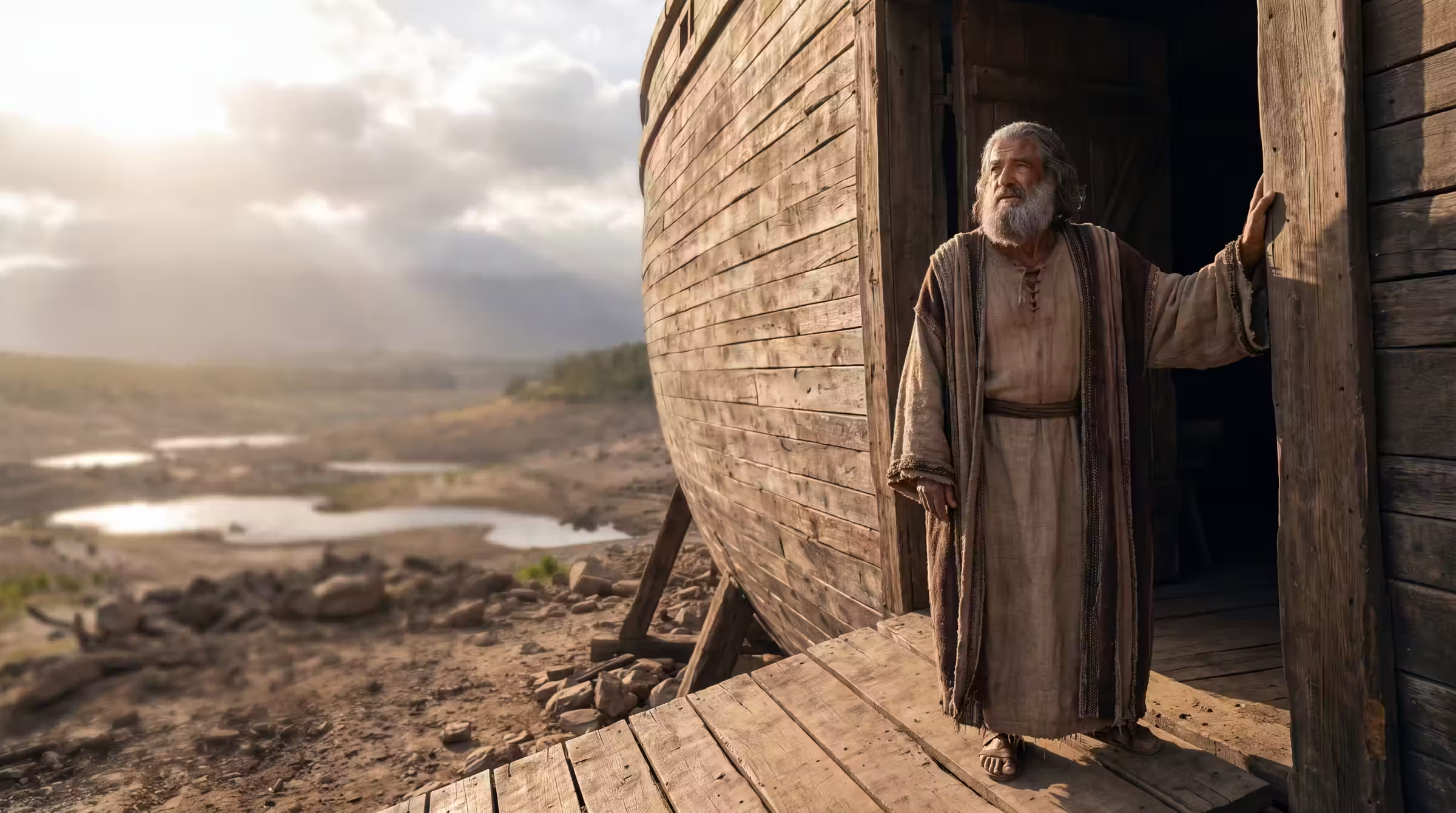
In Genesis 6, God speaks to Noah directly. He tells him that a great flood is coming — one that will cover the earth — and that Noah is to build a massive wooden vessel to preserve his family and representatives of every animal.
The instructions were specific. The ark was to be built from gopher wood (likely cypress), coated with pitch inside and out, and measure 300 cubits long, 50 cubits wide, and 30 cubits high. At standard cubit measurements, this is roughly 450 feet long — about the length of 1.5 football fields. It was a structure of enormous scale.
Noah didn't question, debate, or bargain. Genesis 6:22 says simply: "Noah did everything just as God commanded him."
The Story of Noah and the Ark: The Flood Begins
Once the ark was complete, God told Noah to gather his family and bring two of every kind of animal — male and female — along with seven pairs of every clean animal. They were to store enough food for everyone aboard.
Then the rain began. Genesis 7:11 describes it as the "springs of the great deep burst forth" and "the floodgates of the heavens were opened." It rained for 40 days and 40 nights. The waters rose until every high mountain was covered. Everything on the dry land that had the breath of life in it died.
But the ark floated. Noah, his wife, his sons, their wives, and the animals were preserved.
40 Days to 150 Days to a New World
The flood lasted far longer than the initial 40 days of rain. Genesis 7:24 says the waters flooded the earth for 150 days. Then God "remembered Noah" — a phrase that signals active, compassionate attention, not forgetfulness — and sent a wind to cause the waters to recede.
The ark came to rest on the mountains of Ararat. Noah sent out a raven, then a dove. The dove returned the first time. The second time, it came back with an olive leaf. The third time, it didn't return at all. The earth was dry.
God's Covenant with Noah
When Noah and his family stepped off the ark, the first thing he did was build an altar and offer burnt offerings to God. God was pleased with the offering and made a solemn covenant with Noah — and with all living creatures.
The terms of the covenant were clear: God promised never again to destroy all living creatures with a flood. And he gave a sign to seal that promise: the rainbow.
"I have set my rainbow in the clouds," God says in Genesis 9:13, "and it will be the sign of the covenant between me and the earth."
Every rainbow since has been a reminder of that promise.
What the Story of Noah Means for Us
The story of Noah and the ark is about more than a flood. It's about what it means to trust God when the call is costly, the task is overwhelming, and the timeline is unclear.
Noah didn't see the flood coming. He built a massive ship in a world that had never seen one. He worked for decades on what must have looked like foolishness to everyone around him. And yet he persisted — because God had spoken and Noah believed.
Faith under pressure. The world around Noah was morally chaotic. He maintained his integrity and his relationship with God regardless.
Obedience without full understanding. Noah didn't know exactly when the rain would come, how long it would last, or what would remain. He built anyway.
Covenant relationship. God didn't destroy and forget. He preserved, made promises, and established a new beginning. This is the pattern of the biblical God — not only judgment but redemption.
The apostle Peter references Noah in his first epistle as a model of salvation — eight souls were saved through water, prefiguring baptism (1 Peter 3:20–21). The writer of Hebrews lists Noah among the great heroes of faith (Hebrews 11:7).
How Noah Fits Into the Bigger Story of the Bible
Noah's story connects the early chapters of Genesis — the creation and fall of humanity in Genesis 1–5 — to the story of Abraham and the patriarchs that begins in Genesis 12. It's the hinge between the primeval history of humankind and the specific story of Israel's ancestors.
More broadly, Noah introduces one of the Bible's great themes: that God acts to preserve a remnant when the world is lost. This pattern repeats throughout Scripture — in the Exodus, in the exile, and ultimately in Jesus, who comes to seek and save the lost (Luke 19:10).
Exploring Noah's Story on The Ark Life Bible Directory
The Ark Life Bible Directory is your comprehensive guide to the people, stories, and themes of the Bible. From Noah to Moses, David to Paul, we bring Scripture to life through detailed profiles, story guides, and character studies.
Whether you're studying the story of Noah and the ark for the first time or going deeper into what it means for life today, you'll find everything you need here.
Start exploring at livethearklife.com.
Continue the Story

People of the Bible
The Story of Joseph in the Bible: From Pit to Palace
The story of Joseph in the Bible is one of the most dramatic and emotionally rich narratives in all of Scripture.
People of the Bible
Who Was Lamech?
Who Was Lamech? Lamech is a figure from the early chapters of Genesis, a descendant of Cain, and the first man recorded in Scripture to have taken two wives.