
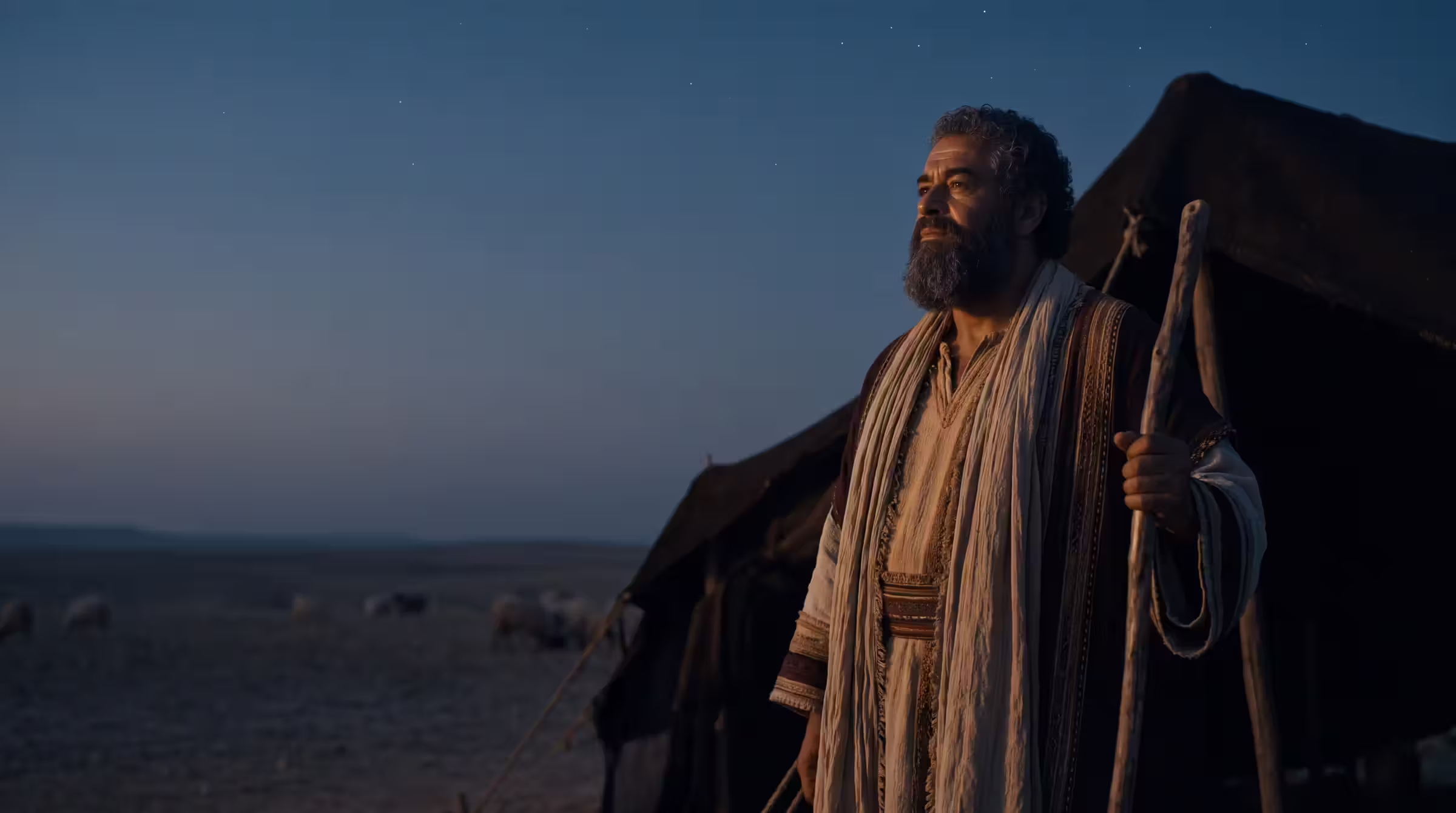
People of the Bible
Who Was Abraham? The Story of the Father of Nations
Who Was Abraham? Abraham is one of the most important figures in all of human history — and one of the most important in the Bible. He is called the Father of Nations, the father of faith, and the founding patriarch of Judaism, Christianity, and Islam.

Who Was Abraham?
Abraham is one of the most important figures in all of human history — and one of the most important in the Bible. He is called the Father of Nations, the father of faith, and the founding patriarch of Judaism, Christianity, and Islam. His story begins in the Book of Genesis and echoes through every page of Scripture that follows.
But before all of that, he was simply a man named Abram, living in the ancient city of Ur in Mesopotamia — what is now modern-day Iraq. He had a wife named Sarai, an aging father named Terah, and as far as the Bible tells us, no particular reason to expect that his name would still be spoken thousands of years later.
The Call That Changed Everything
The turning point in Abraham's story — and in the story of humanity — comes in Genesis 12 with one of the most dramatic commands in all of Scripture:
Go from your country, your people and your father's household to the land I will show you.
God told Abram to leave. He didn't tell him where he was going. He didn't give him a map or a timeline. He simply said go — and attached to that command was a staggering promise: Abram would become the father of a great nation, his descendants would be as numerous as the stars, and through his family, all peoples on earth would be blessed.
Abram was 75 years old. He packed everything up, took Sarai and his nephew Lot, and left. The Bible records no hesitation, no negotiation, no asking for a sign. He simply went. That act of faith — walking toward a promise without knowing the destination — becomes the defining quality that the rest of Scripture holds up as the gold standard of believing God.
The Long Wait for Isaac
What followed was not an easy path. Abraham and Sarah waited decade after decade for the promised son who would carry the covenant forward. They tried to solve the problem themselves — Sarah gave her servant Hagar to Abraham, and Ishmael was born. But God was clear: the covenant would run through a child yet to come, born to Sarah herself.
When Abraham was 99 and Sarah was 90, God appeared and renewed the promise. Sarah overheard and laughed. Who could blame her? But the next year, she held Isaac in her arms — a child whose name means laughter — and the impossible had happened.
The Ultimate Test — Mount Moriah
The most dramatic and theologically significant moment of Abraham's life came when God asked him to sacrifice Isaac on Mount Moriah. Abraham obeyed, building the altar and binding his son — and at the last moment, God provided a ram. "God himself will provide the lamb," Abraham had told Isaac on the way up. Christians have long seen in this story a foreshadowing of the cross: a father, a beloved son, a substitute provided at the final moment on the very hill where Jerusalem would one day stand.
Abraham's Legacy
Abraham died at 175 years old, having seen the beginning of what God promised but not its fullness. His son Isaac carried the covenant. His grandson Jacob — renamed Israel — became the father of twelve sons whose descendants became the twelve tribes of a nation. And ultimately, one descendant fulfilled the promise made in Genesis 12: that through Abraham's offspring, all peoples on earth would be blessed.
The Apostle Paul calls Abraham "the father of all who believe" — not because Abraham was perfect (he wasn't), but because he trusted God when trusting required everything.
Explore Abraham's Full Story in the Ark Life Bible Directory
The Ark Life Bible Directory features a full cinematic portrait and complete biography for Abraham — plus his wife Sarah, his son Isaac, his grandson Jacob, and the entire Family Tree of Abraham through the 12 Tribes of Israel.
Download the free Family Tree of Abraham guide — 23 pages of portraits, stories, and Scripture, completely free.
https://arkbibledirectory.netlify.app/
Continue the Story

People of the Bible
The Story of Joseph in the Bible: From Pit to Palace
The story of Joseph in the Bible is one of the most dramatic and emotionally rich narratives in all of Scripture.
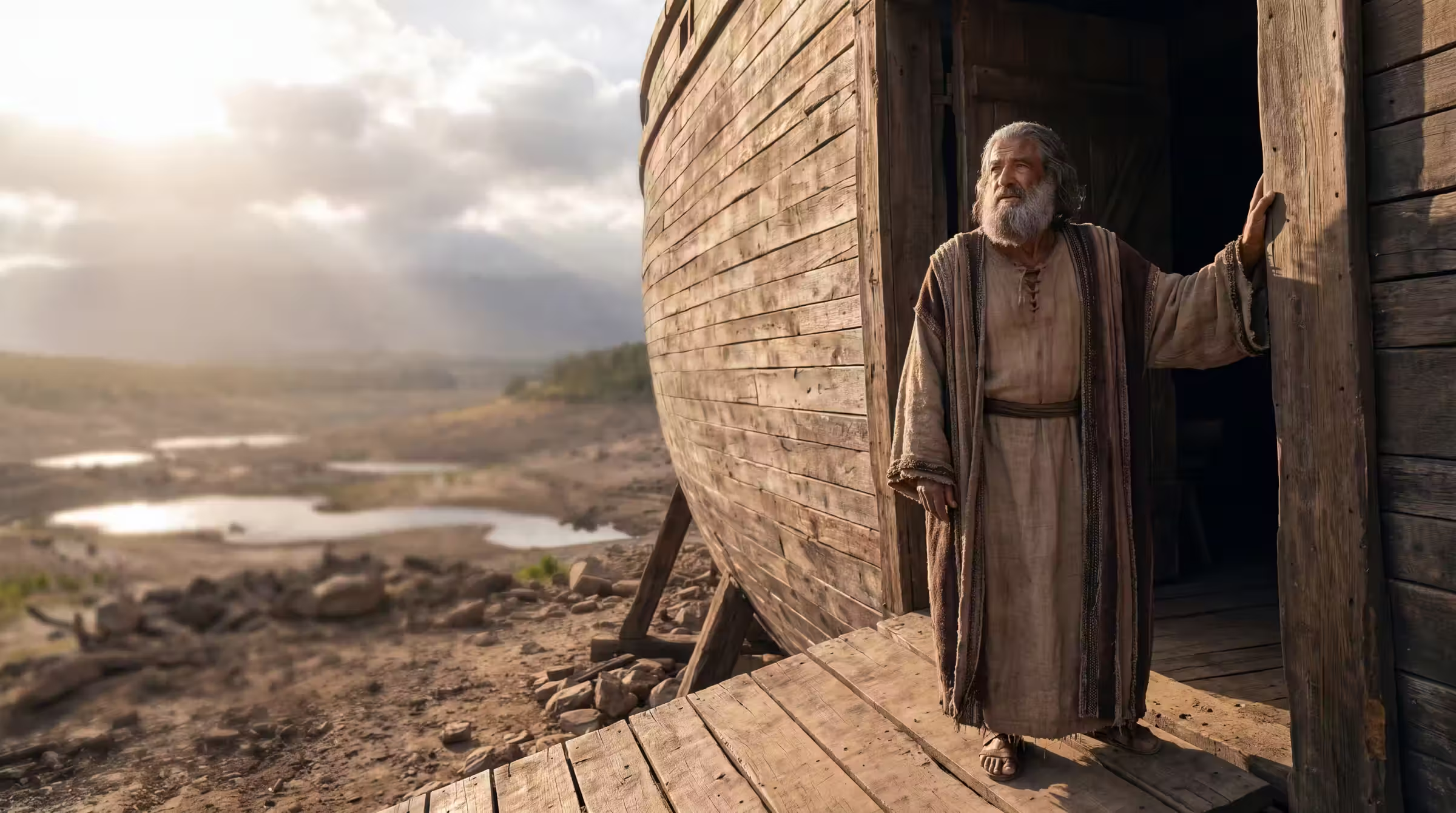
People of the Bible
The Story of Noah and the Ark: Faith, Flood, and a New Beginning
The story of Noah and the ark is one of the most recognizable stories in all of Scripture. It appears in Genesis 6–9 and tells of a man who trusted God completely — even when what God asked seemed impossible.