
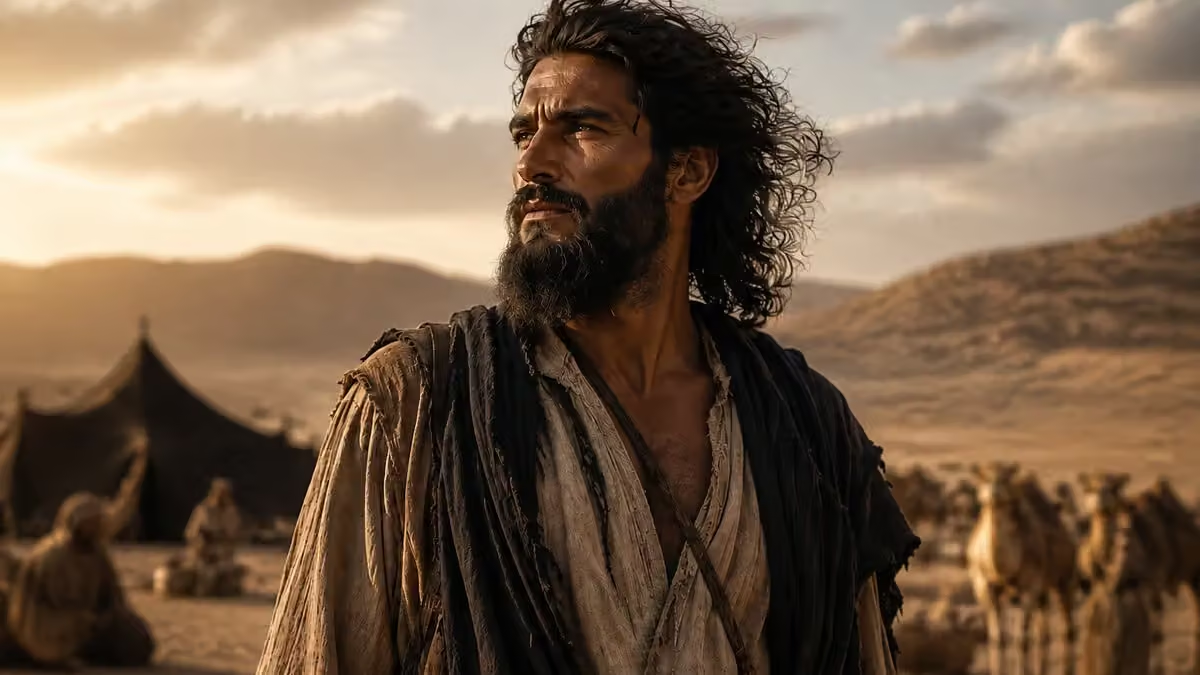
People of the Bible
Who Was Ishmael?
Ishmael, Abraham's firstborn son, was cast out but became the father of a great nation, showing God's care for the outcast.

Who Was Ishmael?
Ishmael is one of the most overlooked figures in the Bible, yet his story touches on themes of family, promise, and God's unwavering care. He was the firstborn son of Abraham, born to Hagar, Sarah's Egyptian maidservant. His name means 'God hears,' a constant reminder that the Lord sees our affliction and responds.
Living around 2000 B.C. in the land of Canaan, Ishmael grew up in the shadow of a great promise. His father Abraham was called by God to become the father of a great nation, but Sarah, Abraham's wife, was barren. In their impatience, Sarah gave Hagar to Abraham, and Ishmael was conceived. But God had a different plan—He promised a son to Sarah herself. This created a household divided, with Ishmael caught in the middle.
Their Story
Ishmael's early years were marked by conflict. When Sarah finally gave birth to Isaac, the tension escalated. At Isaac's weaning feast, Sarah saw Ishmael mocking and demanded that Abraham send Hagar and Ishmael away. Scripture says this grieved Abraham deeply, but God reassured him: 'Do not be distressed... because of the boy and your slave woman. Listen to whatever Sarah tells you, because it is through Isaac that your offspring will be reckoned. I will make the son of the slave woman into a nation also, because he is your offspring' (Genesis 21:12-13).
So Hagar and Ishmael wandered in the wilderness of Beersheba. When their water ran out, Hagar placed Ishmael under a bush and wept, fearing his death. But God heard the boy crying, and an angel called to Hagar from heaven: 'Do not be afraid... God has heard the boy crying as he lies there. Lift the boy up and take him by the hand, for I will make him into a great nation' (Genesis 21:17-18). God opened Hagar's eyes to a well of water, and they survived. Ishmael grew up in the wilderness of Paran, becoming an archer. He later married an Egyptian woman and fathered twelve sons, who became tribal leaders—fulfilling God's promise to make him a great nation.
The last glimpse of Ishmael comes at Abraham's funeral, where he and Isaac together bury their father (Genesis 25:9). This moment of reconciliation hints at the possibility of healing even in broken families.
Key Verses
Genesis 21:17-18 captures the heart of Ishmael's story:
'God heard the boy crying, and the angel of God called to Hagar from heaven and said to her, “What is the matter, Hagar? Do not be afraid; God has heard the boy crying as he lies there. Lift the boy up and take him by the hand, for I will make him into a great nation.”'
Also, Genesis 16:11-12 records the angel's prophecy at his birth, and Genesis 25:12-18 lists his descendants.
Why They Matter
Ishmael's life teaches us that God sees and hears those who are cast out and overlooked. Even when human plans go awry, God's purposes unfold. Ishmael was not the child of promise, yet God still blessed him and made him a great nation. This reminds us that God's grace extends to all—even those outside the main line of blessing. For anyone who has felt rejected or abandoned, Ishmael's story is a beacon of hope: God is near to the brokenhearted and hears every cry. He has a plan for each of us, even when our circumstances seem like a wilderness.
A Closing Thought
Ishmael's name—'God hears'—is a promise to us all. In our own moments of despair, when we feel like we are running out of water in the desert of life, we can cry out to God, and He will hear. He sees us, He cares, and He provides. Just as He opened Hagar's eyes to a well, He can open our eyes to His provision in the most impossible situations.
Continue the Story
People of the Bible
Who Was Ezekiel?
Ezekiel was a priest and prophet among the Babylonian exiles, known for his dramatic visions of God's glory and the valley of dry bones, calling Israel to repentance and hope.
People of the Bible
Who Was Philemon?
Philemon was a wealthy Christian in Colossae who hosted a house church and was challenged by Paul to forgive and welcome back his runaway slave, Onesimus, as a brother in Christ.