
People of the Bible
Who Was Jeremiah? The Weeping Prophet Who Never Stopped Preaching
Jeremiah preached for forty years to a nation that refused to listen. Mocked, imprisoned, thrown in a pit — he never stopped. Discover the story of Israel's weeping prophet.

Who Was Jeremiah?
Jeremiah is known as the Weeping Prophet — a title earned not through emotional weakness but through forty years of faithful preaching to a nation that rejected everything he said. He was called as a young man to deliver a message that would make him deeply unpopular, and he spent his ministry being mocked, threatened, beaten, imprisoned, and thrown into a muddy cistern to die. He never stopped. His story is one of the most costly and courageous in the entire Bible.
Called Before He Was Born
God's word to Jeremiah at the very beginning of his ministry set the tone for everything that followed:
Before I formed you in the womb I knew you, before you were born I set you apart; I appointed you as a prophet to the nations.
Jeremiah's response was immediate protest: he was too young, he didn't know how to speak. God's response was equally direct — don't say you're too young, go where I send you, say what I command, and I will be with you. It was a call with no opt-out clause.
A Message No One Wanted to Hear
Jeremiah's message was simple and devastating: Judah had abandoned God, chased foreign idols, and judgment was coming in the form of the Babylonian empire. Nebuchadnezzar would besiege Jerusalem. The Temple would be destroyed. The people would be carried into exile. For forty years, Jeremiah pleaded with his nation to turn back before it was too late.
Almost no one listened. The kings ignored him. The priests and other prophets opposed him publicly, declaring that peace was coming, that the Temple would never fall, that Babylon was no real threat. Jeremiah called them liars. It cost him nearly everything.
The Prophet Who Was Forbidden to Marry
God told Jeremiah not to marry or have children — a sign to the nation of the suffering that was coming. While others built families and futures, Jeremiah lived as a walking embodiment of his own message: the normal rhythms of life were about to be shattered.
Thrown in a Pit to Die
As the Babylonian siege of Jerusalem intensified, Jeremiah urged the people to surrender — not from cowardice, but because he knew resistance was futile and would only multiply the suffering. The officials declared him a traitor and had him lowered by ropes into a cistern with no water, only mud. He sank into it. An Ethiopian court official intervened, got permission from the king, and pulled him out with old rags and worn-out clothes under the ropes so they wouldn't cut into him.
The Book of Lamentations
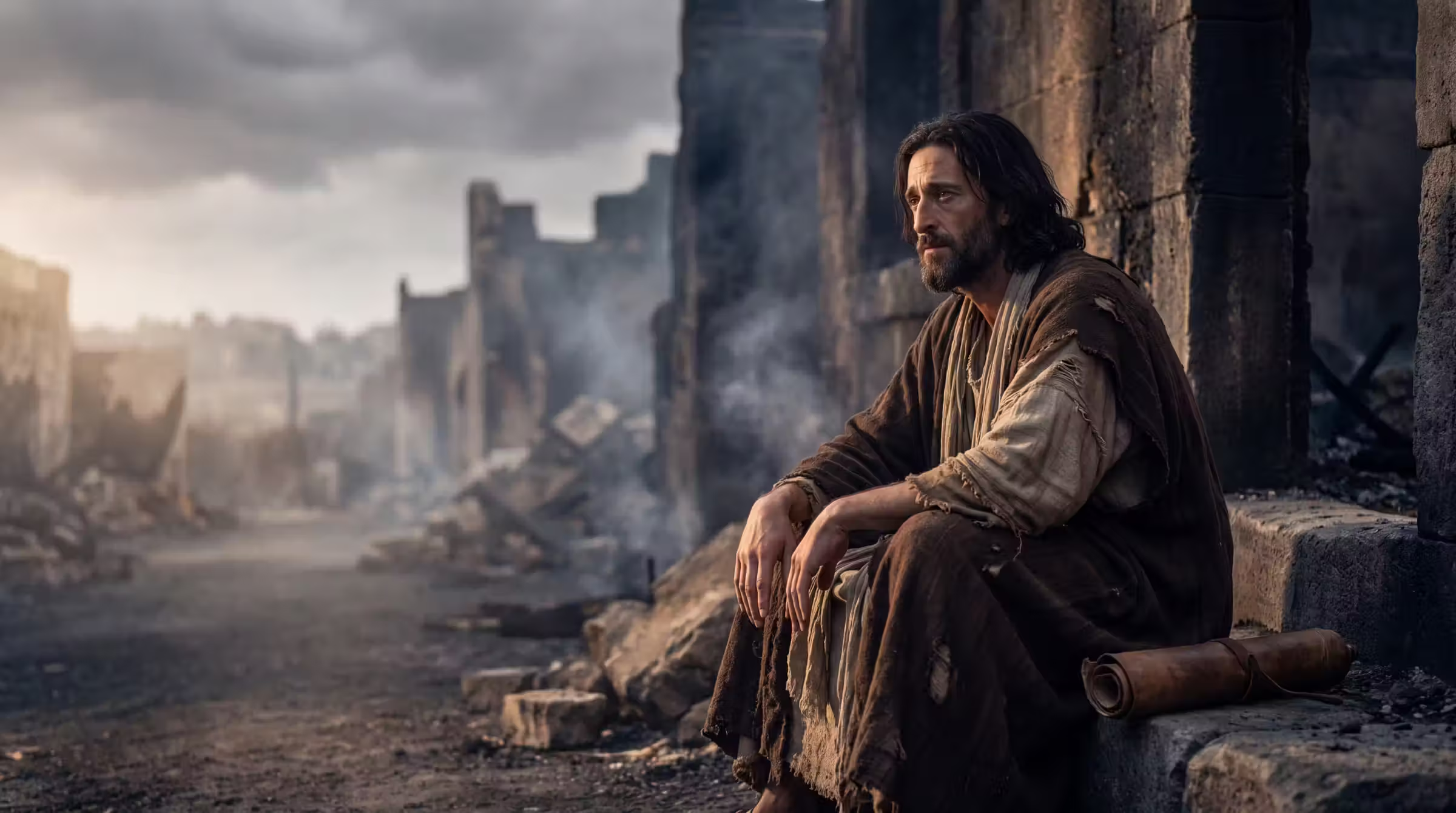
When Jerusalem finally fell — when the Temple was burned, the walls were torn down, and the people were marched into Babylon — Jeremiah stayed behind. He sat in the rubble of the city he had spent his life trying to save and wrote Lamentations: a raw, anguished collection of poems expressing grief with a depth that still startles readers today. "Is it nothing to you, all you who pass by?" he wrote. "Look and see if there is any sorrow like my sorrow."
Why Jeremiah Still Matters
Jeremiah's life raises a question most of us would rather avoid: what do you do when faithfulness leads to suffering rather than success? He preached for four decades without visible results, suffered for telling the truth, and watched everything he warned about come to pass. Yet he kept going. His story is a portrait of a man who understood that obedience and outcome are not always the same thing — and who chose obedience anyway.
Explore Jeremiah's Full Story in the Ark Life Bible Directory
The Ark Life Bible Directory features a full cinematic portrait and complete biography for Jeremiah — plus Isaiah, Elijah, and the prophets who shaped Israel's most turbulent centuries.
Download the free Kings & Prophets Reference Card — completely free.
https://arkbibledirectory.netlify.app/
Continue the Story

People of the Bible
Who Was Isaiah? The Prophet Who Saw Jesus 700 Years Early
Isaiah wrote about a suffering servant, a virgin birth, and a prince of peace — centuries before Jesus was born. Discover the greatest prophet of the Old Testament.

People of the Bible
Who Was Daniel? The Man Who Faced Lions and Refused to Bend
Daniel was taken captive to Babylon as a teenager and rose to advise kings — without ever compromising who he was. Discover the story of one of Scripture's most faithful figures.