Scripture
Why did God harden Pharaoh's heart?
If God hardened Pharaoh's heart, was Pharaoh ever really free? The order of the story answers the fairness question.

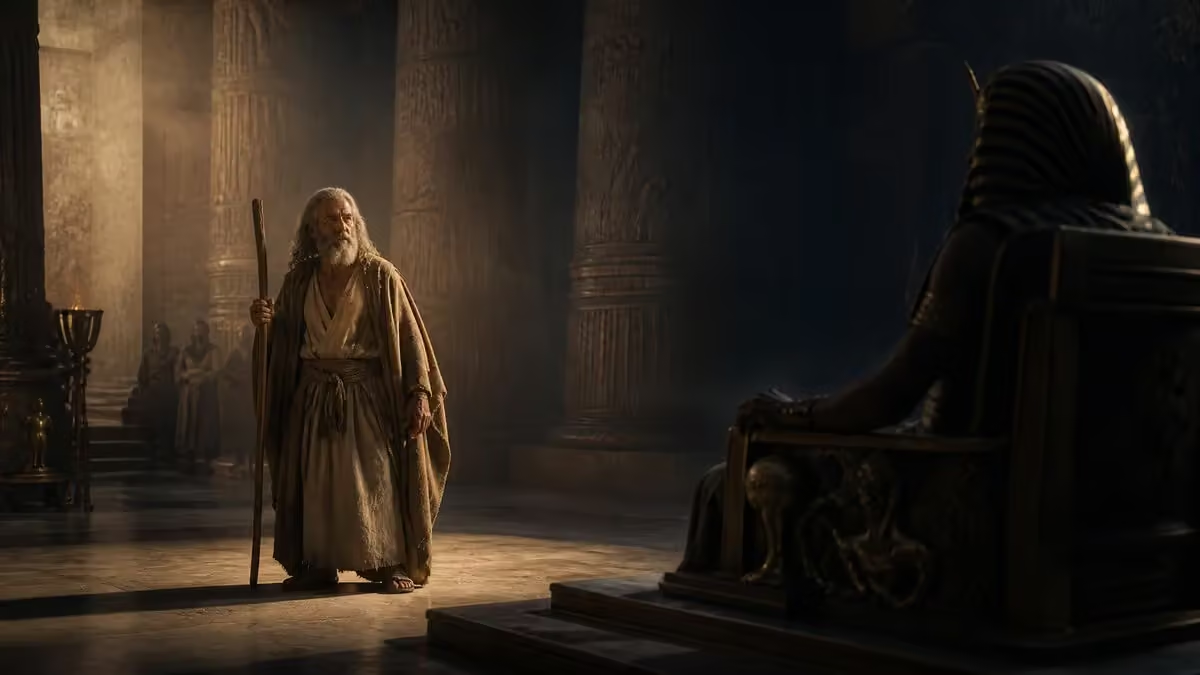
When you read that the LORD hardened Pharaoh's heart, the question comes up fast. Did Pharaoh ever have a real choice, or was he just a prop in someone else's story?
The text answers that question, but not the way most people expect. It answers it with the order of the sentences themselves.
And the Lord hardened the heart of Pharaoh, and he hearkened not unto them; as the Lord had spoken unto Moses.
That is real. It is in the text. But it is not the first thing the text says about Pharaoh's heart.
The Bible tells the hardening story three different ways
Exodus does not say the same thing every time Pharaoh's heart comes up. It says three different things, and it says them in a deliberate order.
First, Pharaoh hardens his own heart.
But when Pharaoh saw that there was respite, he hardened his heart, and hearkened not unto them; as the Lord had said.
God had just lifted a plague. Pharaoh got relief, and used the relief to dig in harder. He does the same thing again in Exodus 8:32 and again in 9:34.
Second, the text describes his heart as hardened, without naming who did it.
And the magicians of Egypt did so with their enchantments: and Pharaoh's heart was hardened, neither did he hearken unto them; as the Lord had said.
Only after both of those does the text say, for the first time, that the LORD hardened Pharaoh's heart. That is Exodus 9:12, the verse at the top of this article. Count the plagues before it. Pharaoh has already resisted through water turned to blood, frogs, lice, flies, and the death of Egypt's livestock. By the time God's hardening enters the sentence, Pharaoh has hardened himself on his own initiative at least twice already.
The order is the argument. Self-hardening first. Then the passive description. Then, and only then, the LORD hardening a heart that has already chosen its direction. Even Exodus 7:13, which reads "and he hardened Pharaoh's heart," uses the same Hebrew verb as the passive statements. The heart is the subject there, not the LORD. It belongs with the "was hardened" verses, not with the verses where God acts.
God says out loud why He is doing it
Scripture does not leave the purpose of the hardening to guesswork. God states it, more than once, in plain speech.
And in very deed for this cause have I raised thee up, for to shew in thee my power; and that my name may be declared throughout all the earth.
And again, right before the sea closes over Egypt's army:
And I will harden Pharaoh's heart, that he shall follow after them; and I will be honoured upon Pharaoh, and upon all his host; that the Egyptians may know that I am the Lord. And they did so.
Three things are named. God's power would be shown. God's name would be declared through all the earth. Egypt would know that the LORD is the LORD. None of those aims is cruelty for its own sake. They are the point of the entire Exodus, a slave nation walking out of the most powerful empire on earth, and everyone watching knowing exactly whose hand did it.
Pharaoh's own religion said a heavy heart condemns you
Here is something the first readers of Exodus would have caught that we often miss.
Exodus uses three different Hebrew verbs across this story: chazaq, to make strong or firm; kabad, to make heavy; and qashah, to make stiff or stubborn. They are not interchangeable window dressing. When Pharaoh hardens his own heart in Exodus 8:15, 8:32, and 9:34, the verb is kabad, to make heavy.
That word was not neutral in Egypt. In Egyptian belief, the dead stood before judgment and their heart was weighed on a scale against the feather of Ma'at. A heart too heavy meant the person was devoured and condemned. Egyptians knew a heavy heart as the mark of guilt that fails the scales.
So when Exodus says Pharaoh made his own heart heavy, it is not borrowing a random figure of speech. It is taking the vocabulary of Egypt's own judgment scene and turning it back on Egypt's king. The man who ruled the empire that weighed the dead against a feather is himself found with a heart too heavy to stand.
Paul reads the story and answers the fairness question
Centuries later, Paul takes up exactly the question this article opened with. If God hardens whom He wills, is God being unfair?
For the scripture saith unto Pharaoh, Even for this same purpose have I raised thee up, that I might shew my power in thee, and that my name might be declared throughout all the earth.
Therefore hath he mercy on whom he will have mercy, and whom he will he hardeneth.
Paul does not soften that. He states it as plainly as Exodus does. Then he anticipates the objection and answers it, not by explaining away God's sovereignty, but by putting the objector in his place.
Nay but, O man, who art thou that repliest against God? Shall the thing formed say to him that formed it, Why hast thou made me thus?
Hath not the potter power over the clay, of the same lump to make one vessel unto honour, and another unto dishonour?
God is the potter. We are the clay. That answer does not erase Pharaoh's guilt. Paul's whole argument only works because Pharaoh's hardening was real and just. It answers the fairness question by reminding the objector who is standing in front of whom.
Where sincere Christians differ
Reformed readers emphasize that the LORD's hardening is sovereign and decisive: "whom he will he hardeneth" (Romans 9:18), and that even Pharaoh's own choices unfold under God's decree.
Arminian and free-will readers emphasize that Pharaoh hardened himself first, and that God's hardening is judicial, confirming a heart that has already resisted every call to repent.
Both camps read the same text; they differ on how to systematize it. Ark Life holds both truths exactly as Scripture presents them: God is fully sovereign, and Pharaoh is fully responsible for his own hardening. We will not soften either side or force the mystery into one philosophical system. The text's own order, self-hardening first and judicial hardening only after, is the plain way it holds the two together.
So did Pharaoh have a choice? And do you?
He did. Real chances, more than once. Relief from a plague, and room to relent (Exodus 8:15). Warning after warning through Moses. Every one of those chances met the same response.
He sinned yet more, and hardened his heart (Exodus 9:34).
That is not a man with no choice. That is a man who kept making the same one.
God's hardening did not begin the story. It confirmed where the story was already headed. Self-hardening first. Then the hardening that seals it.
The purpose was never cruelty. It was power shown, a name declared, and a people who would know that the LORD is the LORD.
Pharaoh's heart is not a museum piece from ancient Egypt. It is the same heart every person carries, the kind that can hear the truth, feel the relief, and still choose to harden.
God is still willing to soften what has not yet sealed itself shut. The mercy that answered Israel's cry is still open to whoever will stop resisting.
You are not Pharaoh yet. But you are being asked the same question he was asked, plague after plague: will you let go, or hold on?
Continue the Story

Scripture
Biblical Typology: How Does Jesus Connect to Israel?
New Life Through the Waters From the very beginning, water has played a pivotal role in God's plan for His people. In Genesis, new life emerged through the waters of creation.
Scripture
What is the Year of Jubilee? | Hitting the Reset Button on Life
Title: Jesus Christ: The Eternal Jubilee Scripture Reading: Leviticus 25:8-13; Luke 4:16-21 Opening Reflection: In the Old Testament, God instituted the Year of Jubilee—a sacred time of liberation, restoration, and renewal.