Scripture
Why did God rest on the seventh day?
God never got tired. So what does it mean that the Creator of everything stopped and rested on the seventh day?

If God is all-powerful, why would He need a day off?
That is the question underneath Genesis 2. The text says plainly that God rested on the seventh day. But rested from what? An all-powerful God does not run out of strength.
And on the seventh day God ended his work which he had made; and he rested on the seventh day from all his work which he had made. And God blessed the seventh day, and sanctified it: because that in it he had rested from all his work which God created and made.
The answer is in the Hebrew word itself. "Rested" is shabath, and its core meaning is not recovery. It means to cease, to desist, to stop. God did not collapse after a long week. He stopped, because there was nothing left to do.
God did not rest because He was tired
Genesis 1:31 already told us how the sixth day ended. "And God saw every thing that he had made, and, behold, it was very good." The work was complete, and it was good. There was nothing unfinished to recover from.
Genesis 2:1 says it again, plainly: "Thus the heavens and the earth were finished, and all the host of them." Finished. Not abandoned. Not paused for exhaustion. Finished.
And Scripture will not let us read fatigue into this rest anywhere else, either.
Hast thou not known? hast thou not heard, that the everlasting God, the Lord, the Creator of the ends of the earth, fainteth not, neither is weary? there is no searching of his understanding.
The God who made the universe does not faint. He does not grow weary. Psalm 121:4 says He does not even sleep. So when Exodus 31:17 adds that God "was refreshed," that is not the Bible contradicting itself. It is God speaking to us in terms we understand, the way a parent describes a feeling to a child who has no other vocabulary for it yet. The rest is the settled satisfaction of a finished work, not the recovery of strength that was never lost.
The seventh day was blessed before anyone was told to keep it
Here is something easy to miss. Genesis 2:3 blesses and sanctifies the seventh day, sets it apart, long before anyone is commanded to observe it. The rhythm of work and rest was built into creation itself, not bolted onto the law later as an afterthought.
The first time anyone is actually told to keep the Sabbath is not at Mount Sinai. It is in the wilderness, with the manna, before Israel ever reaches the mountain. God gave two days' bread on the sixth day so the people would have no excuse to work on the seventh.
And he said unto them, This is that which the Lord hath said, To morrow is the rest of the holy sabbath unto the Lord.
So the pattern of six and one, labour and rest, is older than the covenant at Sinai. It is woven into how the world was made.
The Sabbath was a sign, and a sign always points past itself
When the fourth commandment arrives at Sinai, it is the only one of the Ten anchored in creation rather than in the exodus.
For in six days the Lord made heaven and earth, the sea, and all that in them is, and rested the seventh day: wherefore the Lord blessed the sabbath day, and hallowed it.
But the Sabbath is called something very specific, twice, in the same chapter where it is given a death-penalty seriousness.
Speak thou also unto the children of Israel, saying, Verily my sabbaths ye shall keep: for it is a sign between me and you throughout your generations; that ye may know that I am the Lord that doth sanctify you.
A sign. Not the destination. A sign exists to point at something beyond itself. Ezekiel 20:12 calls it the same thing: a sign between God and Israel. The Sabbath marked Israel out as God's covenant people. It was never meant to be the final word.
Paul says as much, looking back at it from the other side of the cross. "Which are a shadow of things to come; but the body is of Christ" (Colossians 2:17). A shadow tells you something real is casting it. The Sabbath was the shadow. Christ is the substance.
Jesus said the Sabbath was made for man
When the Pharisees challenged Jesus over His disciples plucking grain on the Sabbath, His answer went straight to the point of the whole institution.
And he said unto them, The sabbath was made for man, and not man for the sabbath: Therefore the Son of man is Lord also of the sabbath.
He was not loosening the day into nothing. He was claiming to be the one the day had always been about. The sign was never going to outrank the thing it signified.
John records Him saying something that also answers a quieter question: did God's creation rest leave Him permanently idle? "My Father worketh hitherto, and I work" (John 5:17). God's rest at creation was the completion of one finished work. It did not strand Him in inactivity forever. The Lord of the Sabbath keeps working, even now, toward the rest He is bringing His people into.
Where sincere Christians differ
Bible-believing Christians do not all land in the same place on whether the seventh-day Sabbath still binds the church.
Some hold that the Sabbath was instituted at creation and never repealed, so Saturday rest remains required of every believer. Others hold that the command carries forward but the day has moved to Sunday, the Lord's Day, marked by the resurrection. Most evangelicals hold that the Sabbath was a covenant sign given specifically to Israel, fulfilled in Christ, so that no particular day now binds the conscience, leaving the day itself to each believer, as Paul does in Romans 14:5-6 and Colossians 2:16-17.
Ark Life holds that third view. The Sabbath was a sign to Israel, and Christ is the substance the sign pointed to all along. We do not bind a day on any believer's conscience. The creation rhythm of work and rest remains good and wise. But the rest that truly remains is not a day on a calendar. It is entered by faith.
So why did God rest on the seventh day?
Not because He was tired. He never is.
He rested because the work was finished, and it was very good.
He blessed the day and set it apart before anyone was commanded to keep it, because rest was part of the design from the start.
He gave Israel the Sabbath as a sign, pointing to a rest that was still to come.
He sent His Son, who claimed to be Lord of that sign, and who is still working to bring that rest to pass.
There remaineth therefore a rest to the people of God.
That rest is not behind us at Eden, and it is not locked to a day of the week. It is open, right now, to everyone who believes.
Have you entered it? Not a day off. Not a ritual kept. Rest, from trying to finish the work yourself, because Christ already finished it.
Continue the Story
Scripture
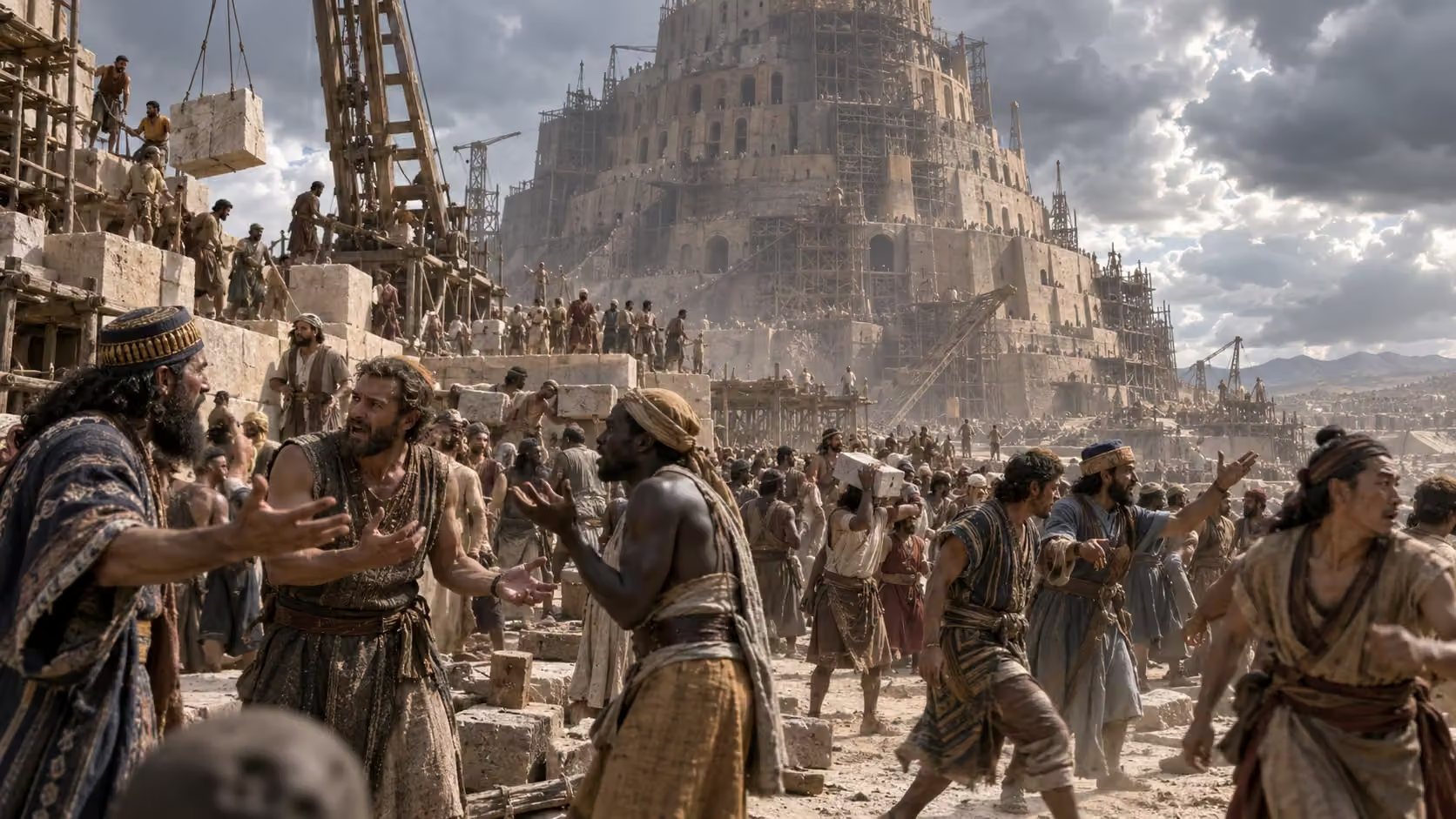
What happened at the Tower of Babel, and why does it matter?
Babel was never about how tall the tower was. It was about a name men grabbed for themselves, instead of the name God gives.

Scripture
Genesis Chapter 1: The Foundation of Everything
Overview Genesis 1 is not merely an account of creation—it is the theological foundation upon which the entire Bible rests.