
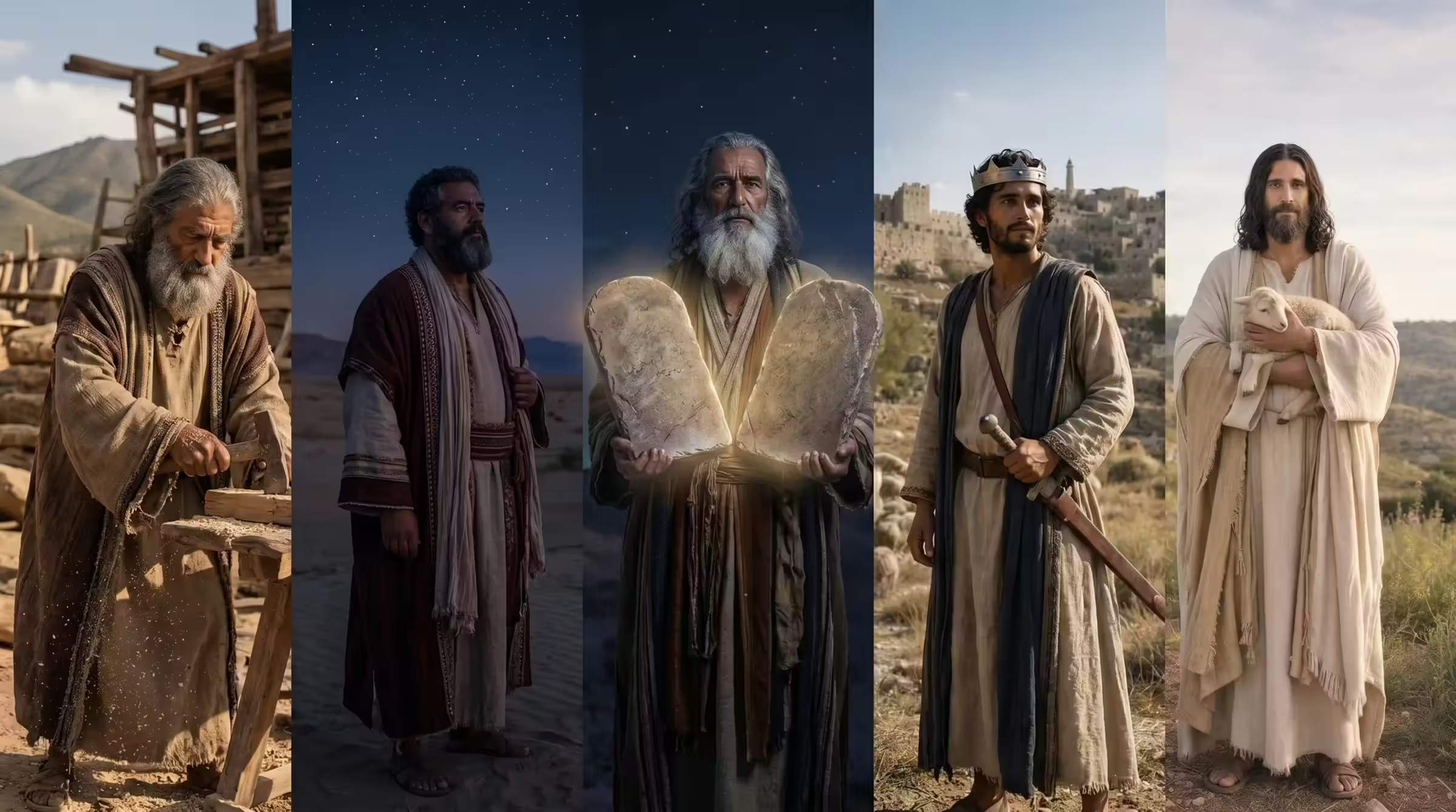
People of the Bible
Bible Characters in Chronological Order: A Complete Timeline Guide
Trace people in the Bible in chronological order — from Adam and Noah through the patriarchs, kings, prophets, and into the New Testament.

The Bible spans thousands of years of human history — from the creation of the world to the visions of the final age. Understanding bible characters in chronological order transforms the way you read Scripture, revealing the connections between people and events that span centuries. This timeline guide walks you through the most important people in the bible in chronological order, helping you see the grand arc of God's story from beginning to end.
Era 1: The Beginning — Adam, Eve, Cain, Abel, Noah (Before 2000 BC)
Adam and Eve were humanity's first couple, living in perfect relationship with God until their choice in the Garden set the human story on its current trajectory. Cain and Abel demonstrate the depth of human brokenness in the Bible's first recorded act of violence. Noah emerged as a righteous man in a corrupt world, built the ark, and preserved humanity through the flood — resulting in the rainbow covenant.
Era 2: The Patriarchs — Abraham, Isaac, Jacob, Joseph (2000–1700 BC)
Abraham is the pivot point of the Old Testament — called from Ur with a covenant promise that through his lineage all peoples would be blessed. Isaac continued the covenant line. Jacob, the trickster who wrestled with God, became Israel and fathered 12 sons who became 12 tribes. Joseph, sold into slavery, rose to save Egypt and ultimately his entire family.
Era 3: Egypt and the Exodus — Moses, Aaron, Miriam (1700–1400 BC)
Moses is the most significant bible character in chronological order in the Old Testament era. Raised in Pharaoh's palace, called at a burning bush, he led Israel out of Egypt, received the Law on Sinai, and guided the nation through 40 years of wilderness. Aaron served as the first high priest. Miriam led Israel's women in worship after the Red Sea crossing.
Era 4: Conquest and Judges — Joshua, Deborah, Gideon, Samson, Ruth, Samuel (1400–1050 BC)
Joshua led Israel across the Jordan into the Promised Land. Deborah served as prophetess, judge, and military commander. Gideon led 300 men to defeat thousands. Samson's great strength met great moral failure. Ruth demonstrated extraordinary covenant loyalty and entered the lineage of Jesus. Samuel served as the last judge and first prophet-kingmaker of Israel.
Era 5: Kings and Prophets — Saul, David, Solomon, Elijah, Isaiah, Jeremiah, Daniel, Esther (1050–400 BC)
Saul was Israel's first king whose pride led to his downfall. David, Israel's greatest king, received the covenant promise of an eternal throne fulfilled in Christ. Solomon built the Temple and presided over Israel's golden age before turning to idolatry. Elijah confronted false prophets with fire from heaven. Isaiah wrote the most precise messianic prophecies, 700 years before Jesus. Jeremiah wept through Jerusalem's fall and announced the new covenant. Daniel maintained integrity in Babylonian exile. Esther saved the Jewish people from genocide in the Persian empire.
Era 6: The New Testament — John the Baptist, Jesus, the Apostles, Paul (4 BC – AD 100)
John the Baptist prepared the way for Christ. Mary said yes to bearing the Son of God. Jesus — the center of all biblical history — lived, died, and rose again. The twelve apostles carried his mission forward. Paul, converted from persecutor to missionary, planted churches across the Roman Empire and wrote 13 New Testament letters. His writings, along with those of the apostles, form the theological foundation of Christian faith.
When you arrange bible characters in order of when they lived — people in the bible in order from Adam to Paul — the Bible's message becomes clearer. It is one continuous story of a God who pursues, redeems, and restores. Explore character profiles and timelines at The Ark Life Bible Directory.
Continue the Story
People of the Bible
Bible Characters in the New Testament: The Complete Guide
The complete guide to bible characters in the New Testament — from Jesus and the twelve apostles to Paul, Mary Magdalene, and the early church leaders.
People of the Bible
Female Bible Characters: The Most Influential Women in Scripture
Meet the most powerful female bible characters — from Deborah and Esther to Mary and Mary Magdalene — and discover why their stories still matter.