Scripture
What does Psalm 23 mean?
Most people have heard Psalm 23 read at a funeral. Few have been shown what it actually says, verse by verse.
Most people have heard Psalm 23 read at a funeral.
The Lord is my shepherd. The valley of the shadow of death. A psalm that gets read over a casket and then forgotten for another decade.
But Psalm 23 was not written to be read once a decade. It was written by a man who had actually kept sheep, about a God he had come to know the same way he knew his flock. It opens with a claim that changes everything that follows.
A Psalm of David. The Lord is my shepherd; I shall not want.
That is the whole psalm in one sentence. Everything after it is David explaining what he means.
The shepherd who provides everything the sheep needs
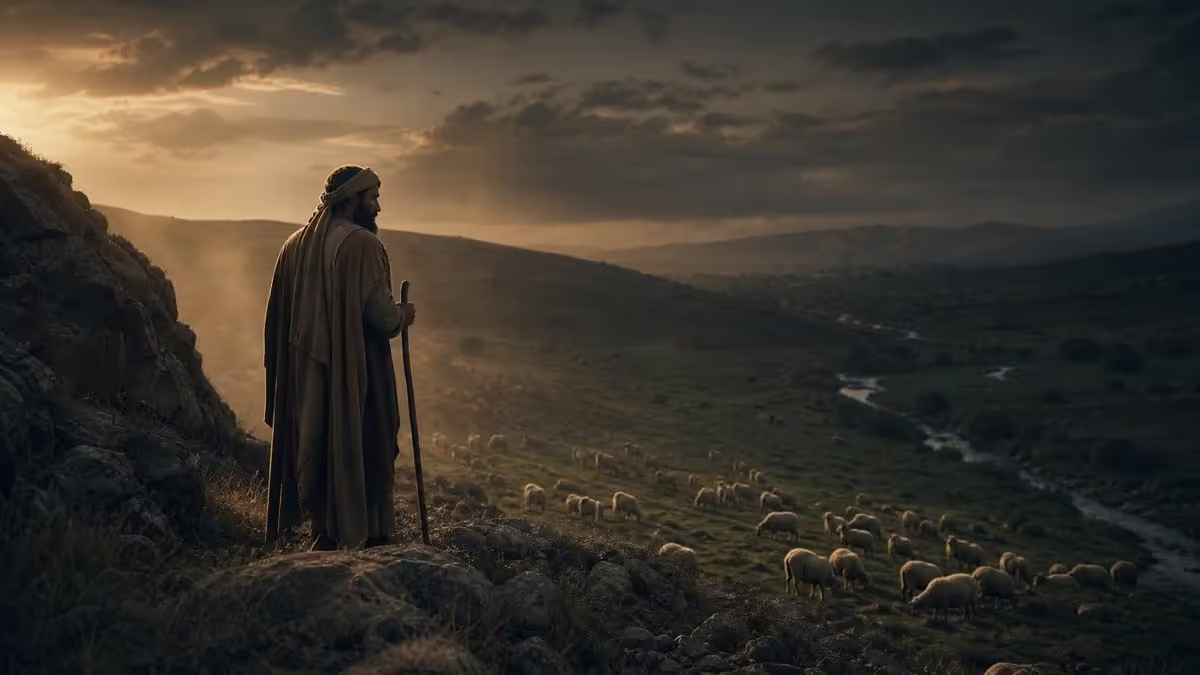
Before David kept Israel, he kept sheep. He knew what a flock needed because he had spent years giving it to them. Grass. Water. Direction. Protection from animals bigger than he was. A sheep does not feed itself well, and it does not find rest on its own.
He maketh me to lie down in green pastures: he leadeth me beside the still waters. He restoreth my soul: he leadeth me in the paths of righteousness for his name's sake.
Notice who is doing the work in these two verses. He maketh. He leadeth. He restoreth. He leadeth again. The sheep is not given a map and sent off to graze. The shepherd takes it to the pasture, takes it to the water, and when its soul is worn down, the shepherd restores it.
And notice the reason given at the end of verse 3: for his name's sake. David is not led in right paths because he earned it. He is led there because of who the shepherd is. That is the whole psalm's logic in one phrase. The sheep contributes nothing to the quality of the shepherding. The shepherd's own character is what is on the line.
Walking through the valley without being alone in it
Then the psalm turns, and this is the verse everyone actually remembers.
Yea, though I walk through the valley of the shadow of death, I will fear no evil: for thou art with me; thy rod and thy staff they comfort me.
Read it carefully. David does not say the valley disappears. He says he walks through it. The green pastures and still waters of verses 2 and 3 do not stay forever; there is a valley, and it has a shadow, and the shadow belongs to death.
This is why the verse gets read at funerals. It names the darkest road a person walks and does not pretend the road is not dark.
But look at what actually drives out the fear. It is not the absence of danger. It is the presence of the shepherd. Thou art with me. Four words, and they carry the whole verse.
The rod and the staff were tools a shepherd actually carried. The rod struck at what threatened the flock. The staff pulled a sheep back from where it had wandered, or leaned it steady on rough ground. David is not describing comfort in general. He is describing a shepherd who is both willing to fight for the sheep and willing to correct it, and finding comfort in both.
A table, an anointing, and a cup that will not run dry
The psalm does not stay in the valley. It climbs out into a scene that would be strange anywhere else in Scripture.
Thou preparest a table before me in the presence of mine enemies: thou anointest my head with oil; my cup runneth over.
A table set in front of the very people who want to see David fail. He is not hidden from his enemies. He is fed in plain sight of them, while they are still there, while the danger has not necessarily passed.
That is worth sitting with. God's provision for His own does not wait for the enemies to leave the room.
The anointing with oil and the overflowing cup describe a guest treated with honor, not a prisoner kept alive. This is not survival. It is abundance, given in the exact place abundance looks impossible.
Followed by goodness and mercy, not just surviving to the end
The psalm closes by widening out from one scene to a whole life.
Surely goodness and mercy shall follow me all the days of my life: and I will dwell in the house of the Lord for ever.
Not goodness and mercy occasionally. Not goodness and mercy on the good days. All the days. The shepherd who led him to pasture, restored his soul, and set a table before his enemies does not stop being that shepherd once the crisis passes. Goodness and mercy follow him the way a shepherd's own dogs follow a flock, watching the rear, closing the gaps.
And the psalm does not end at the grave. It ends in a house, dwelling there forever. The valley in verse 4 was real. It was not the destination.
The shepherd David wrote about, and the one he wrote toward
David wrote this psalm out of a real trade. He had actually counted sheep, actually fought off what came for them, actually slept near the flock so nothing could reach it without reaching him first. When he calls the Lord his shepherd, he is not reaching for a pretty word. He is describing the one job he understood from the inside, and saying God does it better than he ever could.
Centuries later, a greater Son of David stood in front of people who knew this psalm by heart and told them what kind of shepherd He was.
I am the good shepherd: the good shepherd giveth his life for the sheep.
David's shepherd led, restored, protected, fed, and stayed with him all his days. Jesus did all of that and then did the one thing no earthly shepherd ever had to do. He laid down His own life for the flock.
Psalm 23 was always pointing somewhere. It ends at a house. It was always going to end at a person.
So what does Psalm 23 mean?
It means the Lord provides what a sheep cannot provide for itself. Pasture. Water. A restored soul. Right paths, not for the sheep's merit, but for His own name.
It means the valley is real, and walking through it with the shepherd beats standing outside it alone.
It means a table can be set in front of your enemies before they are gone, because provision does not wait on danger to clear.
It means goodness and mercy are not occasional. They follow every day, and the road ends in a house, not a grave.
The Lord is your shepherd. That is the whole answer.
Is He yours? Has He led you yet through a valley you are still walking?
Continue the Story
Scripture
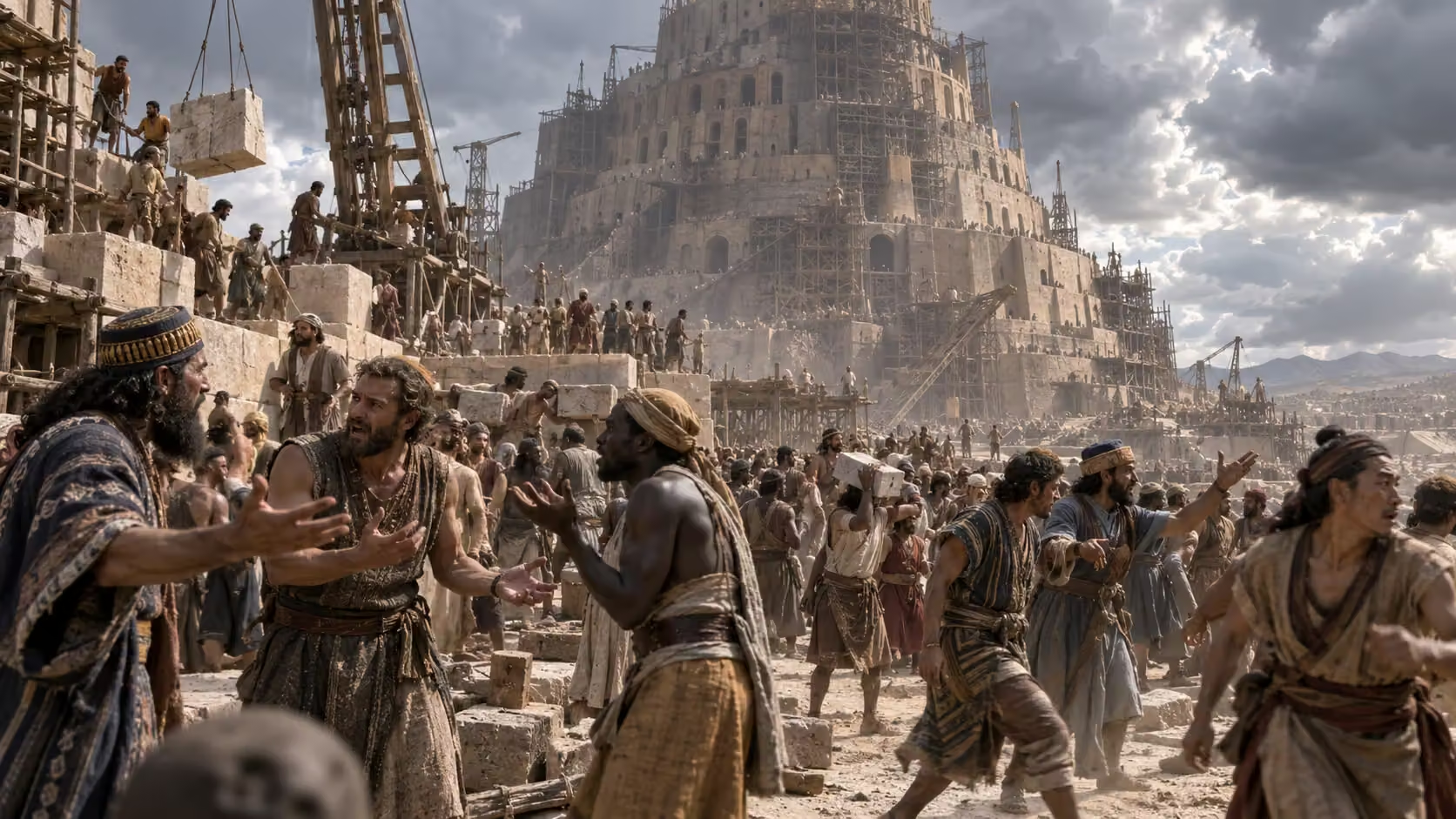
What happened at the Tower of Babel, and why does it matter?
Babel was never about how tall the tower was. It was about a name men grabbed for themselves, instead of the name God gives.
Scripture
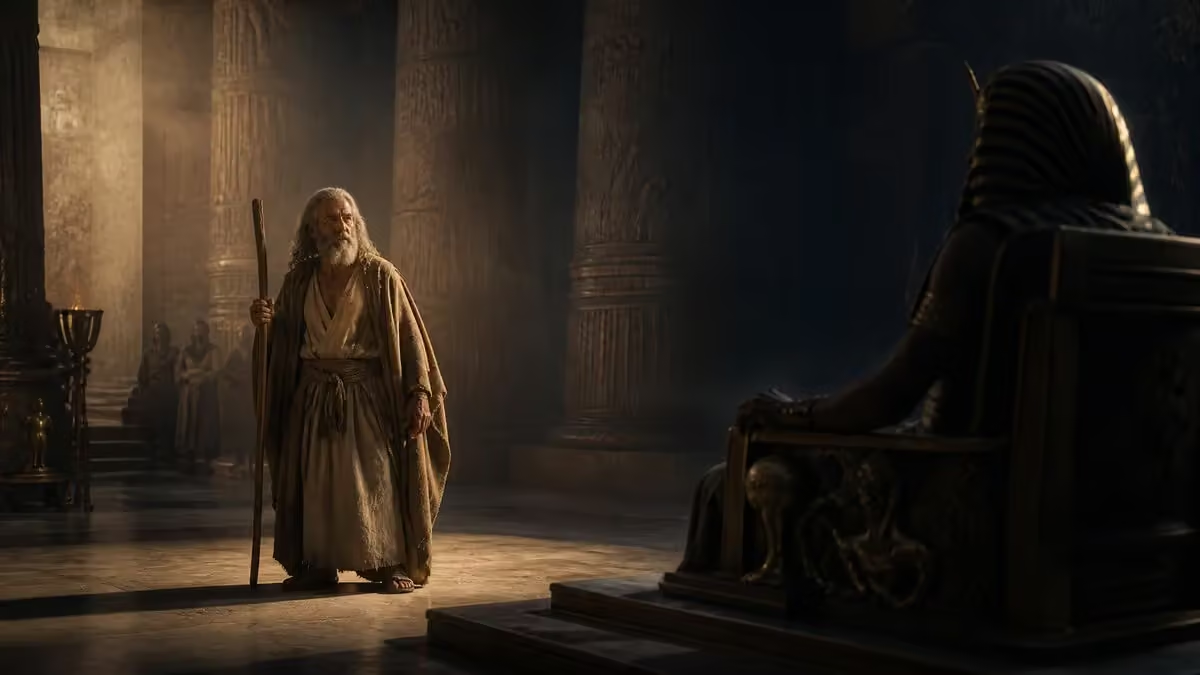
Why did God harden Pharaoh's heart?
If God hardened Pharaoh's heart, was Pharaoh ever really free? The order of the story answers the fairness question.