

People of the Bible
The Story of Esther: Courage, Providence, and "Such a Time as This"
The story of Esther is the only book in the Bible that never mentions the name of God — and yet it is one of the most compelling demonstrations of divine providence in all of Scripture.

The story of Esther is the only book in the Bible that never mentions the name of God — and yet it is one of the most compelling demonstrations of divine providence in all of Scripture. It's the story of a young Jewish woman who became queen of Persia and then risked her life to save her people.
Found in the book of Esther, this narrative takes place during the reign of King Ahasuerus (also known as Xerxes I) in the Persian Empire, around 480 BC — during the period when many Jews remained in Persia following the Babylonian exile.
Who Was Esther?
Esther was a young Jewish woman living in Susa, the Persian capital. Her Hebrew name was Hadassah, meaning "myrtle." Esther was her Persian name.
She was an orphan. Both her father and mother had died, and she had been raised by her older cousin Mordecai, who treated her like his own daughter (Esther 2:7). Esther was described as "lovely in form and features" — beautiful both physically and in character.
What defined Esther, ultimately, was not her beauty but her courage.
How Esther Became Queen
The story begins with a royal crisis. King Ahasuerus threw a lavish feast and commanded his queen, Vashti, to appear before him wearing her royal crown — likely to display her beauty to his guests. Vashti refused. Furious, Ahasuerus removed her as queen.
His advisors suggested a search throughout the empire for a new queen. Beautiful young women were gathered from every province and brought to the palace to undergo twelve months of beauty treatments before appearing before the king.
Esther was among them. Mordecai had counseled her not to reveal her Jewish identity (Esther 2:10). When Esther appeared before the king, he was more drawn to her than any other woman. He set the royal crown on her head and made her queen.
Haman's Plot to Destroy the Jews
The antagonist of the story is Haman, a powerful official whom Ahasuerus had elevated above all others. The king commanded everyone to bow down to Haman. Mordecai refused.
Haman was furious — but targeting Mordecai alone wasn't enough. When he learned Mordecai was Jewish, he devised a plan to destroy every Jew in the entire Persian Empire. He went to the king with his scheme, offering to pay a vast sum into the royal treasury. Ahasuerus gave his signet ring to Haman and told him to handle it.
An edict was sent throughout the empire: on a specific date — determined by casting lots, or "purim" — all Jews were to be killed and their possessions plundered.
Mordecai tore his clothes and mourned in sackcloth. When Esther heard, she was deeply distressed. Through a messenger, Mordecai urged Esther to go before the king and plead for her people.
"For Such a Time as This"
There was a problem. In the Persian court, no one could appear before the king unsummoned — not even the queen. Anyone who approached the inner court without being called faced death unless the king extended his golden scepter. Esther had not been summoned for thirty days.
She told Mordecai. His response has echoed through centuries: "Do not think that because you are in the king's house you alone of all the Jews will escape. For if you remain silent at this time, relief and deliverance for the Jews will arise from another place, but you and your father's family will perish. And who knows but that you have come to your royal position for such a time as this?" (Esther 4:13–14).
Esther asked Mordecai to gather all the Jews in Susa to fast for her for three days. She and her attendants would fast too. "And if I perish, I perish," she said (Esther 4:16).
Then she went to the king.
The Reversal
Ahasuerus extended his scepter. He asked what she wanted, offering up to half the kingdom. Esther invited him and Haman to a banquet. At the banquet, she invited them to another. And at that second banquet, she revealed the truth: she was a Jew, and someone had plotted to destroy her and all her people.
"Who is he? Where is the man who has dared to do such a thing?" the king demanded.
"An adversary and enemy! This vile Haman!" (Esther 7:5–6).
The king was enraged. Haman was hanged on the very gallows he had built for Mordecai. Mordecai was elevated to Haman's position. A new edict was sent throughout the empire allowing the Jews to defend themselves. On the day Haman had chosen for their destruction, the Jews were victorious.
The Jewish feast of Purim — still celebrated today — commemorates this deliverance.
What the Story of Esther Teaches Us
The story of Esther teaches that God works through ordinary people in extraordinary circumstances — often without announcing himself. The absence of God's name in the book is almost certainly intentional. Readers are meant to see his fingerprints everywhere: in the timing, in the coincidences, in the reversal of fortune.
You don't have to see God to trust that he's present. The story of Esther asks us to consider our own positions — our relationships, our access, our circumstances — and ask: what if this is not accidental? What if we are here for such a time as this?
Esther's courage grew from her community (Mordecai's mentorship, the community's fasting), her clarity (she knew what was right), and her conviction (she was willing to die for it).
Explore Esther's Story at The Ark Life Bible Directory
From Esther to Ruth, Mary to Deborah, The Ark Life Bible Directory features in-depth guides to the most remarkable women in Scripture. Discover their stories — and the God who placed them in history for a purpose.
Visit livethearklife.com.
Continue the Story
People of the Bible
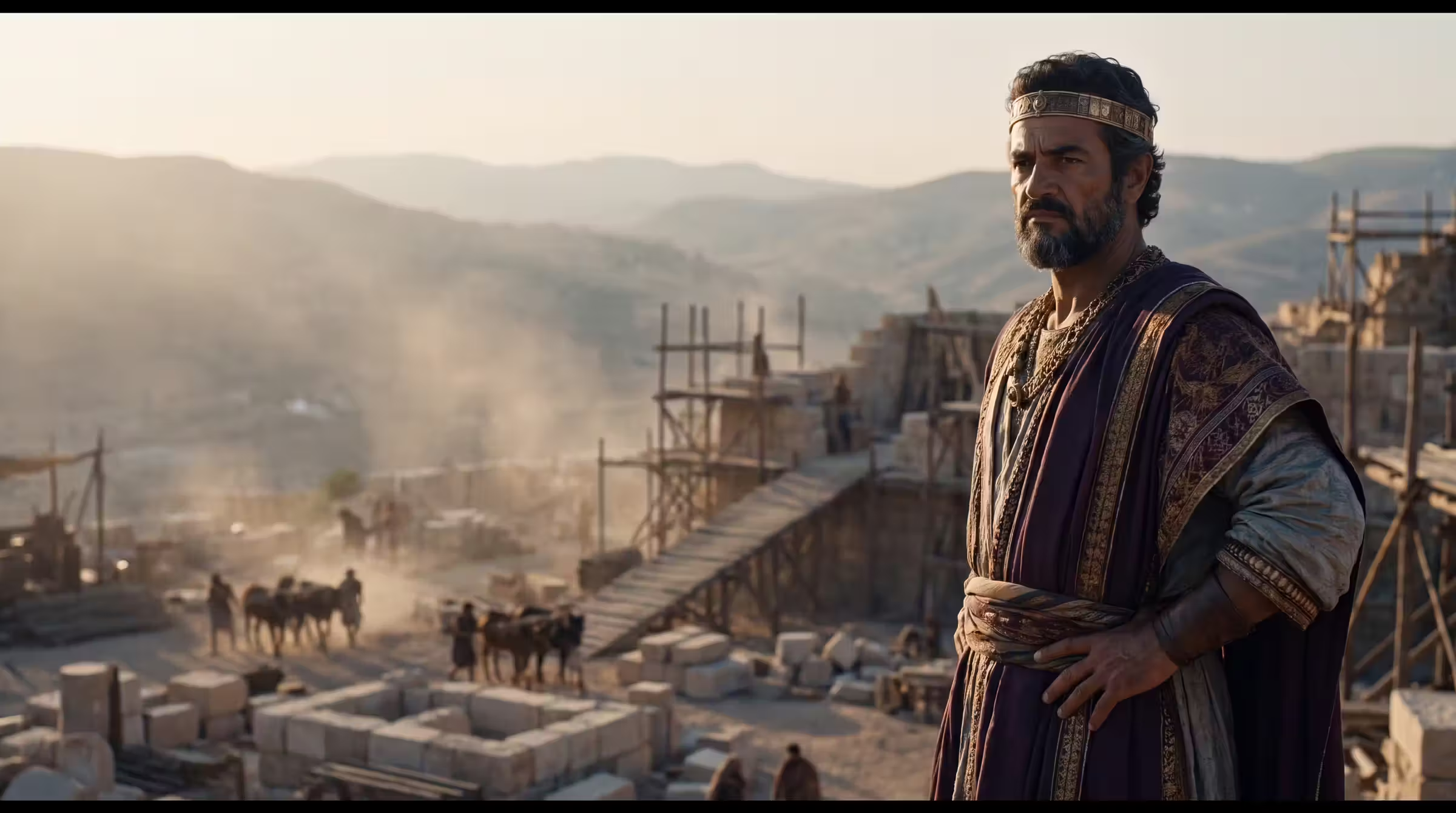
Who Was Omri?
Omri was a powerful but wicked king of Israel who built Samaria and led the nation into idolatry, setting the stage for disaster.
People of the Bible
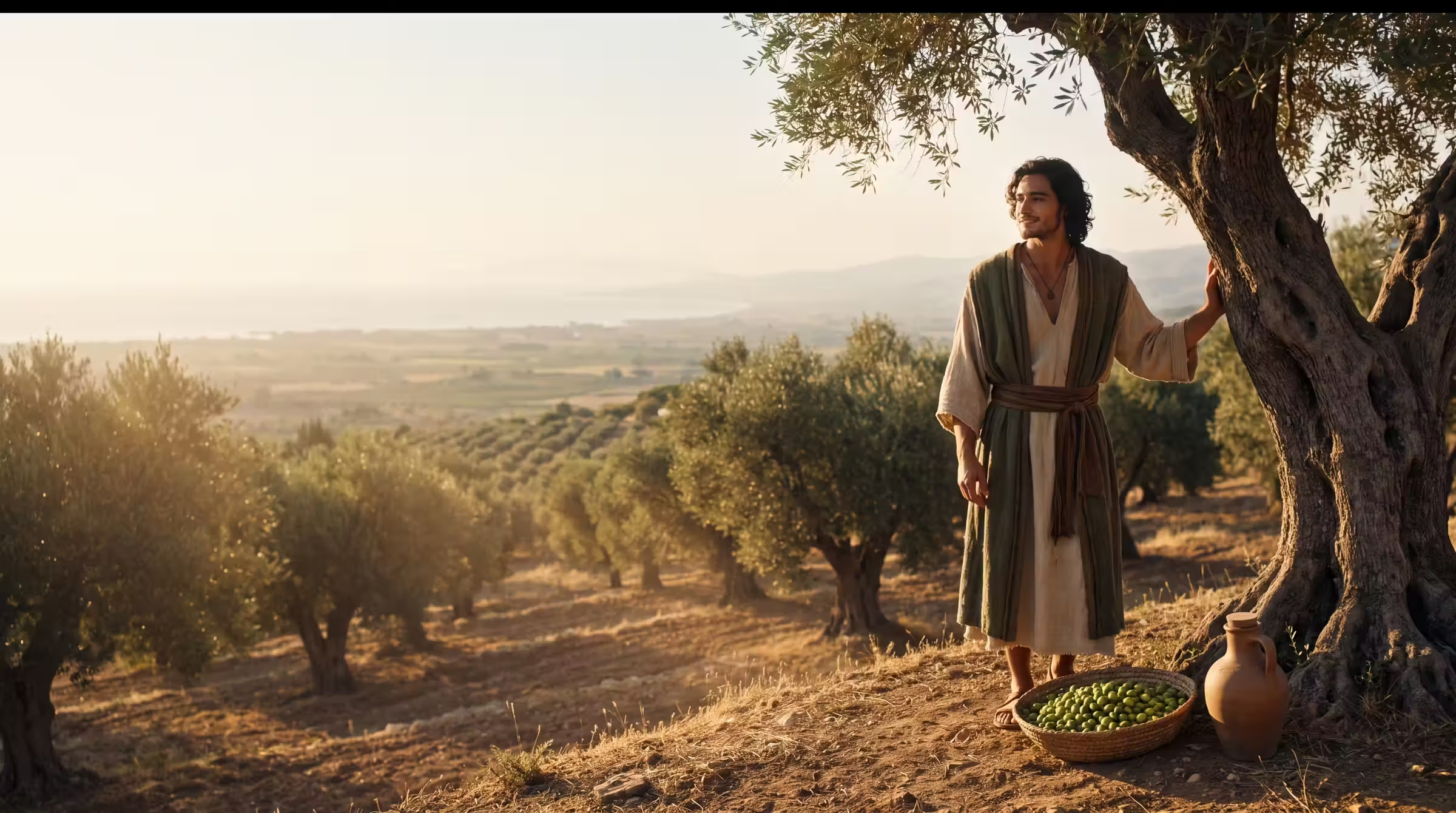
Who Was Asher?
Asher, the eighth son of Jacob, received a blessing of rich food and royal delicacies, symbolizing a life of contentment and God's faithful provision.