Biblical World Tracker

First Assyrian Inscription Found in Jerusalem

Credibility: Confirmed

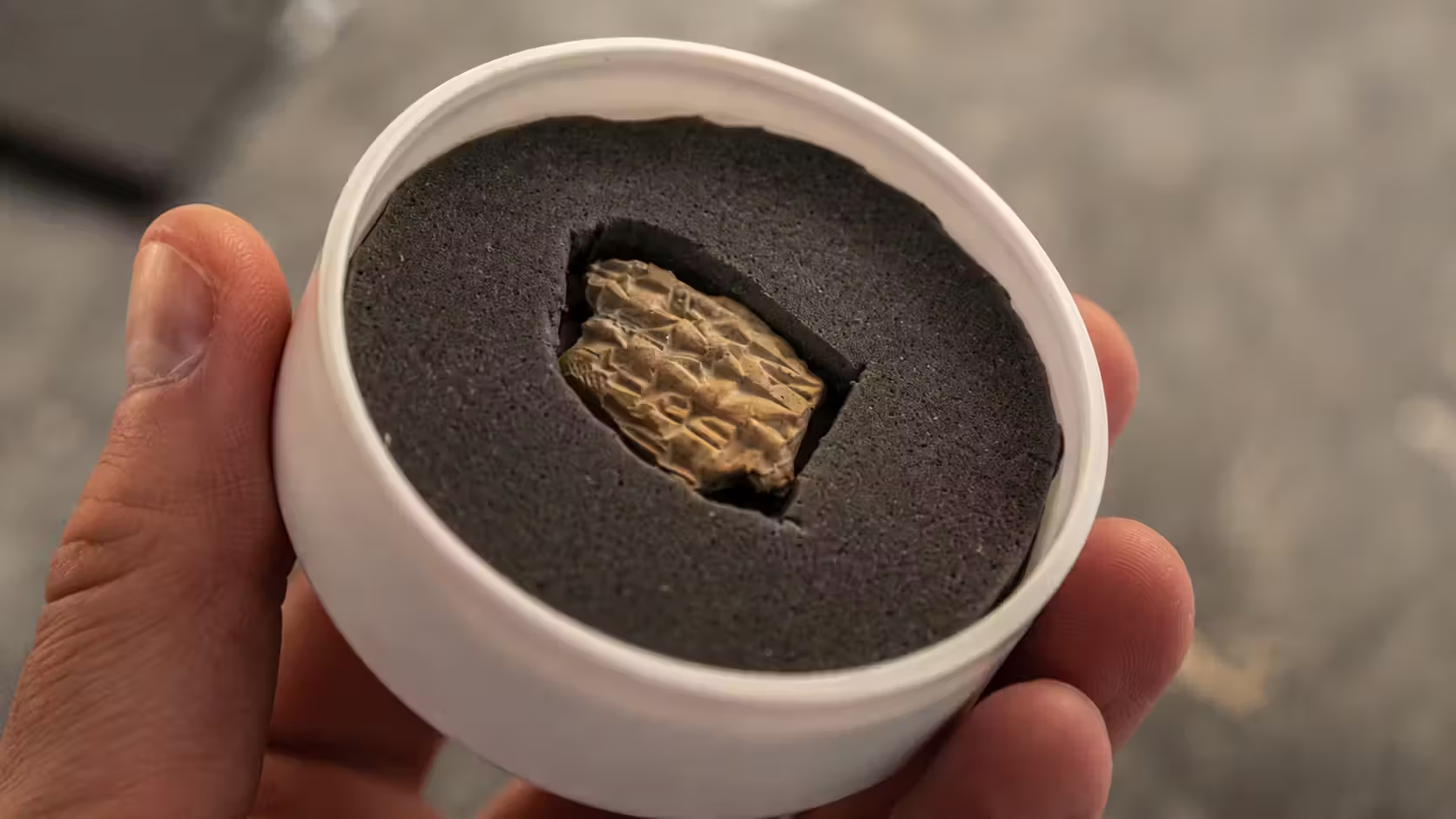
A fragment of clay barely 2.5 centimetres across, found while wet-sifting soil from the Ophel excavation in Jerusalem, carries cuneiform writing in Akkadian - the first Assyrian inscription ever recovered in the city. What survives of the text is a demand: tribute owed to the Assyrian court, to be paid by the first of the month of Av. It is a scrap of the machinery behind the years when Judah paid Assyria to be left alone.

Recovered by wet-sifting from a controlled Israel Antiquities Authority excavation, read by three named Assyriologists, and corroborated by petrographic analysis placing the clay in the Tigris basin rather than Judah. Presented at the IAA/Hebrew University/Tel Aviv University conference in October 2025; the full academic publication is still to come, and the Judean king it was addressed to is not named on the fragment.

Find
Inscription
Place
The Ophel, Jerusalem, Jerusalem, Israel
Period
8th-7th century BC
Announced
October 2025

The find

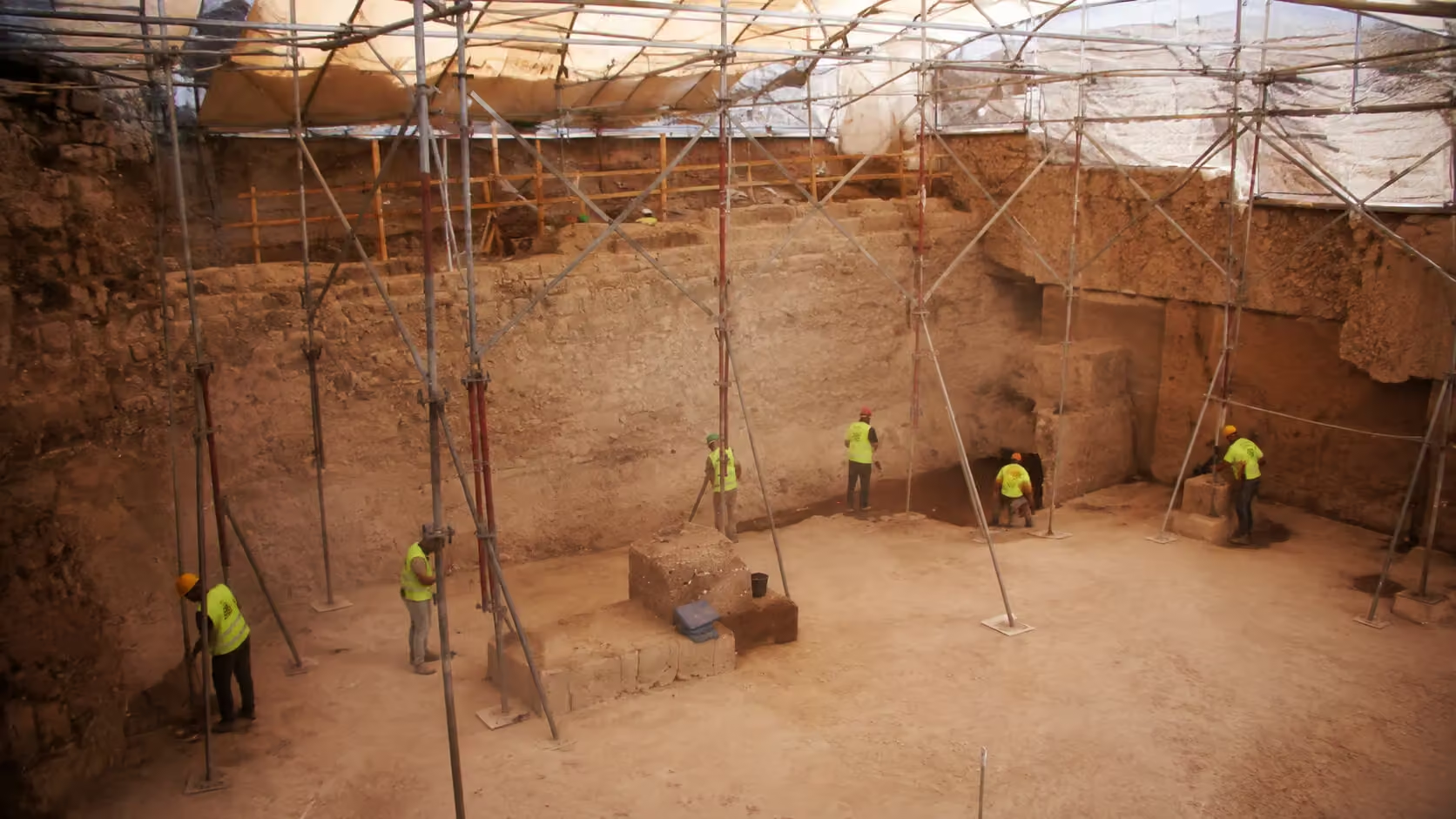
The fragment was recovered by Moriah Cohen while wet-sifting earth removed from the Israel Antiquities Authority excavation along the western edge of the Ophel, the slope between the City of David and the Temple Mount. The dig is directed by Dr. Ayala Silberstein. The piece measures about two and a half centimetres - small enough that it survived only because the soil was being washed and sorted rather than carted away.

What it says

The text was read by Dr. Filip Vukosavovic and Dr. Anat Cohen-Weinberger of the Israel Antiquities Authority with Dr. Peter Zilberg of Bar-Ilan University. It is written in cuneiform, in Akkadian, the administrative language of the Assyrian empire, and what remains of it is a deadline: tribute is to be delivered by the first day of the month of Av. A chariot officer is mentioned. This is not a monument or a boast. It is paperwork.

Why the clay matters as much as the writing

Petrographic analysis - reading the mineral content of the clay itself - found that the fragment was not made from local material. Its composition corresponds to the geology of the Tigris basin, the region holding the Assyrian capitals of Nineveh, Ashur and Nimrud. The object was not written in Jerusalem by someone imitating Assyrian script. It was made in Assyria and carried to Jerusalem, which is what makes it evidence of correspondence rather than of influence.

Where it sits in Scripture

Judah spent much of the eighth and seventh centuries BC as a tributary of Assyria, and the biblical record says so plainly rather than quietly. Ahaz sent silver and gold from the temple and the palace to buy Assyrian help against Aram and Israel. Hezekiah later stripped the temple doors to meet Sennacherib's demand. The fragment does not name its king, and the excavators are careful to say it could belong to the reign of Hezekiah, Manasseh, or Josiah early on. What it supplies is the other side of the exchange - the demand itself, in the empire's own hand, in the city that had to answer it.

In Scripture

Sources

More from the tracker

All entries
  • Credibility: Confirmed

    1,300-year-old industrial hub uncovered during bus terminal construction in Ramat Gan

    A salvage excavation conducted before construction of a new bus terminal uncovered a planned industrial and commercial district beneath the parking lot of Winter Stadium in Ramat Gan. The complex contained intersecting streets, shops, warehouses, pottery kilns, liquid-production installations, lamps, coins, tools, and other objects. It operated mainly during the early Islamic period and was later reused for housing.

    Jaffa—biblical Joppa—with Jerusalem7th - 9th Centuries ADSite

  • Credibility: Confirmed

    Urartu’s Inscribed Bronze Bowls

    A new study of over 100 inscribed bronze bowls from the ancient kingdom of Urartu (biblical Ararat) reveals how Urartian cuneiform evolved and how royal authority was expressed. The bowls, now in museums across Armenia and Russia, show a gradual standardization of script and provide indirect evidence for royal workshops. The study offers fresh insights into a civilization that left few written records.

    Urartu (biblical Ararat), various museum collectionsninth–seventh centuries BCEArtifact

  • Credibility: Claimed

    Seal Impression of Yeda’yah Son of Asayahu Found in Temple Mount Sifting

    A small clay bulla bearing the seal impression of Yeda’yah son of Asayahu was discovered by the Temple Mount Sifting Project. Dating to the late seventh or early sixth century BCE, the bulla may connect to Asaiah, an official mentioned in 2 Kings 22 and 2 Chronicles 20 during King Josiah's reign. While the connection is plausible, it remains uncertain.

    Temple Mount Sifting Project, Jerusalemlate 7th–early 6th century BCEArtifact

A brass compass and pocket watch resting on aged paper

Stay informed. Stay encouraged.

Join the Ark Life Newsletter

Weekly studies, news, and encouragement—straight to your inbox.