Biblical World Tracker

Inscription Links Sergius Paulus to Pisidian Antioch, Shedding Light on Paul's Route

Credibility: Contested

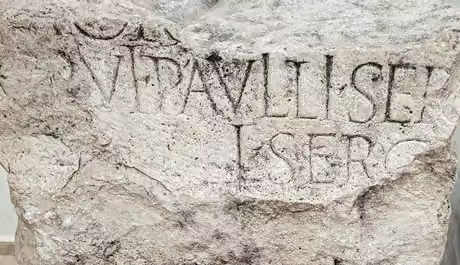
An honorific inscription in the Yalvaç Museum (ancient Pisidian Antioch) mentions the Paulli family and L. Sergius Paulus, likely the proconsul of Cyprus who converted in Acts 13. This supports the idea that Paul and Barnabas traveled to Pisidian Antioch because of a connection with Sergius Paulus, possibly with a letter of recommendation. The find helps explain Paul's otherwise puzzling detour through rugged mountains.

The inscription is real and published in the Summer 2026 issue of Biblical Archaeology Review, but the interpretation linking it to Acts is contested. The identification of the L. Sergius Paulus on the stone with the proconsul of Acts is plausible but not certain, and some scholars question whether the family connection alone explains Paul's route.

Find
Inscription
Place
Yalvaç Museum (ancient Pisidian Antioch), Pisidia, Turkey
Period
1st century AD (Roman period)
Announced
August 2026

The Discovery

In the courtyard of the Yalvaç Museum in Turkey (ancient Pisidian Antioch), archaeologist Mark Wilson and Ben Witherington III noticed an honorific inscription that had been left outdoors, gathering mold. The stone's first line mentions the 'Paulli' (the family), and the second names L. Sergius (Lucius Sergius Paulus)—the very proconsul of Cyprus who appears in Acts 13:6-12. The inscription has since been moved indoors for preservation.

Why It Matters

The inscription provides a concrete link between Sergius Paulus and Pisidian Antioch. This helps explain why Paul and Barnabas, after landing at Perga, made the arduous 160-mile trek over the Taurus Mountains instead of taking the easier coastal route. It suggests the governor may have encouraged them to visit his hometown, possibly providing letters of introduction.

What It Does and Does Not Show

The stone does not prove that Sergius Paulus converted or that he sponsored Paul's mission. It only shows that a family by that name was honored in Pisidian Antioch, and that a L. Sergius Paulus—likely the same man—was prominent there. The connection to Acts is circumstantial but plausible, especially given other inscriptions that trace the family's career.

What Remains Open

Scholars debate whether this is the same Sergius Paulus as in Acts, and whether the family's influence actually shaped Paul's itinerary. The inscription is not dated precisely, and its original context is unknown. Still, it offers a reasonable historical backdrop for Paul's otherwise surprising journey.

In Scripture

Sources

More from the tracker

All entries
  • Credibility: Confirmed

    Monumental Dam from Time of Biblical Kings Uncovered

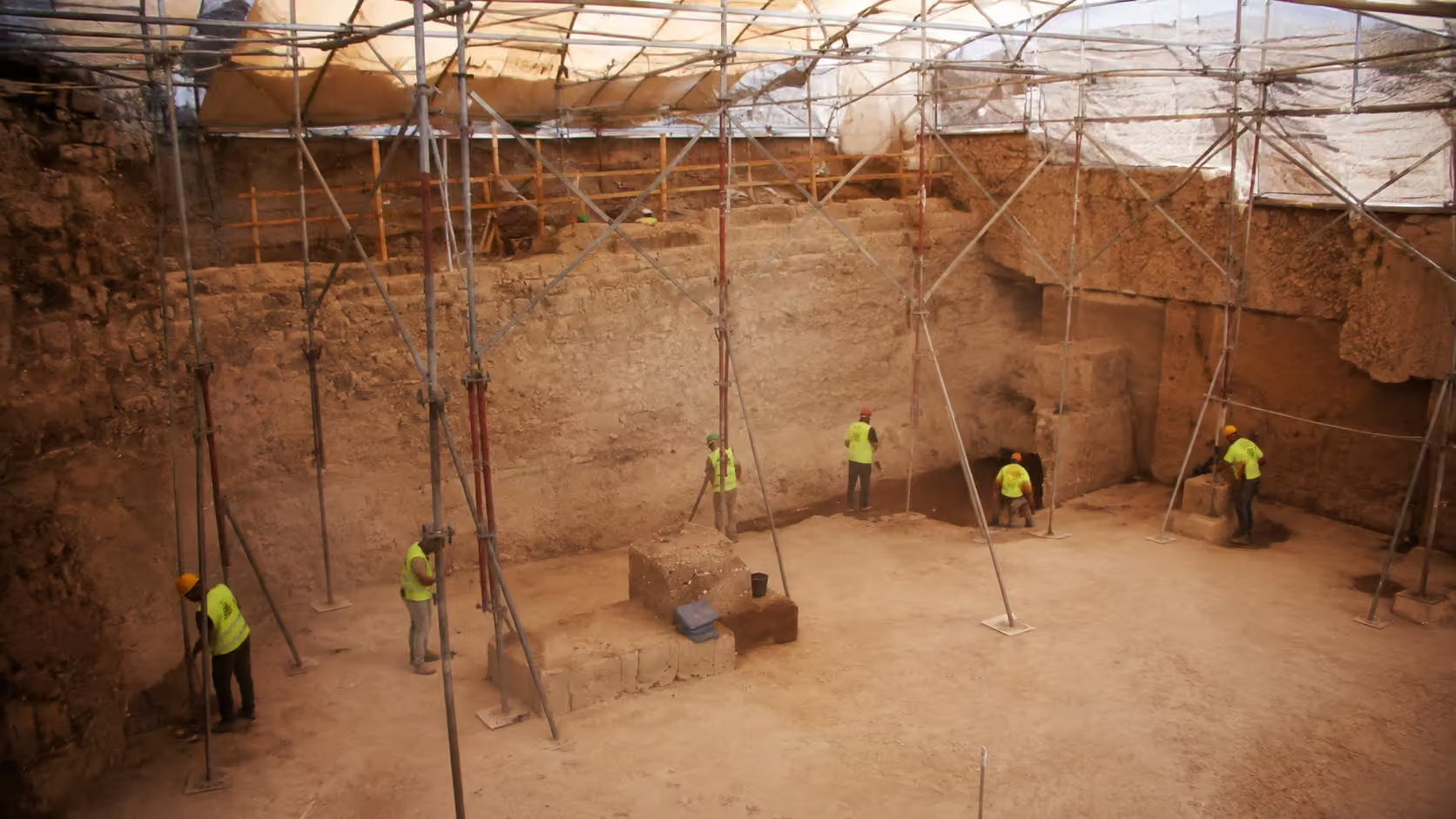
    Archaeologists in Jerusalem have uncovered the largest dam ever constructed in ancient Israel, dating to the late ninth century BCE during the reigns of kings Joash and Amaziah of Judah. The dam, located in the City of David, would have created the Pool of Siloam and reshaped the city's water system.

    City of David Archaeological Park, Jerusalemlate ninth century BCE (Iron Age II)Site
  • Credibility: Confirmed

    1,300-year-old industrial hub uncovered during bus terminal construction in Ramat Gan

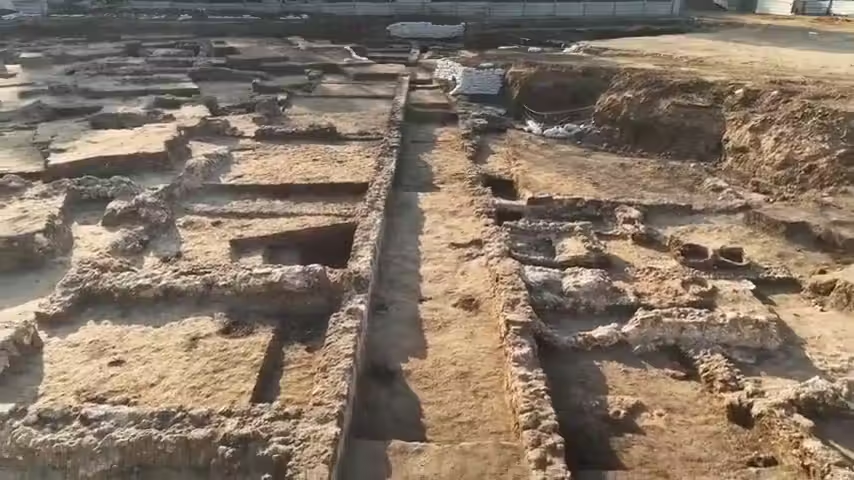
    A salvage excavation conducted before construction of a new bus terminal uncovered a planned industrial and commercial district beneath the parking lot of Winter Stadium in Ramat Gan. The complex contained intersecting streets, shops, warehouses, pottery kilns, liquid-production installations, lamps, coins, tools, and other objects. It operated mainly during the early Islamic period and was later reused for housing.

    Jaffa—biblical Joppa—with Jerusalem7th - 9th Centuries ADSite

  • Credibility: Confirmed

    Urartu’s Inscribed Bronze Bowls

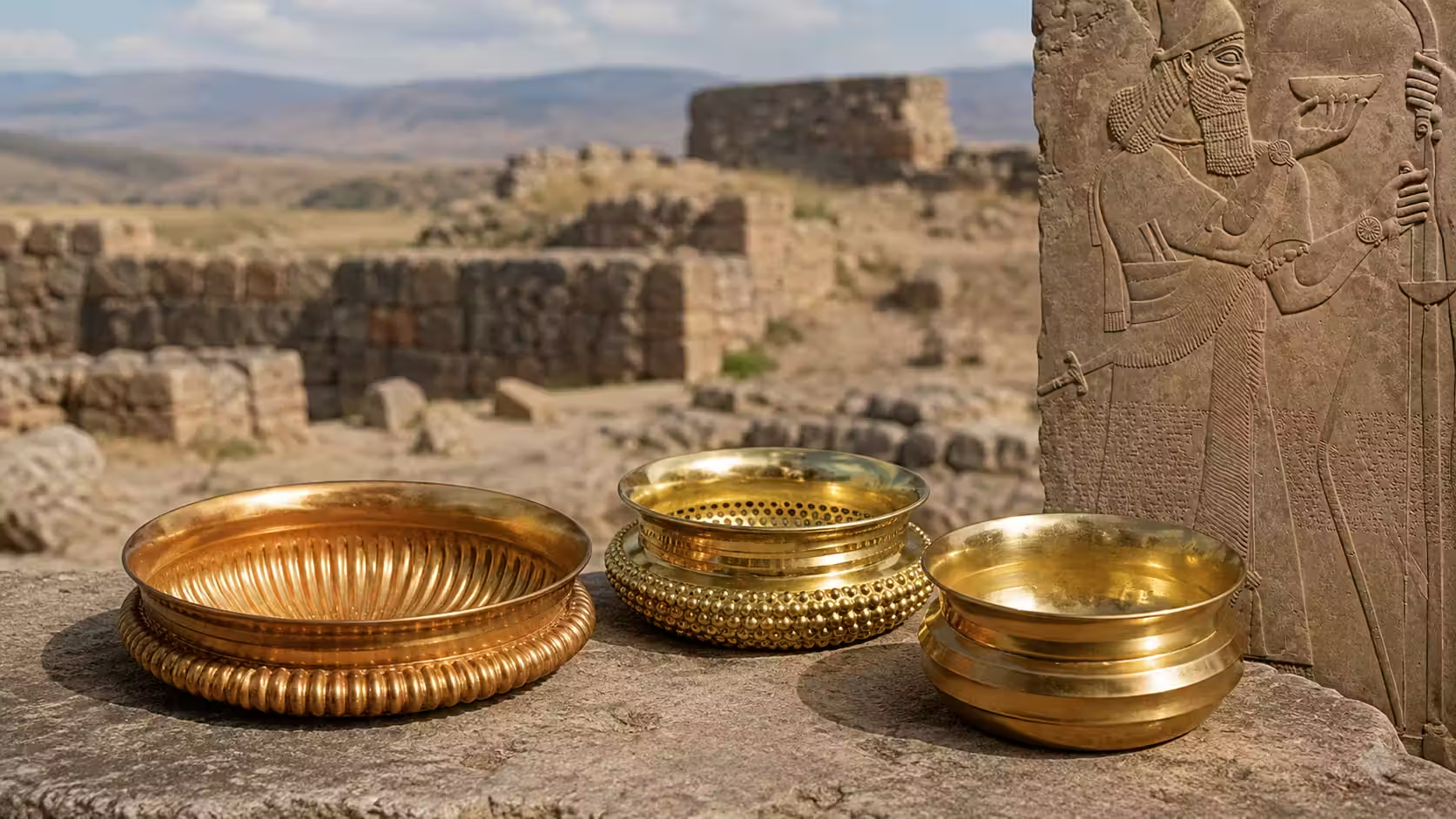
    A new study of over 100 inscribed bronze bowls from the ancient kingdom of Urartu (biblical Ararat) reveals how Urartian cuneiform evolved and how royal authority was expressed. The bowls, now in museums across Armenia and Russia, show a gradual standardization of script and provide indirect evidence for royal workshops. The study offers fresh insights into a civilization that left few written records.

    Urartu (biblical Ararat), various museum collectionsninth–seventh centuries BCEArtifact

A brass compass and pocket watch resting on aged paper

Stay informed. Stay encouraged.

Join the Ark Life Newsletter

Weekly studies, news, and encouragement—straight to your inbox.