A routine construction project in Ramat Gan has uncovered something no one expected: an entire industrial and commercial district buried beneath a modern parking lot.
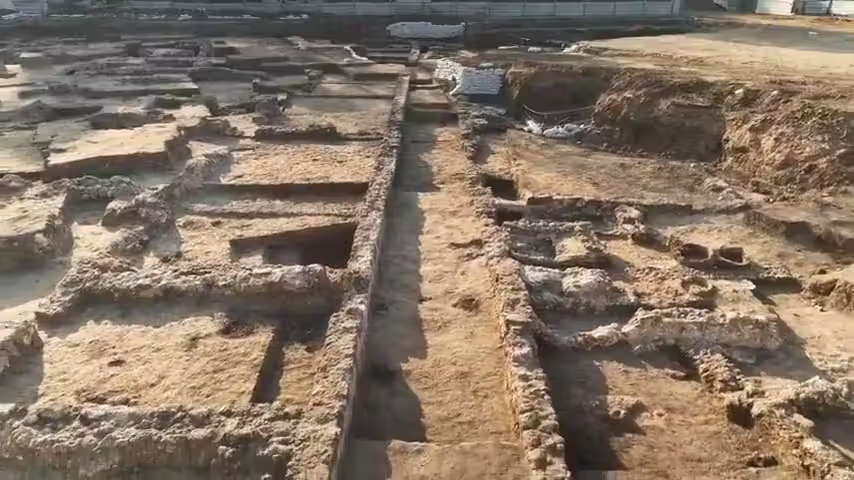
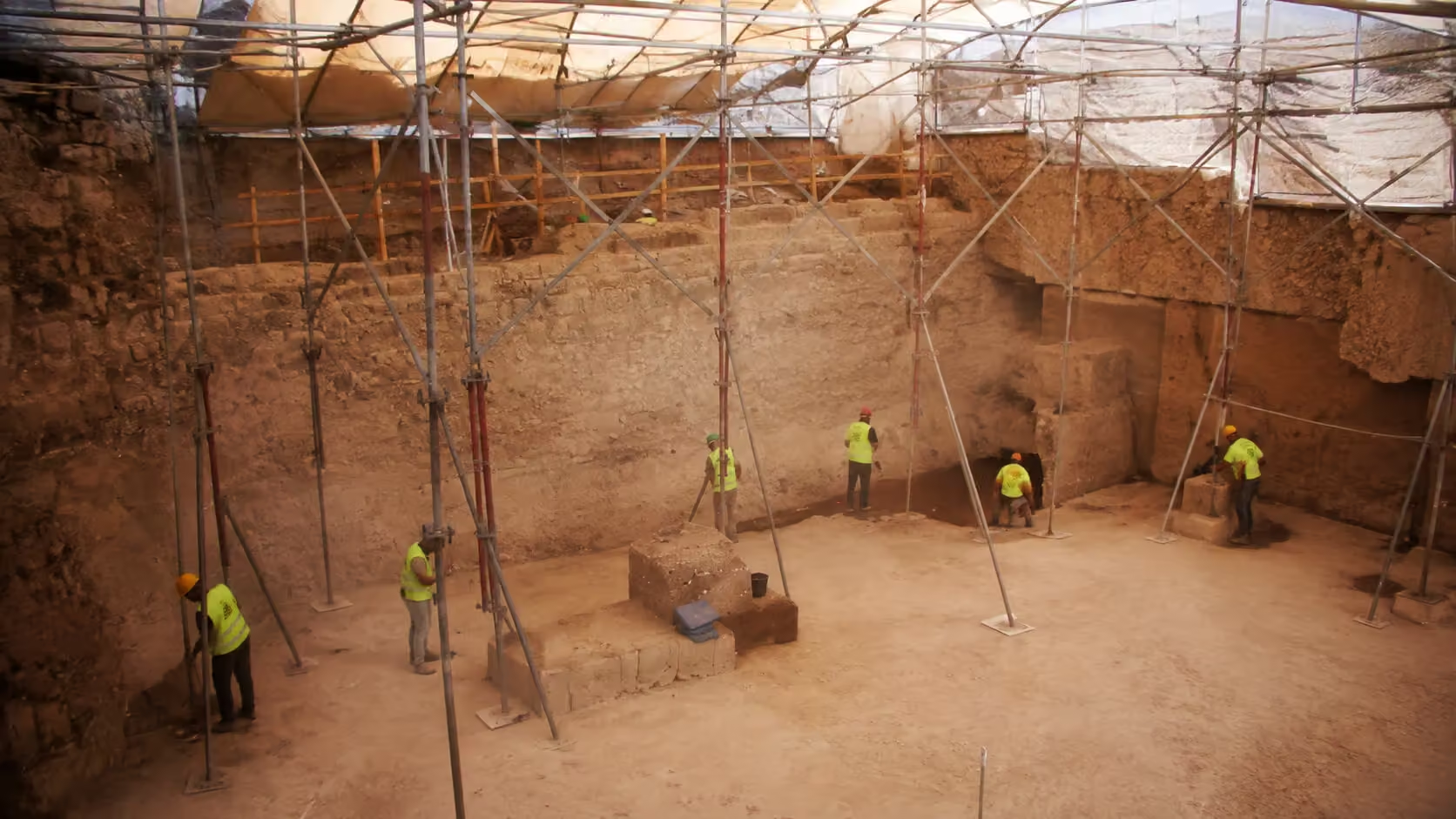
Archaeologists were excavating ahead of construction on a new bus terminal near Winter Stadium when they encountered the remains of a carefully planned complex dating to the seventh and eighth centuries AD—approximately 1,300 years ago.
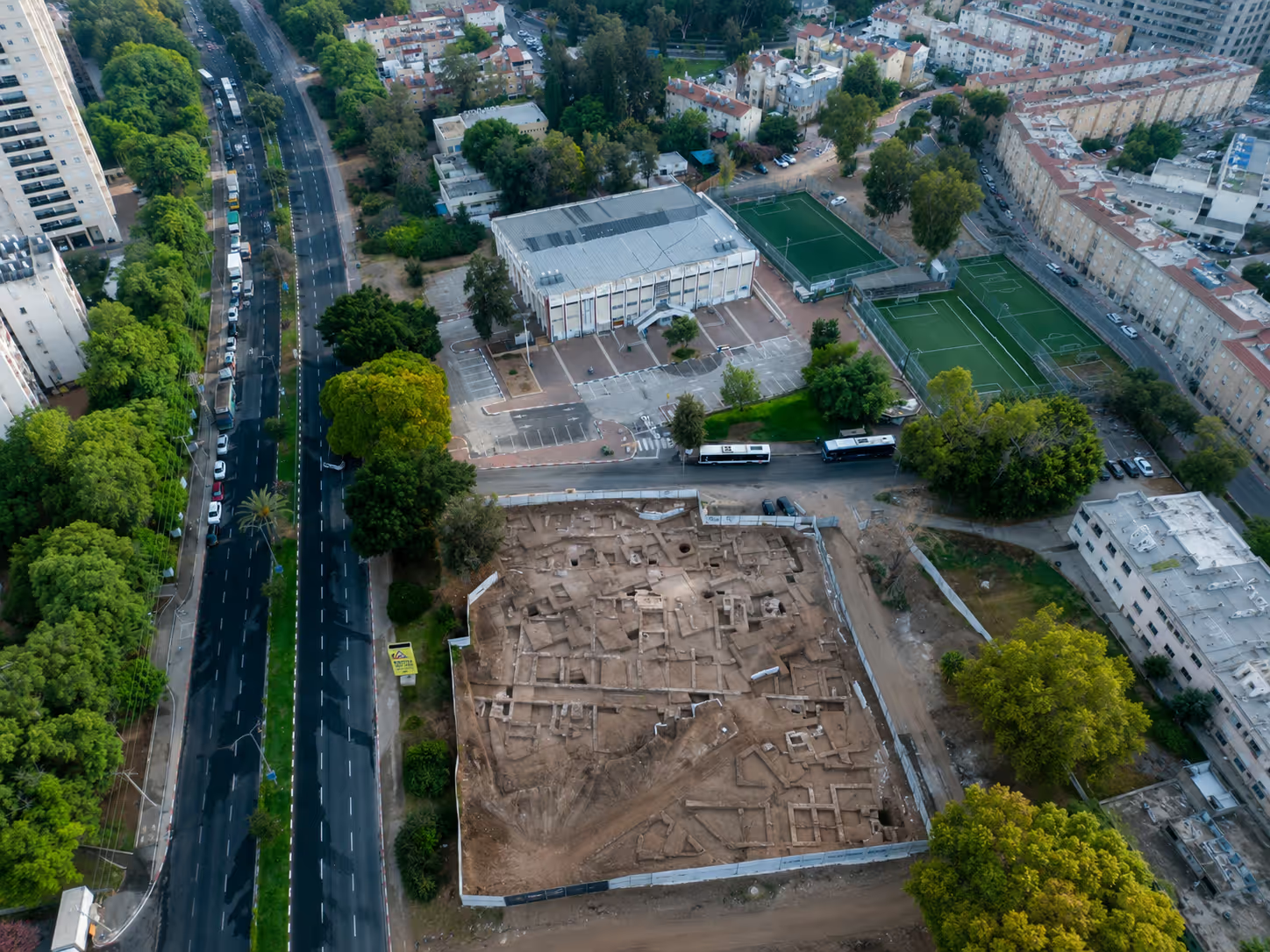
This was not a loose collection of workshops that gradually appeared over time. The site was deliberately organized. Straight streets crossed one another at right angles, while shops, storage rooms, pottery kilns, and industrial installations stood in orderly rows.
The arrangement was so consistent that archaeologists could sometimes predict where the next wall would appear before uncovering it.
A Planned Center of Trade and Production
The discovery offers a fascinating look at the economy of central Israel during the Umayyad and Abbasid periods.
Large kilns show that pottery was manufactured at the site. Other plastered installations were apparently used to produce liquids on a substantial scale, although researchers have not yet determined what those liquids were.
Archaeologists also recovered dozens of pottery vessels, complete oil lamps, coins, glass fragments, bronze tableware, cosmetic tools, iron pickaxe heads, a sickle, and numerous nails.
Together, these objects paint a picture of a busy working district—one filled with craftsmen, merchants, laborers, travelers, and goods moving through the region.
The artifacts have allowed researchers to date the complex with considerable confidence, although scientific testing, including radiocarbon dating, has not yet been completed.
Built Beside an Important Ancient Road
Location may explain why such an extensive complex developed here.
The site stood near an important road connecting Jaffa, Ramla, and Jerusalem. Ramla served as the regional capital during this period, while Jaffa remained a vital Mediterranean port. Anyone traveling between the coast, the administrative center, and Jerusalem may have passed close to these workshops and markets.
The industrial center was almost certainly positioned to serve that traffic.
Travelers could have purchased supplies, merchants may have stored or exchanged goods, and locally manufactured products could have been distributed throughout the surrounding region. Researchers do not yet know how far that trade network extended, but the discovery may represent one piece of a much larger economic system.
Who Lived and Worked Here?
That question remains unanswered.
Although the region was governed by Muslim rulers, its population was remarkably diverse. Muslims, Christians, Samaritans, and Jews all lived in the land during this period.
No synagogue, church, mosque, inscription, or other identifying structure has yet been uncovered at the site. Without that evidence, archaeologists cannot say who owned the complex or who worked inside its shops and workshops.
The nearby Yarkon region may have retained a significant Samaritan population following the Byzantine era, while Ramla had an established Muslim community. For now, however, the identity of the people behind the complex remains part of the mystery.
Abandoned, Resettled, and Abandoned Again
Researchers believe the industrial district operated for roughly 150 years before being abandoned sometime during the second half of the ninth century. Why the activity stopped is unknown.
Around 30 to 40 years later, people returned.
This time, however, the site took on a very different character. Residential buildings were constructed over the former industrial quarter, and tabun ovens used for baking were installed among its ruins. The thriving center of commerce had become a neighborhood of homes.
That settlement appears to have survived until the late eleventh century, shortly before the Crusader conquest. It was then abandoned again and never permanently resettled.
Only Part of the Story Has Been Uncovered
The excavation began in November 2025 and continued—with a winter interruption—until shortly before the discovery was publicly announced on August 16, 2026.
Even after months of work, archaeologists believe they have uncovered only a portion of the complex. Its remains continue beyond the excavation boundaries in several directions.
Nearby digs have revealed additional archaeological material, raising the possibility that this industrial quarter belonged to a much broader landscape of farms, roads, workshops, and commercial centers spread across early Islamic central Israel.
Following documentation, the excavated remains will be covered for protection while construction of the bus terminal proceeds.
This discovery does not come from the biblical period, but it adds another remarkable chapter to the story of the land. Beneath one modern Israeli city lies evidence of an earlier community whose streets were planned, whose industries flourished, and whose goods moved along roads traveled for centuries.
Archaeologists have uncovered the buildings and tools they left behind. The larger story—who these people were, what they produced, and why their busy commercial center disappeared—is still waiting to be told.