Biblical World Tracker

The Royal Seal Impression of King Hezekiah

Credibility: Confirmed

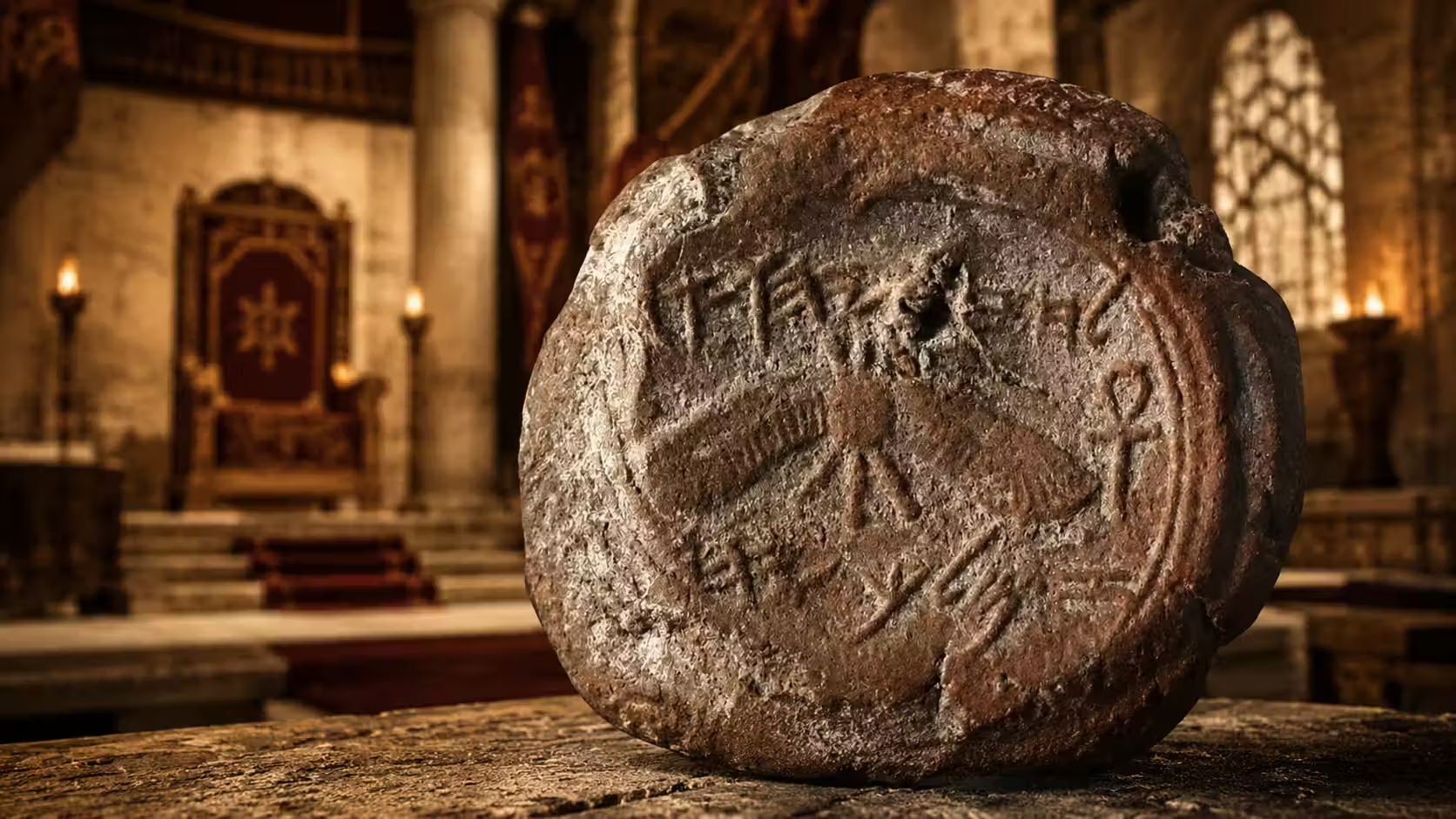
A clay bulla the size of a fingernail, stamped with the words 'Belonging to Hezekiah son of Ahaz king of Judah' in old Hebrew script. It was dug up in the Ophel in 2009 and sat unrecognised in the finds for six years until the inscription was read in 2015. It is the first seal impression of an Israelite or Judean king ever recovered from a scientific excavation rather than the antiquities trade.

Excavated in a controlled dig in the Ophel in 2009 and published after the inscription was identified in 2015 - which means, unusually for a royal bulla, that its findspot is documented rather than bought on the antiquities market. The reading 'Hezekiah son of Ahaz king of Judah' is not disputed. Scholarly discussion has centred on the iconography, particularly what the winged sun and ankh symbols imply, not on whether the seal is genuine.

Find
Artifact
Place
The Ophel, Jerusalem, Jerusalem, Israel
Period
late 8th century BC
Announced
December 2015

Found twice

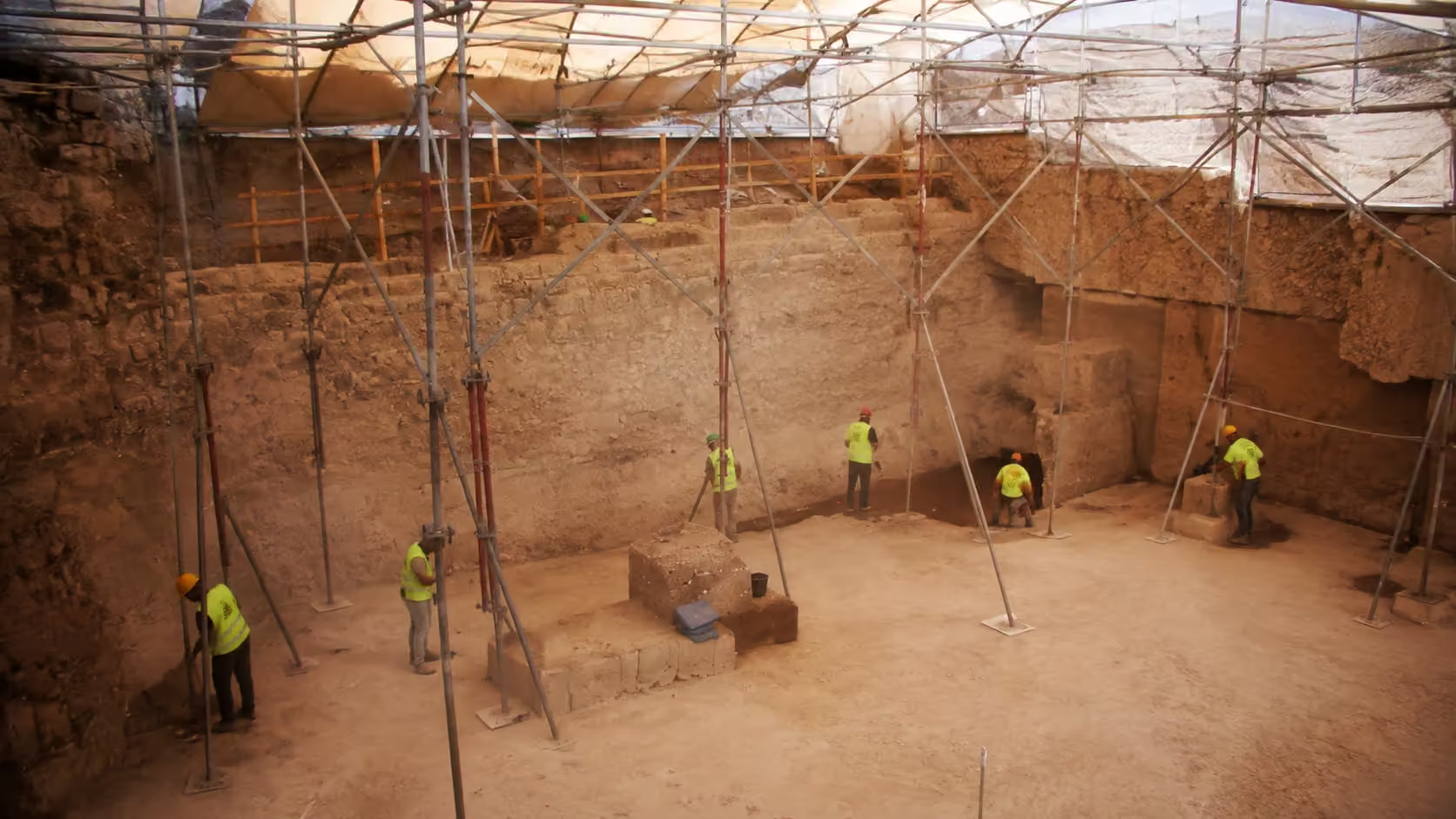
The bulla came out of Dr. Eilat Mazar's excavation at the Ophel, just south of the Temple Mount, in 2009 - part of a group of thirty-four bullae recovered from a refuse dump beside a royal building. Its significance was missed at the time. In 2015 Reut Ben-Arieh of the Hebrew University read the inscription and identified whose seal it was, and the discovery was announced on 2 December that year.

What it is

A bulla is a lump of clay pressed over the cord binding a document or a sack and stamped with a seal, so that the item cannot be opened without breaking it. This one reads, in the palaeo-Hebrew script, 'Belonging to Hezekiah son of Ahaz king of Judah'. The backs of the group show the impressions of coarse cloth and thick cord, which suggests these particular seals closed sacks of goods rather than letters.

Why the findspot matters more than the object

Seal impressions naming Hezekiah were already known, but they came through dealers, and an unprovenanced bulla can be neither dated by its context nor fully cleared of the suspicion of forgery. This one has a documented archaeological context in the royal quarter of the city it names. That is the difference between an object that supports an argument and an object that can only illustrate one.

The image on it

The seal carries a two-winged sun with the wings turned down, flanked by two ankh signs. Both are borrowed from Egyptian and wider Near Eastern royal imagery, where the winged disc signifies divine protection over the king. Their appearance on the seal of a reforming king who removed the high places has drawn steady discussion - most readings connect the downturned wings and the ankhs to the illness and recovery recorded in Isaiah 38, though that is interpretation rather than settled fact.

In Scripture

Sources

More from the tracker

All entries
  • Credibility: Confirmed

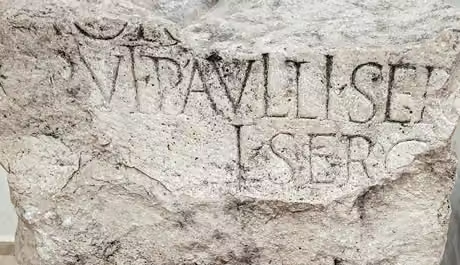
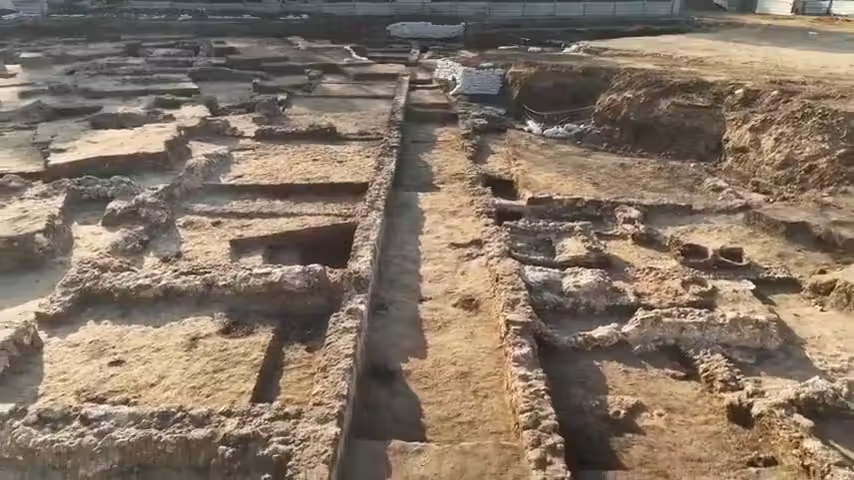
    1,300-year-old industrial hub uncovered during bus terminal construction in Ramat Gan

    A salvage excavation conducted before construction of a new bus terminal uncovered a planned industrial and commercial district beneath the parking lot of Winter Stadium in Ramat Gan. The complex contained intersecting streets, shops, warehouses, pottery kilns, liquid-production installations, lamps, coins, tools, and other objects. It operated mainly during the early Islamic period and was later reused for housing.

    Jaffa—biblical Joppa—with Jerusalem7th - 9th Centuries ADSite

  • Credibility: Confirmed

    Urartu’s Inscribed Bronze Bowls

    A new study of over 100 inscribed bronze bowls from the ancient kingdom of Urartu (biblical Ararat) reveals how Urartian cuneiform evolved and how royal authority was expressed. The bowls, now in museums across Armenia and Russia, show a gradual standardization of script and provide indirect evidence for royal workshops. The study offers fresh insights into a civilization that left few written records.

    Urartu (biblical Ararat), various museum collectionsninth–seventh centuries BCEArtifact

  • Credibility: Claimed

    Seal Impression of Yeda’yah Son of Asayahu Found in Temple Mount Sifting

    A small clay bulla bearing the seal impression of Yeda’yah son of Asayahu was discovered by the Temple Mount Sifting Project. Dating to the late seventh or early sixth century BCE, the bulla may connect to Asaiah, an official mentioned in 2 Kings 22 and 2 Chronicles 20 during King Josiah's reign. While the connection is plausible, it remains uncertain.

    Temple Mount Sifting Project, Jerusalemlate 7th–early 6th century BCEArtifact

A brass compass and pocket watch resting on aged paper

Stay informed. Stay encouraged.

Join the Ark Life Newsletter

Weekly studies, news, and encouragement—straight to your inbox.