What Was Found
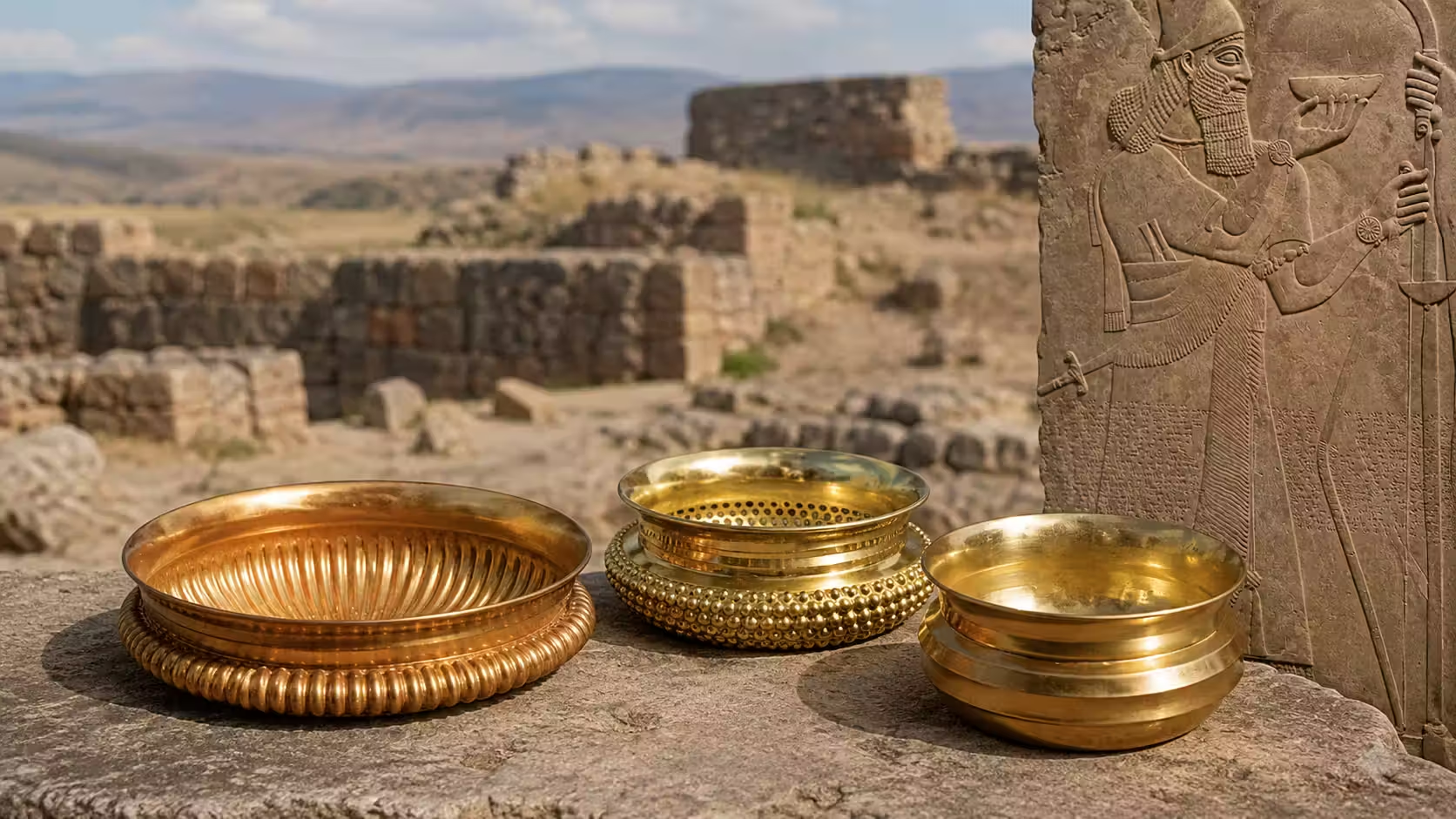
A study published in Antiquity examines more than 100 inscribed bronze bowls from Urartu, a kingdom that flourished in the ninth–seventh centuries BCE in what is now eastern Turkey, Armenia, and northwestern Iran. The bowls are held in museums across Armenia, Russia, and elsewhere. They bear royal inscriptions in Urartian cuneiform, a script that is only partially understood.
Why It Matters
Urartu was a major power that challenged Assyria, yet few written records survive. Most known Urartian texts are short, formulaic royal inscriptions. These bowls, however, form a rich archive—nearly 100 were found together at the fortress of Karmir-blur—allowing scholars to trace changes in script over successive reigns.
What It Shows
The study reveals a gradual evolution of Urartian cuneiform from an early resemblance to Neo-Assyrian to a more standardized, recognizably Urartian form. High-resolution photography shows how engraving into bronze differed from carving stone or impressing clay. The consistency of inscriptions suggests engravers followed shared conventions, implying the existence of royal workshops or scribal schools, even though no such institutions have been found.
What It Does NOT Show
This study does not directly connect to a specific biblical event. It provides background on the kingdom of Ararat, which is mentioned in the Bible as the region where Noah’s Ark rested (Genesis 8:4) and as a northern power (2 Kings 19:37, Isaiah 37:38). The bowls are royal objects, not biblical artifacts, and their inscriptions do not mention Israel or Judah.
What Remains Open
The study does not identify the engravers or their workshops, and the exact provenance of many bowls is unclear. The authors call for further research into Urartian writing culture and the political role of inscribed luxury objects.