Biblical World Tracker

The Pilate Stone

Credibility: Confirmed

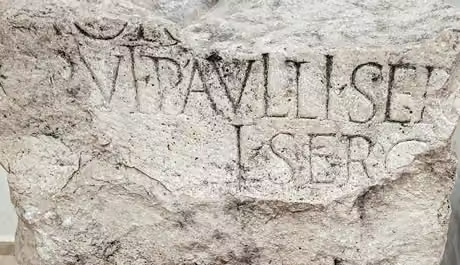
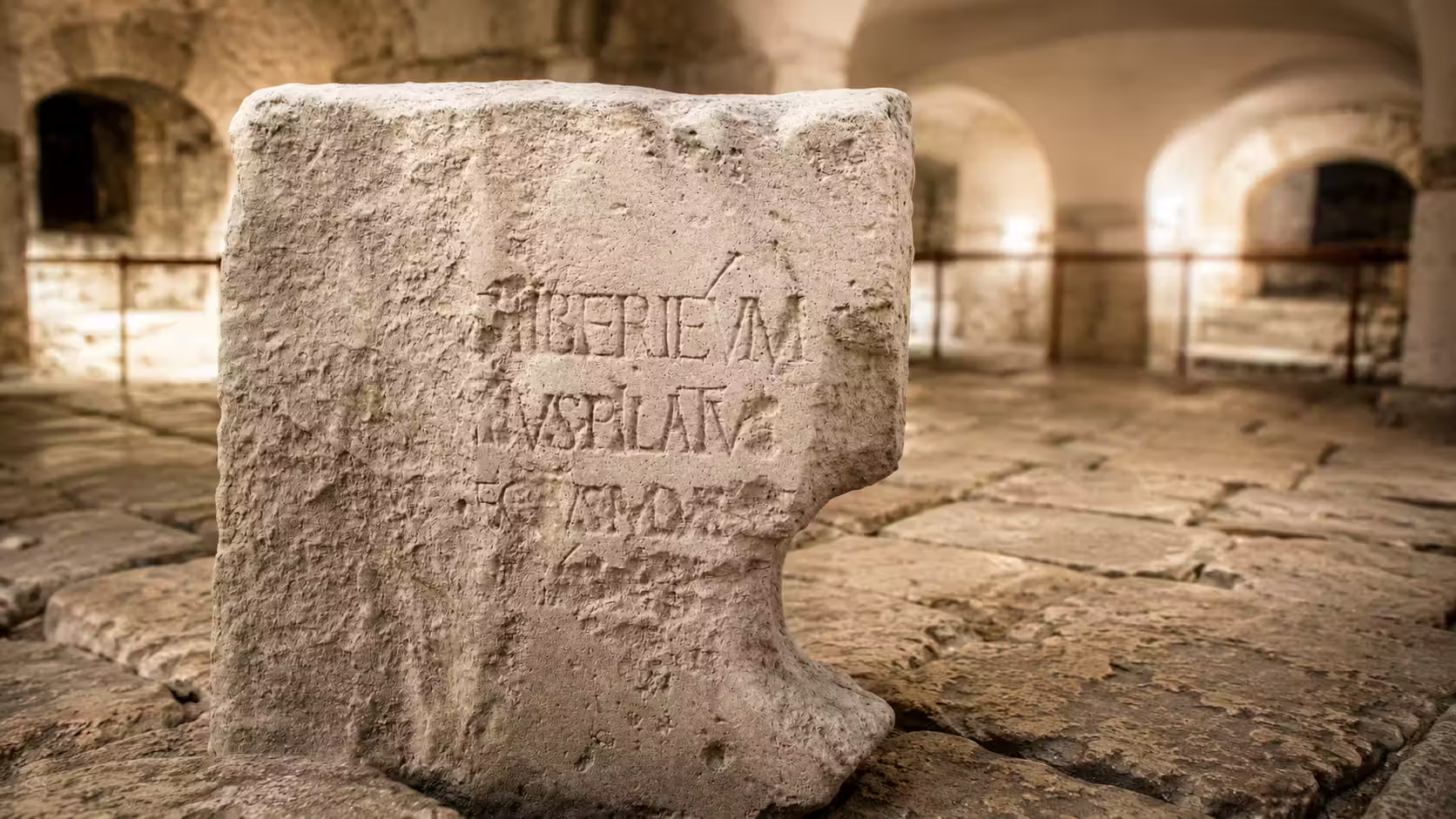
A damaged block of limestone, reused as a stair landing in the Roman theatre at Caesarea, carrying a Latin dedication in which the surviving letters read Pontius Pilatus and prefect of Judaea. Found in 1961, it remains the only inscription naming Pilate ever recovered - and it settles his title, which the gospels and Tacitus give differently.

Excavated in 1961 in the Roman theatre at Caesarea Maritima by Antonio Frova's Italian expedition, with a documented findspot, and accepted without serious dissent for over sixty years. The surviving letters preserve the name and the title; the reconstruction of the damaged edges, including the reference to a building honouring Tiberius, is scholarly restoration and is discussed as such. The stone is on display at the Israel Museum.

Find
Inscription
Place
Caesarea Maritima, Sharon plain, Israel
Period
AD 26-36
Announced
June 1961

The find

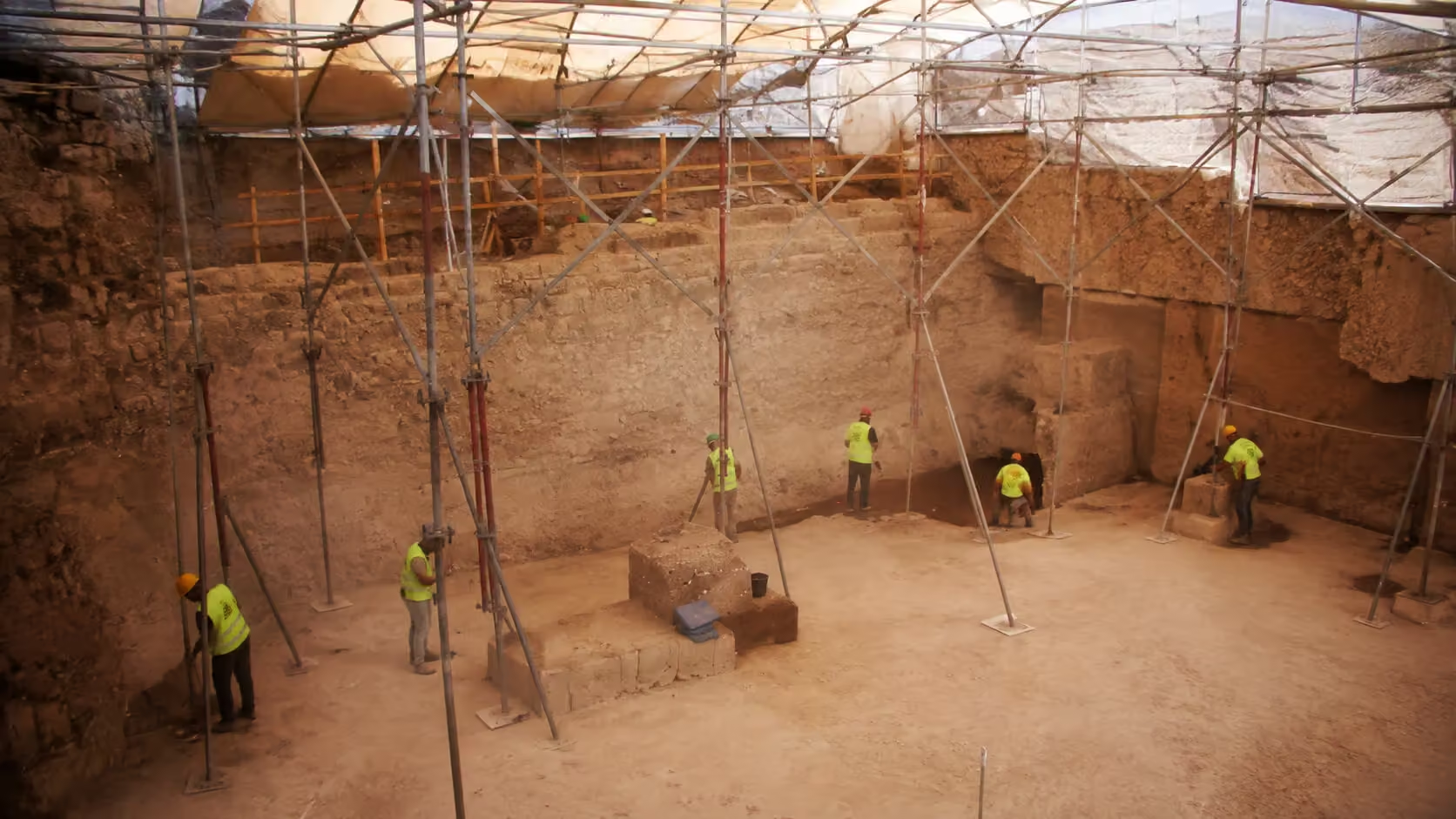
In June 1961 an Italian expedition led by Antonio Frova was excavating the theatre at Caesarea Maritima, Herod's harbour city and the seat of Roman government in Judaea. A limestone block roughly eighty by sixty-five centimetres was found built into a stairway as a landing. It carried an inscription, worn and broken at the edges, and it had plainly been cut down from something larger before being reused - probably in the fourth century, when the theatre was remodelled and older ruins were quarried for material.

What survives

Enough. The readable portions preserve the name Pilatus with the end of Pontius before it, and the title praefectus of Judaea. The fuller reconstruction - that the block came from the dedication of a building, probably a temple, raised in honour of the emperor Tiberius - depends on restoring damaged letters and is presented by scholars as reconstruction. The name and the office do not.

Why the title is the interesting part

Roman governors of Judaea held the rank of prefect until about AD 44, after which the province was administered by procurators. Tacitus, writing early in the second century, calls Pilate a procurator - the term of his own day, applied backwards. The stone gives the contemporary title, prefect, which is what a man in that post in the AD 30s would actually have been called. It is a small correction, and it is the kind that only a contemporary inscription can supply.

Where it sits in Scripture

Pilate appears in all four gospels at the trial of Jesus, and Luke dates the beginning of John's ministry by his governorship. Caesarea, where the stone was found, is where Pilate would ordinarily have lived - Jerusalem was the place a prefect went for the festivals, when crowds made trouble likely. Acts has Paul sent down to Caesarea under guard and held there for two years, before the same seat of government a generation later.

In Scripture

Sources

More from the tracker

All entries
  • Credibility: Confirmed

    1,300-year-old industrial hub uncovered during bus terminal construction in Ramat Gan

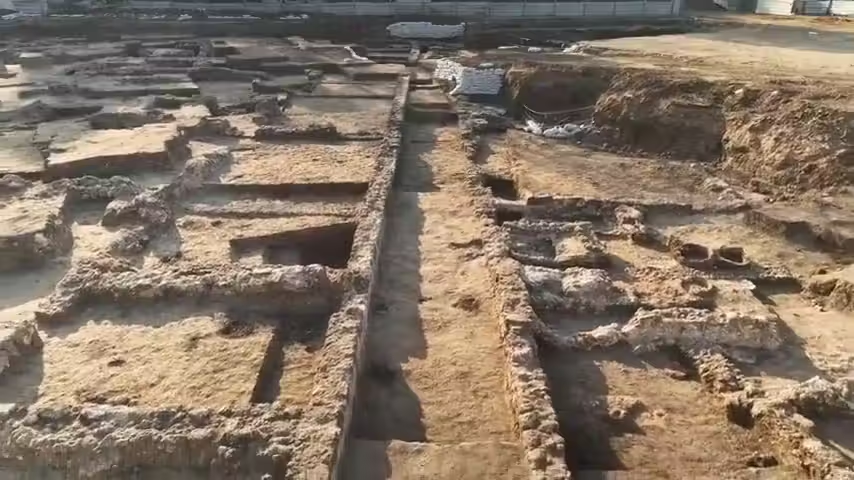
    A salvage excavation conducted before construction of a new bus terminal uncovered a planned industrial and commercial district beneath the parking lot of Winter Stadium in Ramat Gan. The complex contained intersecting streets, shops, warehouses, pottery kilns, liquid-production installations, lamps, coins, tools, and other objects. It operated mainly during the early Islamic period and was later reused for housing.

    Jaffa—biblical Joppa—with Jerusalem7th - 9th Centuries ADSite

  • Credibility: Confirmed

    Urartu’s Inscribed Bronze Bowls

    A new study of over 100 inscribed bronze bowls from the ancient kingdom of Urartu (biblical Ararat) reveals how Urartian cuneiform evolved and how royal authority was expressed. The bowls, now in museums across Armenia and Russia, show a gradual standardization of script and provide indirect evidence for royal workshops. The study offers fresh insights into a civilization that left few written records.

    Urartu (biblical Ararat), various museum collectionsninth–seventh centuries BCEArtifact

  • Credibility: Claimed

    Seal Impression of Yeda’yah Son of Asayahu Found in Temple Mount Sifting

    A small clay bulla bearing the seal impression of Yeda’yah son of Asayahu was discovered by the Temple Mount Sifting Project. Dating to the late seventh or early sixth century BCE, the bulla may connect to Asaiah, an official mentioned in 2 Kings 22 and 2 Chronicles 20 during King Josiah's reign. While the connection is plausible, it remains uncertain.

    Temple Mount Sifting Project, Jerusalemlate 7th–early 6th century BCEArtifact

A brass compass and pocket watch resting on aged paper

Stay informed. Stay encouraged.

Join the Ark Life Newsletter

Weekly studies, news, and encouragement—straight to your inbox.