Biblical World Tracker

The Pool of Siloam Opened for Full Excavation

Credibility: Confirmed

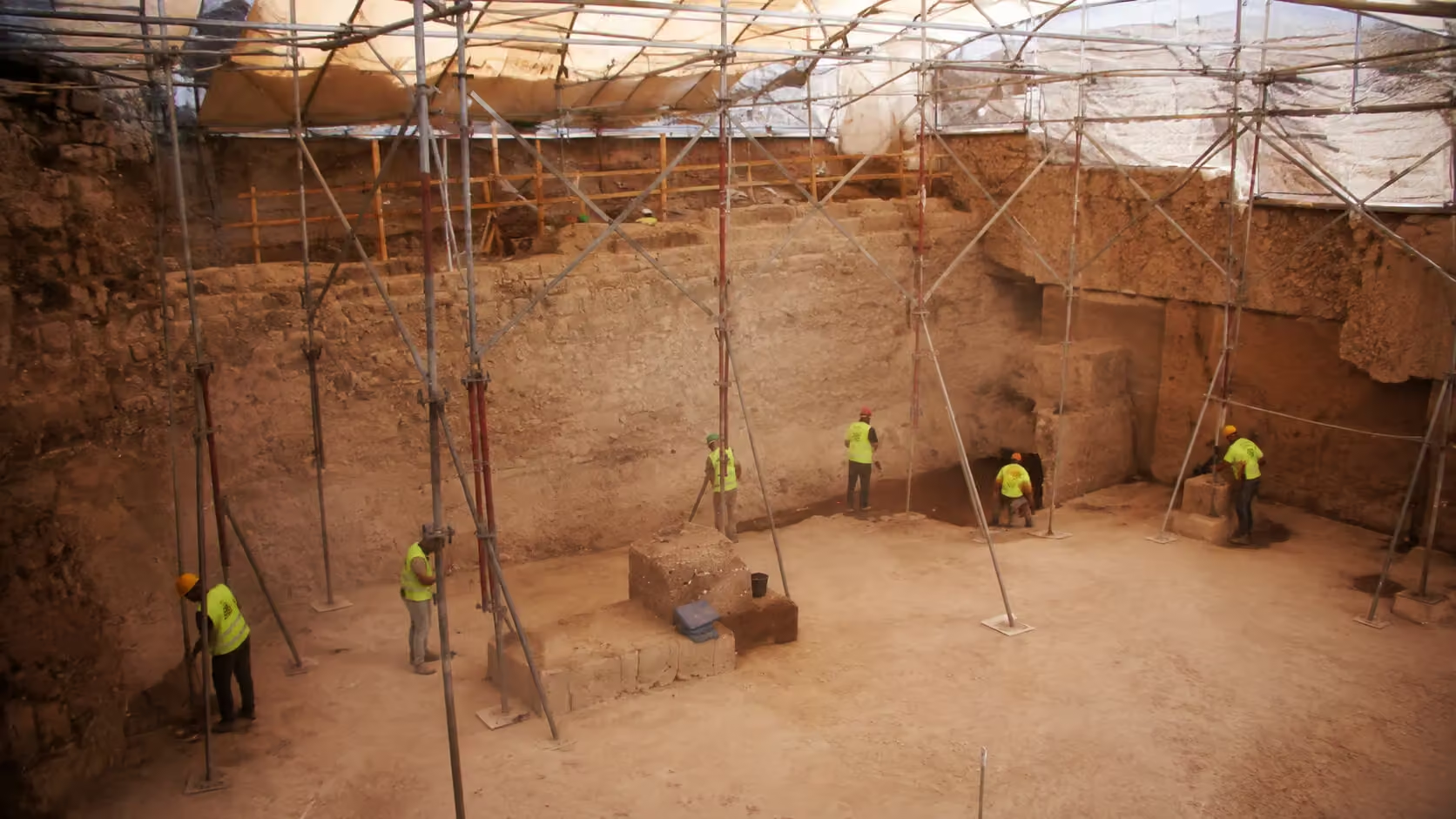
On 27 December 2022 the Israel Antiquities Authority, the Israel National Parks Authority and the City of David Foundation announced that the Pool of Siloam would be excavated in full and eventually opened to visitors. Only a corner of it has ever been exposed - a flight of steps found by accident in 2004 during sewer repairs. It is the pool John names in the account of the man born blind.

The pool itself is not in doubt: its steps were uncovered in 2004 during drainage works and excavated by Ronny Reich and Eli Shukron, and the identification with the Second Temple pool is broadly accepted. The 2022 announcement concerns the scope of further excavation, which is a plan rather than a result. The site is also politically contested - it lies in Silwan in East Jerusalem and the dig is run in partnership with the City of David Foundation - and that is a dispute about the excavation, not about the pool.

Find
Site
Place
City of David, Silwan, Jerusalem, Israel
Period
First Temple foundation, Second Temple expansion
Announced
December 2022

Found by accident

In 2004 a repair crew working on a drainage line in the City of David cut into a run of ancient stone steps. Excavation by Ronny Reich and Eli Shukron followed and identified them as the northern edge of a large stepped pool from the Second Temple period. Most of the pool lies under an adjoining orchard and has never been dug.

What was announced

The December 2022 announcement was that the whole pool would now be excavated, in stages, in view of the public, and eventually joined to the walking route running up from the City of David to the Temple Mount area. This is a plan, and worth reading as one: what it changes is access to the site, not what is known about it.

The two pools, and why the dates differ

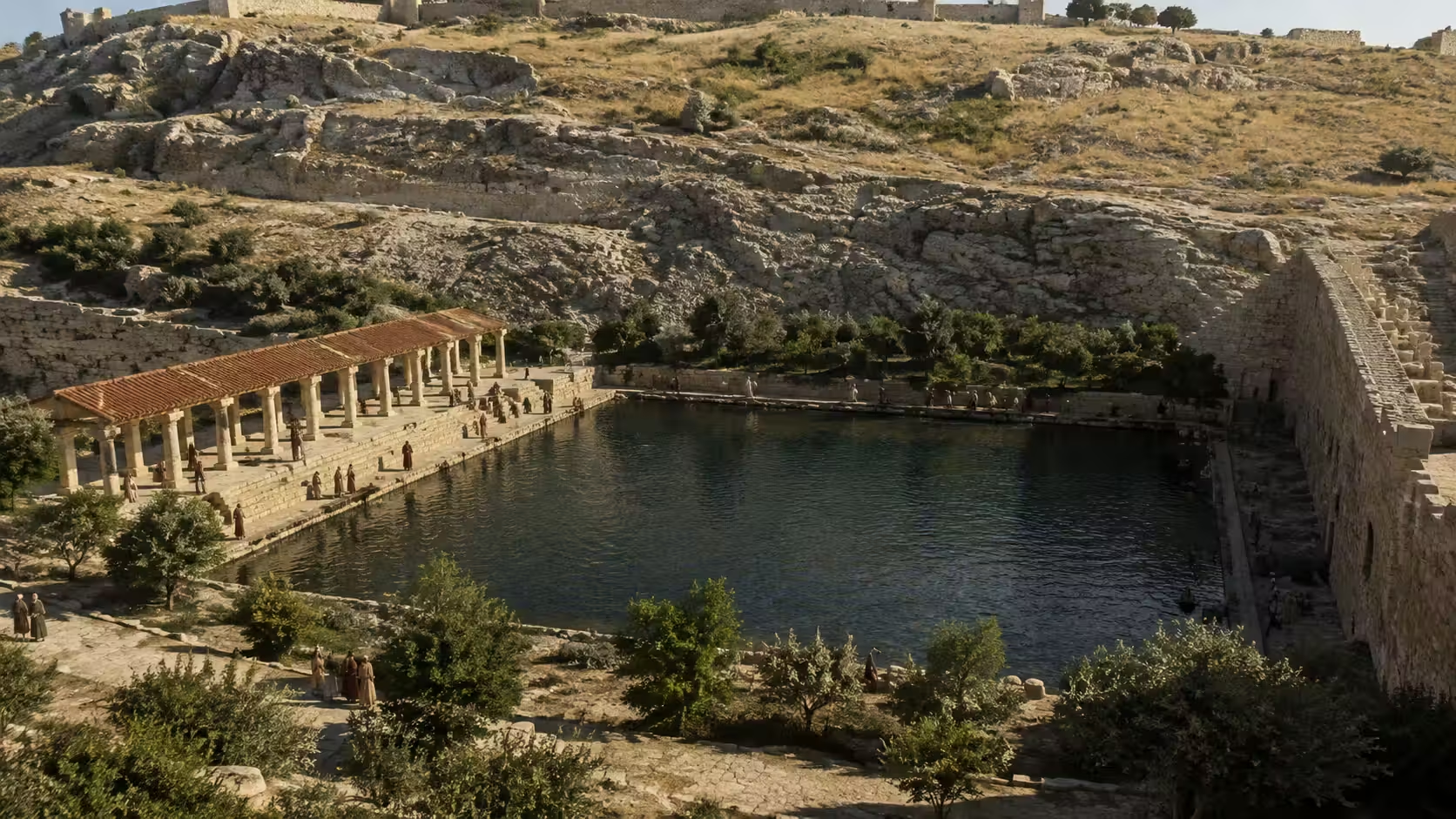
Water has been collected at this end of the ridge since the First Temple period. The Gihon spring fed the city, and Hezekiah's tunnel was cut to bring that water inside the walls ahead of the Assyrian siege - work the book of Kings records directly. The stepped pool exposed in 2004 is later, from the end of the Second Temple period, and was substantial: steps on multiple sides, of a size that fits use by pilgrims arriving for the festivals, very plausibly for ritual immersion before going up to the temple.

Where it sits in Scripture

John 9 has Jesus send a man born blind to wash in the pool of Siloam, and notes the name means Sent. That is the pool of the Second Temple period - the one whose steps were found in 2004 and which is now to be uncovered in full. Isaiah's reference to the waters of Shiloah that go softly belongs to the earlier system. Both are the same water, several centuries apart.

In Scripture

Sources

More from the tracker

All entries
  • Credibility: Confirmed

    1,300-year-old industrial hub uncovered during bus terminal construction in Ramat Gan

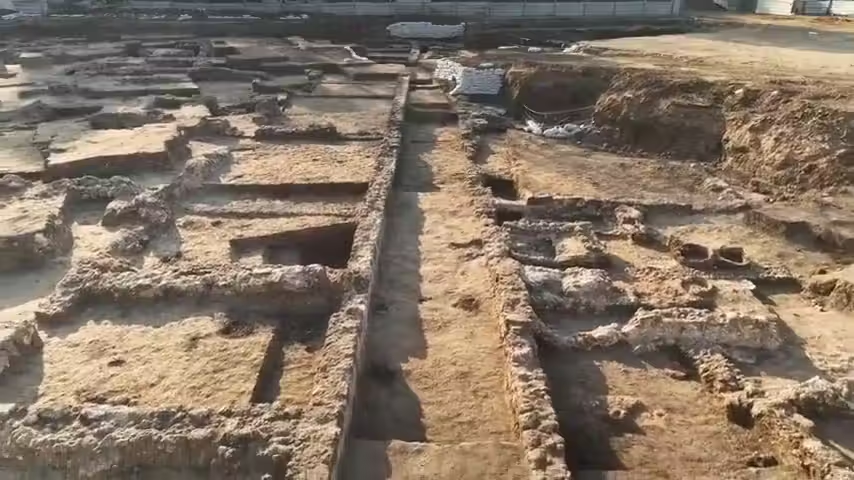
    A salvage excavation conducted before construction of a new bus terminal uncovered a planned industrial and commercial district beneath the parking lot of Winter Stadium in Ramat Gan. The complex contained intersecting streets, shops, warehouses, pottery kilns, liquid-production installations, lamps, coins, tools, and other objects. It operated mainly during the early Islamic period and was later reused for housing.

    Jaffa—biblical Joppa—with Jerusalem7th - 9th Centuries ADSite

  • Credibility: Confirmed

    Urartu’s Inscribed Bronze Bowls

    A new study of over 100 inscribed bronze bowls from the ancient kingdom of Urartu (biblical Ararat) reveals how Urartian cuneiform evolved and how royal authority was expressed. The bowls, now in museums across Armenia and Russia, show a gradual standardization of script and provide indirect evidence for royal workshops. The study offers fresh insights into a civilization that left few written records.

    Urartu (biblical Ararat), various museum collectionsninth–seventh centuries BCEArtifact

  • Credibility: Claimed

    Seal Impression of Yeda’yah Son of Asayahu Found in Temple Mount Sifting

    A small clay bulla bearing the seal impression of Yeda’yah son of Asayahu was discovered by the Temple Mount Sifting Project. Dating to the late seventh or early sixth century BCE, the bulla may connect to Asaiah, an official mentioned in 2 Kings 22 and 2 Chronicles 20 during King Josiah's reign. While the connection is plausible, it remains uncertain.

    Temple Mount Sifting Project, Jerusalemlate 7th–early 6th century BCEArtifact

A brass compass and pocket watch resting on aged paper

Stay informed. Stay encouraged.

Join the Ark Life Newsletter

Weekly studies, news, and encouragement—straight to your inbox.