Biblical World Tracker

The Gezer Calendar: An Israelite Almanac or a Writing Exercise?

Credibility: Confirmed

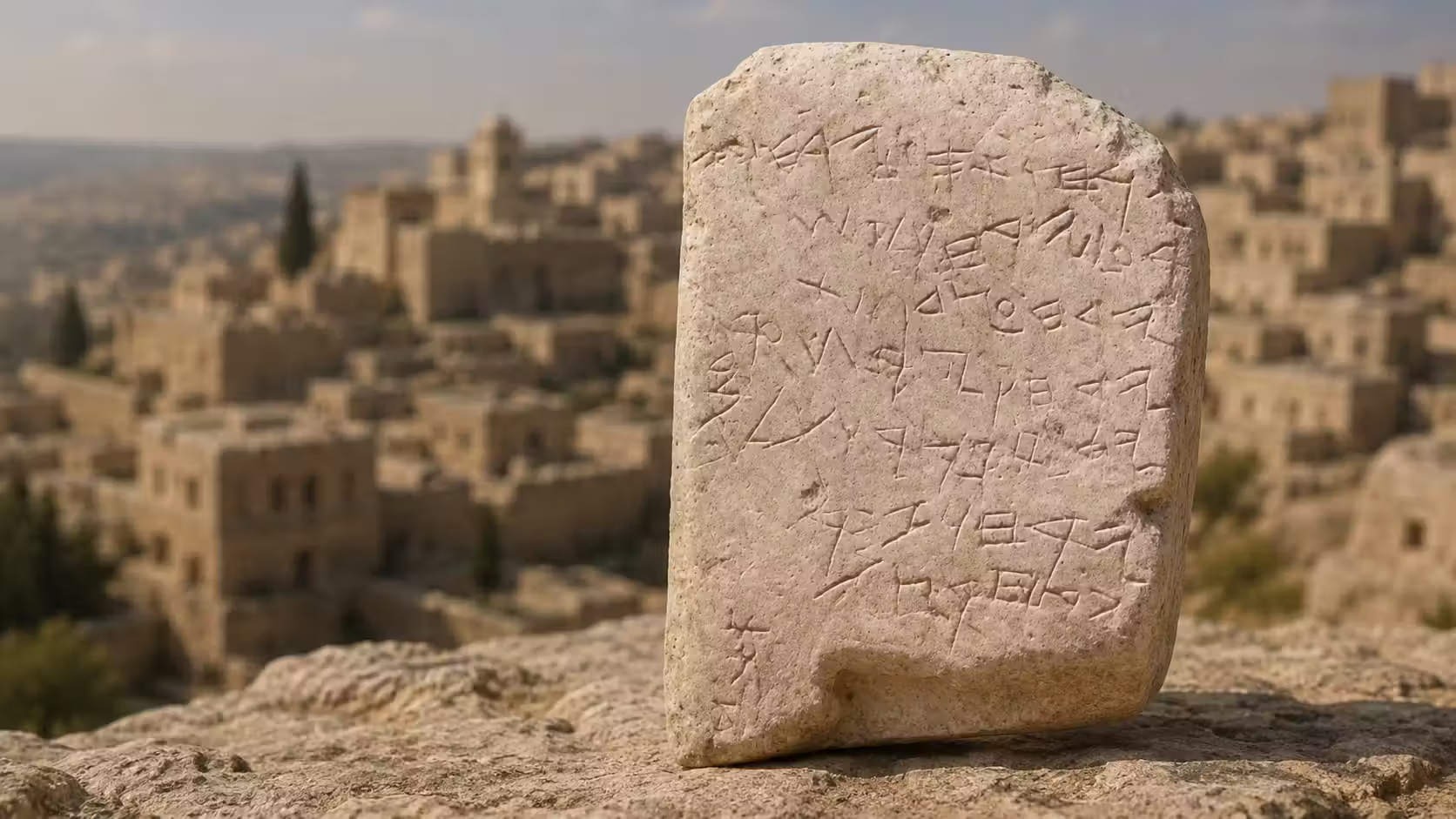
The Gezer Calendar is a small limestone tablet inscribed with a list of agricultural activities covering a full year, dating to the tenth century BCE. Found in 1908 at Tel Gezer, it is one of the earliest known inscriptions in a language and script that may be Hebrew, making it significant for understanding early Israelite literacy and the agricultural calendar. Its exact purpose remains debated, with interpretations ranging from a farmer's almanac to a scribal exercise.

The Gezer Calendar is widely accepted as authentic and is one of the most studied inscriptions from ancient Israel. It was published in the Palestine Exploration Fund Quarterly Statement in 1909 and has been the subject of numerous scholarly analyses, including a 1998 study in the Israel Exploration Journal. The main scholarly debate concerns its language and script (Hebrew vs. Phoenician/Canaanite), not its authenticity.

Find
Inscription
Place
Tel Gezer, Shephelah, Israel
Period
c. 10th century BCE (Iron Age IIA)
Announced
January 1908

The Find

The Gezer Calendar is a small limestone slab, about 4.25 inches tall, inscribed with seven lines of text listing agricultural activities across the seasons. It was discovered in 1908 by Irish archaeologist R.A.S. Macalister during excavations at Tel Gezer, conducted for the Palestine Exploration Fund. The tablet is now in the Istanbul Archaeological Museum.

What It Says

The text lists months associated with activities such as olive harvest, grain planting, late planting, hoeing flax, barley harvest, harvest and festivity, vine-tending, and summer fruit. A personal name, reconstructed as "Abiyah," appears in the lower left margin. The inscription is written in an early alphabetic script, which scholars identify as either Phoenician or Old Hebrew, and the language is debated as Hebrew, Canaanite, or Phoenician.

Significance

The calendar is one of the earliest known inscriptions that may be in Hebrew, and it is often cited alongside the Khirbet Qeiyafa ostracon and other finds as evidence of writing in tenth-century Judah. It reflects the agricultural cycle of the Shephelah region and may have served as a farmer's almanac, a writing exercise, or a blessing tablet. The name Abiyah, which includes the divine element "Yah," could indicate an Israelite origin, but this is not certain.

What It Does NOT Show

The Gezer Calendar does not prove the biblical narrative or confirm any specific biblical event. Its lack of a secure archaeological context, due to Macalister's excavation methods, means its dating relies on script and language analysis rather than stratigraphy. The debate over whether it is truly Hebrew or Canaanite means it cannot be used as definitive proof of Israelite presence at Gezer in the tenth century BCE.

In Scripture

Sources

More from the tracker

All entries
  • Credibility: Confirmed

    1,300-year-old industrial hub uncovered during bus terminal construction in Ramat Gan

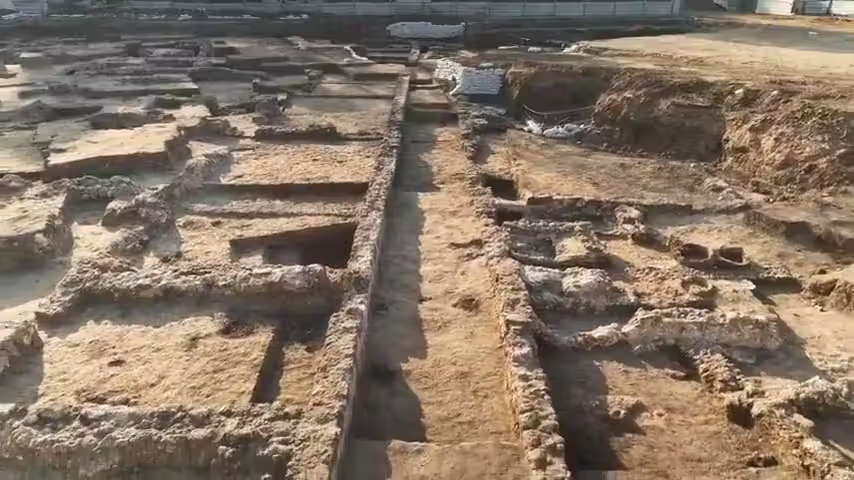
    A salvage excavation conducted before construction of a new bus terminal uncovered a planned industrial and commercial district beneath the parking lot of Winter Stadium in Ramat Gan. The complex contained intersecting streets, shops, warehouses, pottery kilns, liquid-production installations, lamps, coins, tools, and other objects. It operated mainly during the early Islamic period and was later reused for housing.

    Jaffa—biblical Joppa—with Jerusalem7th - 9th Centuries ADSite

  • Credibility: Confirmed

    Urartu’s Inscribed Bronze Bowls

    A new study of over 100 inscribed bronze bowls from the ancient kingdom of Urartu (biblical Ararat) reveals how Urartian cuneiform evolved and how royal authority was expressed. The bowls, now in museums across Armenia and Russia, show a gradual standardization of script and provide indirect evidence for royal workshops. The study offers fresh insights into a civilization that left few written records.

    Urartu (biblical Ararat), various museum collectionsninth–seventh centuries BCEArtifact

  • Credibility: Claimed

    Seal Impression of Yeda’yah Son of Asayahu Found in Temple Mount Sifting

    A small clay bulla bearing the seal impression of Yeda’yah son of Asayahu was discovered by the Temple Mount Sifting Project. Dating to the late seventh or early sixth century BCE, the bulla may connect to Asaiah, an official mentioned in 2 Kings 22 and 2 Chronicles 20 during King Josiah's reign. While the connection is plausible, it remains uncertain.

    Temple Mount Sifting Project, Jerusalemlate 7th–early 6th century BCEArtifact

A brass compass and pocket watch resting on aged paper

Stay informed. Stay encouraged.

Join the Ark Life Newsletter

Weekly studies, news, and encouragement—straight to your inbox.