Story Lens
Whither Thou Goest
- Passage
- Ruth 1:16
- Book
- Ruth
- Theme
- Loyal Love
- Place
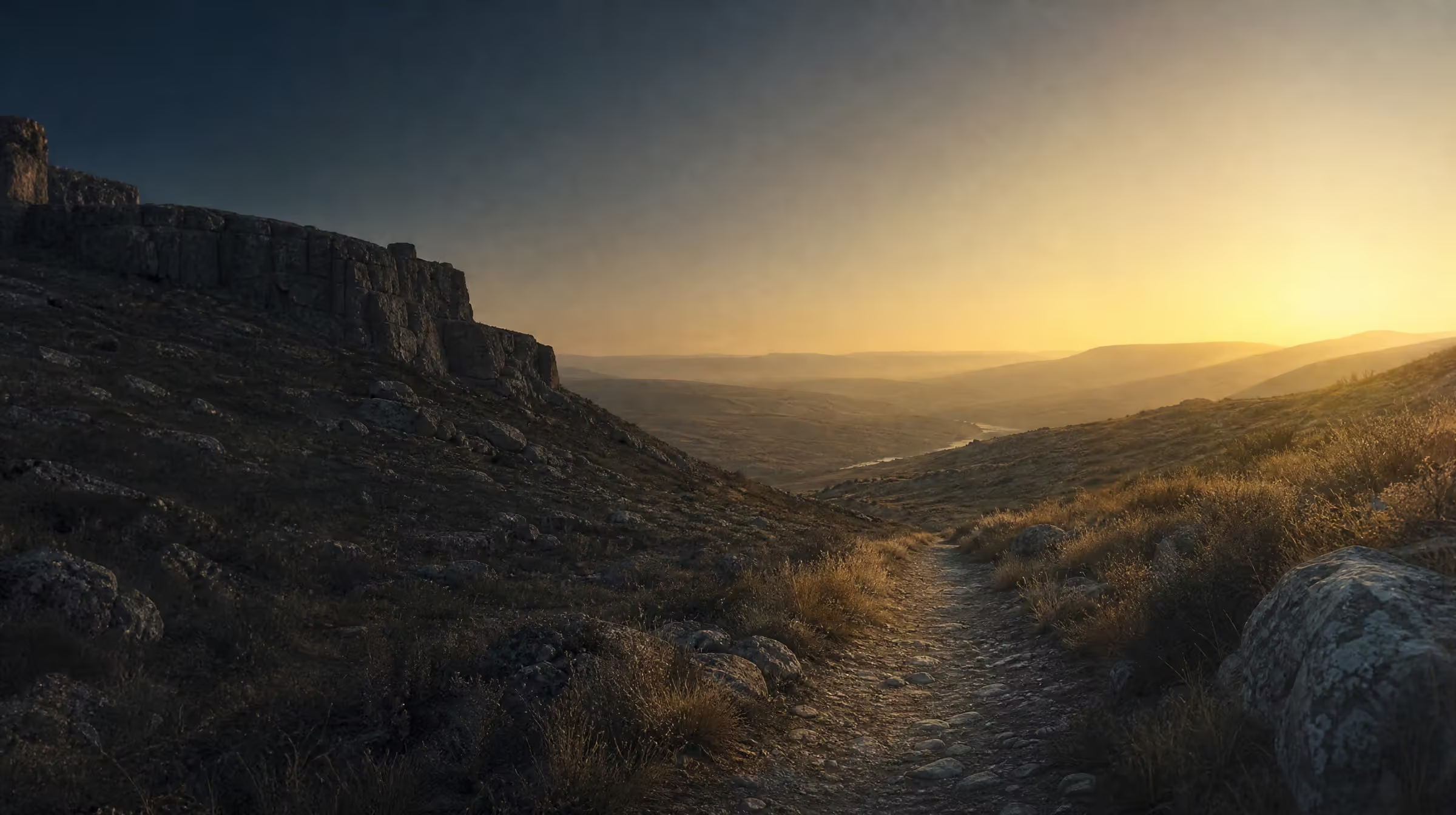
- The Road from Moab, Jordan Valley, near Jericho, Jordan/West Bank border
- On the story
- The Judges
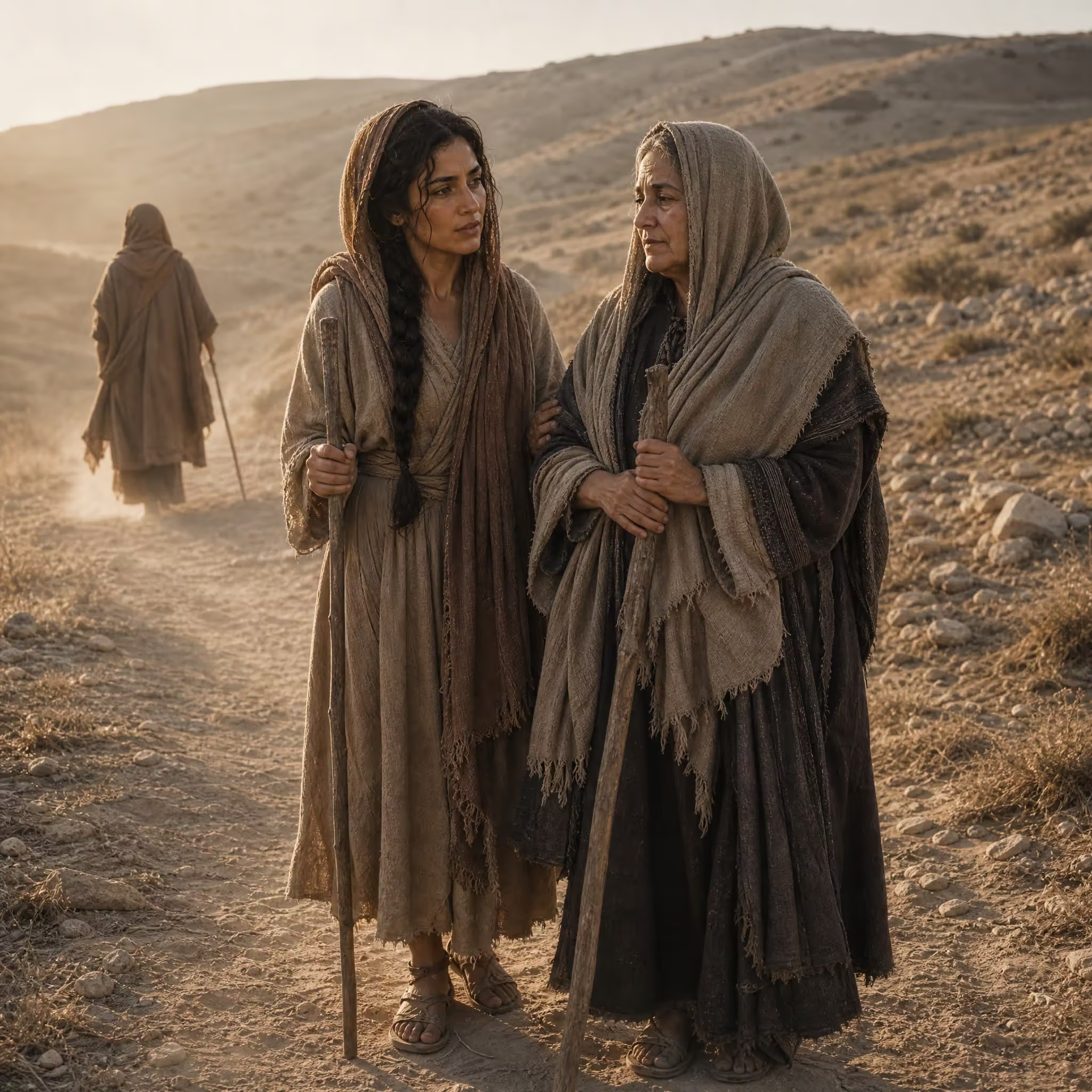
Three widows stood on the road that ran down from Moab toward Jericho.
Naomi was going home.
Her husband was dead. Her two sons were dead. The famine that had sent them to Moab ten years earlier had finally lifted in Judah, and there was nothing left for her there.
She turned to her daughters-in-law and told them to go back.
And Naomi said unto her two daughters in law, Go, return each to her mother’s house: the Lord deal kindly with you, as ye have dealt with the dead, and with me. The Lord grant you that ye may find rest, each of you in the house of her husband. Then she kissed them; and they lifted up their voice, and wept. — Ruth 1:8–9
That is a kind woman releasing two young widows to find new husbands among their own people, their own gods, their own land.
Orpah kissed her and turned back.
Ruth did not.
Ruth's answer was not affection, it was an oath.
And Ruth said, Intreat me not to leave thee, or to return from following after thee: for whither thou goest, I will go; and where thou lodgest, I will lodge: thy people shall be my people, and thy God my God: — Ruth 1:16
Read it slowly.
She does not say she will miss Naomi. She does not say she loves her, though she does.
She names three things, in order, and gives them all away.
Her land.
Her people.
Her gods.
A Moabite woman worshipped Chemosh. Her family was buried in Moab. Her future, by every normal account, was Moab.
She walked away from all three on a dirt road with nothing in her hand but a widow's staff and an old woman who had no husband, no sons, and no land of her own left to give her.
Abraham left not knowing where; Ruth left knowing exactly what she was leaving behind.
By faith Abraham, when he was called to go out into a place which he should after receive for an inheritance, obeyed; and he went out, not knowing whither he went. — Hebrews 11:8
Abraham's call came with a mystery. He did not know the destination.
Ruth's call came with full knowledge.
She knew what Moab was. She knew what Israel might never be to her. She went anyway.
Then she closes her vow the way a man might swear an oath on his own life, calling down a curse on herself if she broke it.
Where thou diest, will I die, and there will I be buried: the Lord do so to me, and more also, if ought but death part thee and me. — Ruth 1:17
That is not a sentimental daughter-in-law.
That is a woman staking her own life on a promise she intends to keep.
A Moabite had no claim on Israel's God, and that is the point.
She was not owed a place among this people.
She took her place by vow, not by blood.
And that is exactly the shape of grace offered to every Gentile who is ever grafted into the promise: not born into it, but bound to it by faith that will not let go.
The road did not end in Moab, and it did not end in sentiment.
So Boaz took Ruth, and she was his wife: and when he went in unto her, the Lord gave her conception, and she bare a son. And the women said unto Naomi, Blessed be the Lord, which hath not left thee this day without a kinsman, that his name may be famous in Israel. And he shall be unto thee a restorer of thy life, and a nourisher of thine old age: for thy daughter in law, which loveth thee, which is better to thee than seven sons, hath born him. And Naomi took the child, and laid it in her bosom, and became nurse unto it. And the women her neighbours gave it a name, saying, There is a son born to Naomi; and they called his name Obed: he is the father of Jesse, the father of David. — Ruth 4:13–17
Watch what the women of Bethlehem say.
They do not say the Lord gave Naomi a grandson.
They say there is a son born to Naomi, and then Scripture names him: Obed, the father of Jesse, the father of David.
The road from Moab led to Bethlehem, and Bethlehem led to Christ.
And Salmon begat Booz of Rachab; and Booz begat Obed of Ruth; and Obed begat Jesse; And Jesse begat David the king; and David the king begat Solomon of her that had been the wife of Urias; — Matthew 1:5–6
Matthew did not have to include Ruth's name in the genealogy of the King.
He did it anyway.
A foreign widow's oath, kept on a dusty road near Jericho, became one of the fixed links in the chain that runs to David and ends at the manger.
Intreat me not to leave thee is not a line for a wedding card.
It is what it costs to belong to God's people when you were never born into them.