Story Lens
Windows Toward Jerusalem
- Passage
- Daniel 6:10
- Book
- Daniel
- Theme
- Steadfast Prayer
- Place
- Babylon, Babil, Iraq
- On the story
- Exile
Daniel heard that the decree had been signed.
For thirty days, no one in Babylon could pray to any god or man except King Darius, on pain of being thrown to the lions.
Daniel had just been named one of three presidents over the whole kingdom, and he had everything to lose.
Then the presidents and princes sought to find occasion against Daniel concerning the kingdom; but they could find none occasion nor fault; forasmuch as he was faithful, neither was there any error or fault found in him. Then said these men, We shall not find any occasion against this Daniel, except we find it against him concerning the law of his God. — Daniel 6:4–5
They could not find a single fault in his work, so they built a trap out of his worship instead.
And when the trap was set, here is what Daniel did.
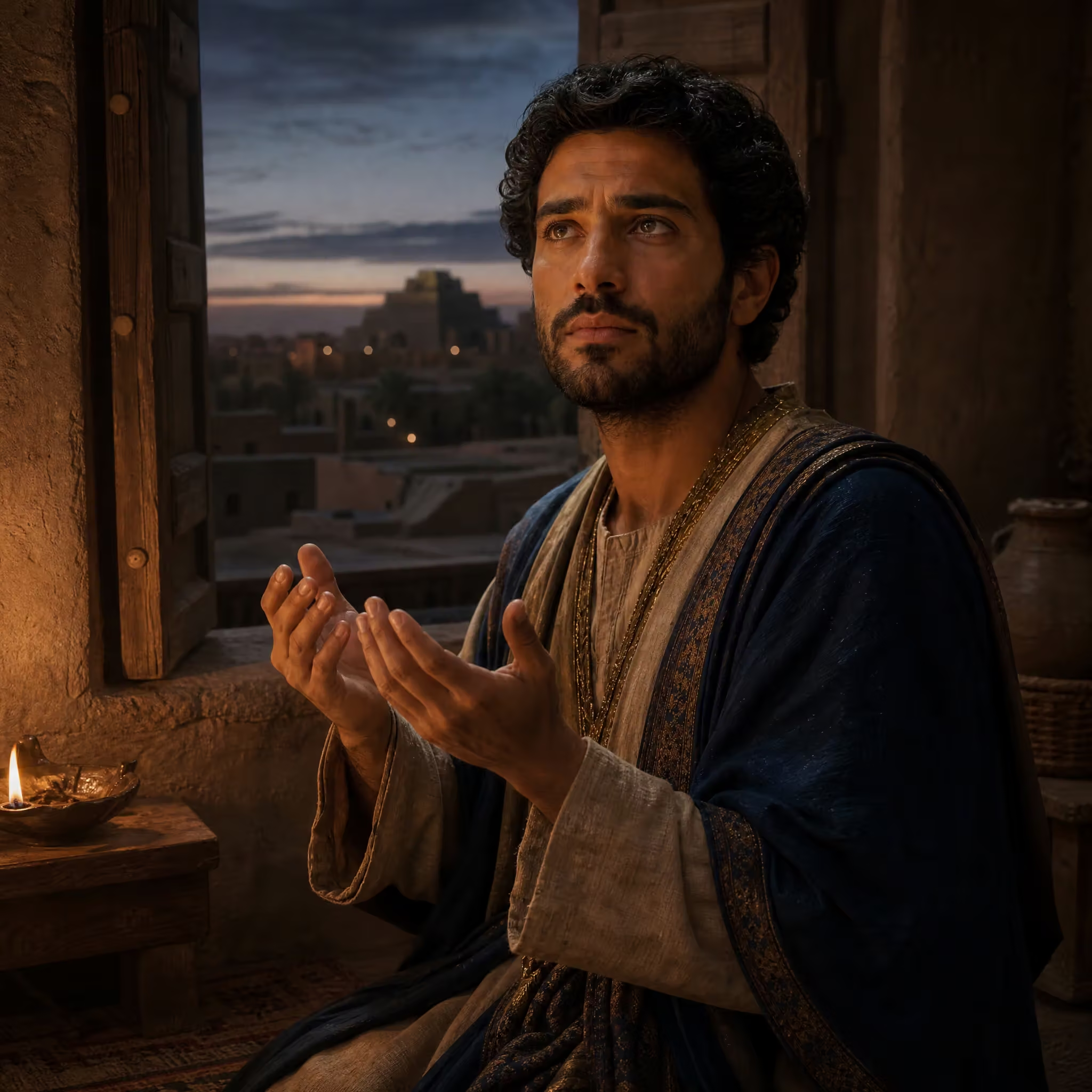
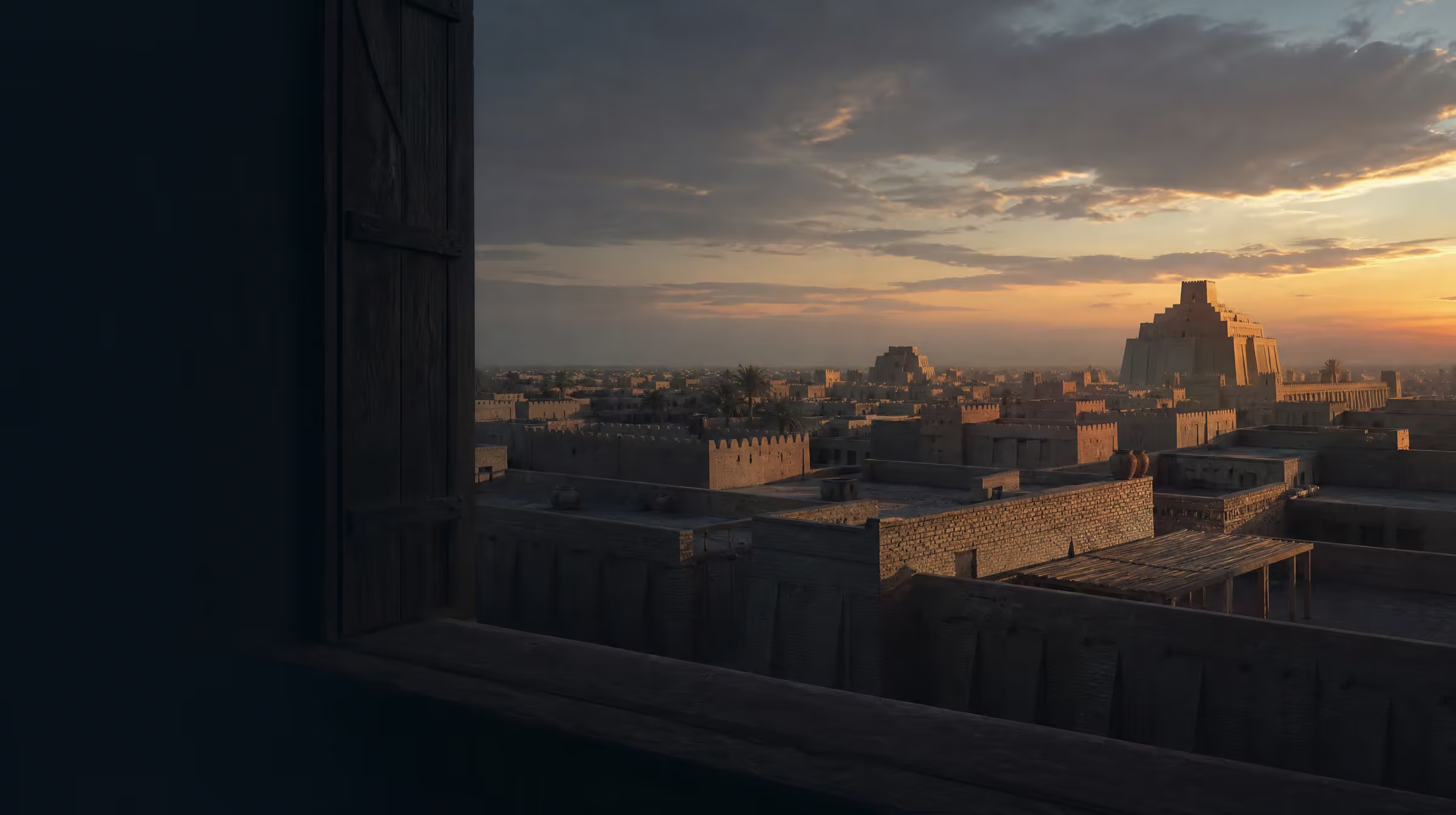
Now when Daniel knew that the writing was signed, he went into his house; and his windows being open in his chamber toward Jerusalem, he kneeled upon his knees three times a day, and prayed, and gave thanks before his God, as he did aforetime. — Daniel 6:10
He did not start praying when the law changed
Read that verse again slowly.
Daniel knew the writing was signed. He went into his house.
His windows were already open toward Jerusalem, because that is where they always were.
He kneeled, and prayed, and gave thanks, three times a day, as he did aforetime.
That last phrase is the whole story.
Daniel did not rise to the occasion.
He simply kept doing what he had always done, in full view of windows he never bothered to close.
Why did the windows face a city he had already lost
Daniel was carried off to Babylon as a young man, in the first wave Nebuchadnezzar took captive, while Jerusalem still stood under siege but not yet destroyed.
The temple's burning and the breaking down of its walls came some twenty years later, long after Daniel was grown and already serving in the courts of Babylon.
By the time the decree was signed against him, that temple was ash and that city was rubble, and Daniel had known it both whole and ruined.
He prayed toward it anyway, because Solomon had asked God for exactly this, centuries earlier, at the temple's dedication.
And so return unto thee with all their heart, and with all their soul, in the land of their enemies, which led them away captive, and pray unto thee toward their land, which thou gavest unto their fathers, the city which thou hast chosen, and the house which I have built for thy name: — 1 Kings 8:48
Solomon prayed for exiles not yet born, in a captivity not yet begun, facing a city not yet ruined.
Daniel was that prayer, answered in reverse.
His open window was not sentiment. It was obedience to a promise older than his own exile, a way of saying that Babylon was not home and never would be.
Three times a day is not a slogan, it is a pattern
Daniel's three prayers a day were not invented under pressure.
They match a rhythm already old in Israel's worship, the same rhythm the psalmist names:
Evening, and morning, and at noon, will I pray, and cry aloud: and he shall hear my voice. — Psalm 55:17
Morning. Noon. Evening.
That is the teaching underneath the whole story. Not one dramatic act of defiance, but years of unremarkable repetition, so steady that his enemies could set their trap by his calendar.
They did not catch Daniel doing something new.
They caught him doing something old.
The world changed, Daniel did not
Daniel's faithfulness only looks extraordinary because the decree made it illegal.
The praying itself was ordinary, the same posture, the same window, the same hours he had kept for years in a court that had never demanded he stop.
Then the law changed, and a man kneeling by an open window became a man risking his life.
He did not escalate. He did not hide. He prayed where he always prayed, and let the world decide what to do with that.
Then the king commanded, and they brought Daniel, and cast him into the den of lions. Now the king spake and said unto Daniel, Thy God whom thou servest continually, he will deliver thee. — Daniel 6:16
Even the king who signed the decree knew what kind of God Daniel served continually.
This steadiness points forward to a faithfulness that never bent
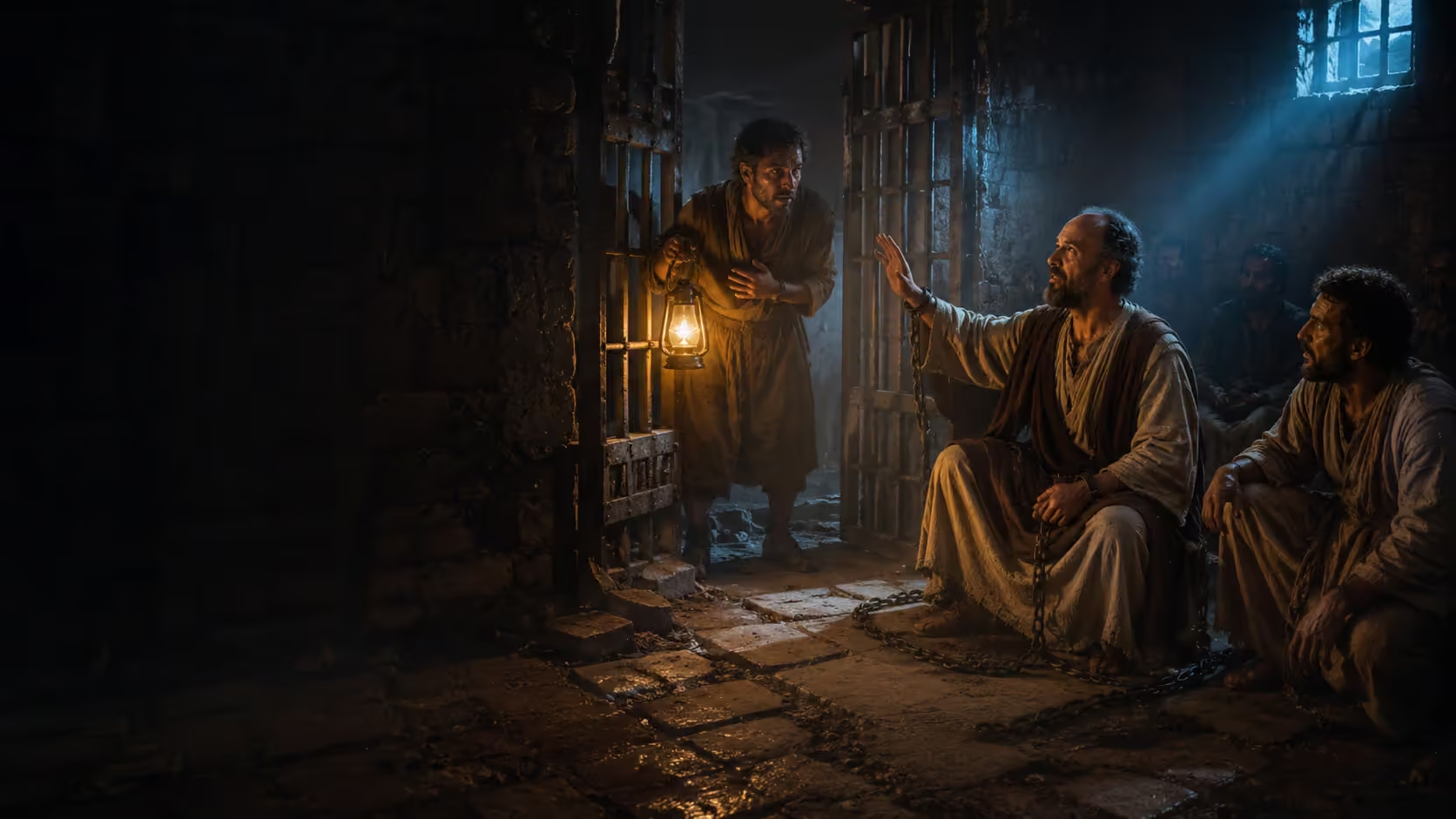
Centuries later, two apostles stood before rulers who commanded them to stop speaking in the name of Jesus.
But Peter and John answered and said unto them, Whether it be right in the sight of God to hearken unto you more than unto God, judge ye. For we cannot but speak the things which we have seen and heard. — Acts 4:19–20
Same shape. A command from the state, a conscience bound to God, a refusal that cost something.
And behind Daniel and the apostles stands the one whose obedience never wavered even when it led to a cross, who prayed in a garden the night before his own decree was signed against him, and did not stop.
Scripture does not ask you to invent a new courage when the pressure comes.
It asks whether the ordinary thing you were already doing is worth keeping when it becomes dangerous.
Daniel's whole defense was that he had nothing to defend. He was simply still praying, window open, facing home.
Faithfulness is not built the night the decree is signed. It is only revealed then.
Read more on who Daniel was and on what prayer is for.