Story Lens
Jehovah-Jireh
- Passage
- Genesis 22:14
- Book
- Genesis
- Theme
- Provision
- Place
- Mount Moriah, Jerusalem, Israel
- On the story
- The Patriarchs
Three days before anything happened on that mountain, a father was walking toward it.
Take now thy son, thine only son Isaac, whom thou lovest, and get thee into the land of Moriah; and offer him there for a burnt offering upon one of the mountains which I will tell thee of. — Genesis 22:2
Not a mountain God named. One He would point out later. Abraham saddled the donkey in the morning and went, and for three days he had nothing to go on but the voice that had already promised him this boy and now asked for him back.
The son carries the wood up the hill
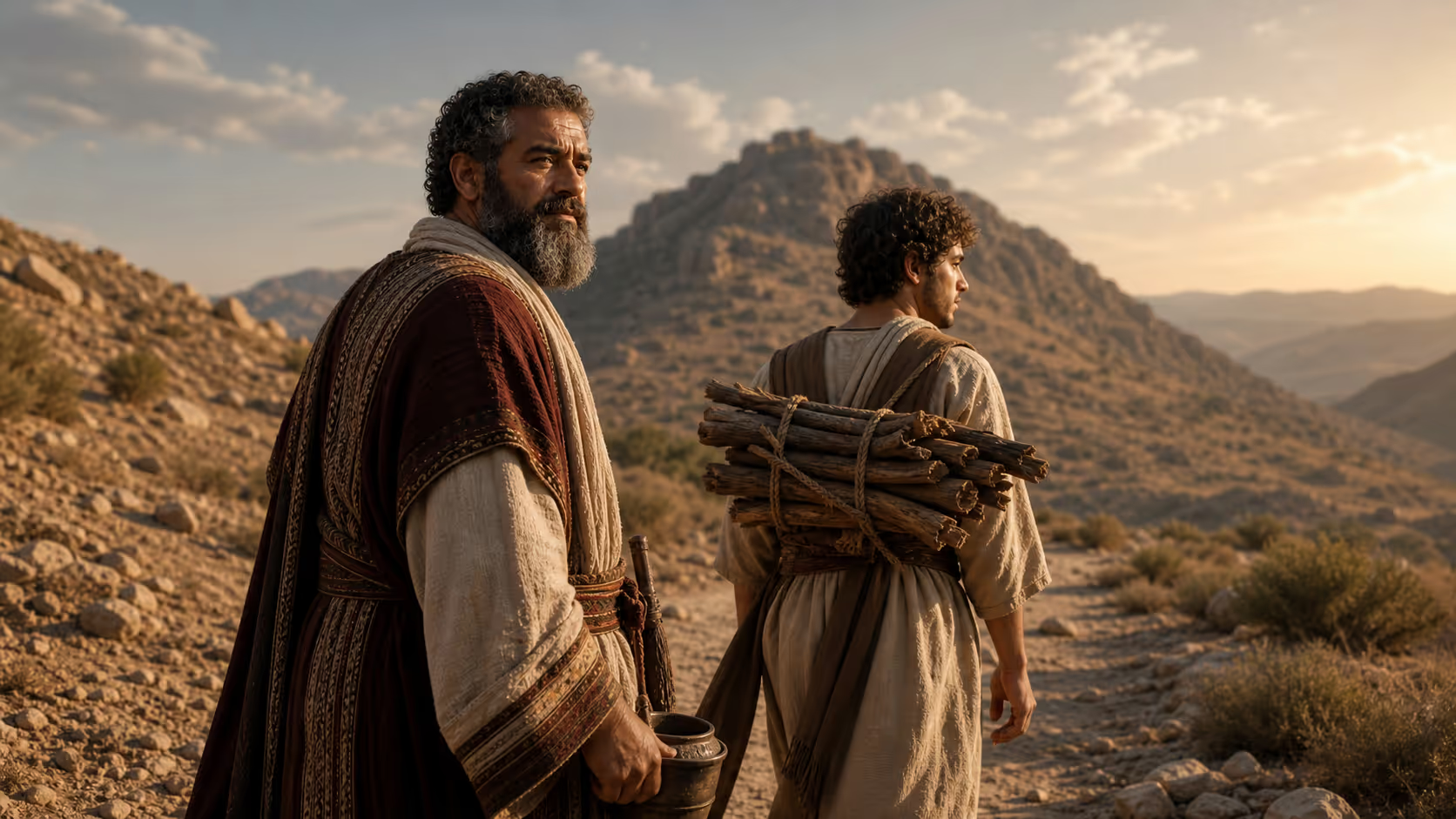
Read the sixth verse slowly, because it is doing more than moving the story along.
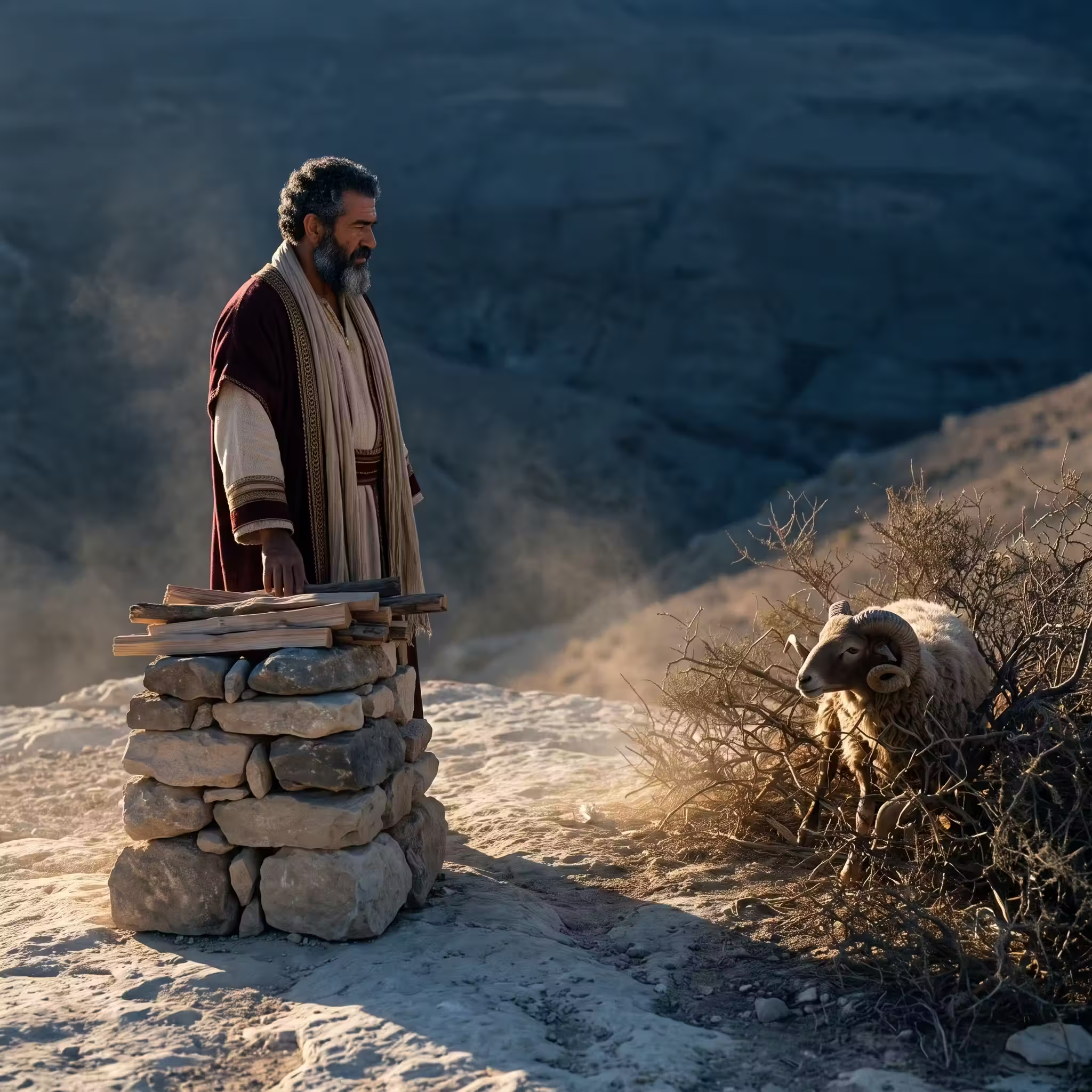
And Abraham took the wood of the burnt offering, and laid it upon Isaac his son; and he took the fire in his hand, and a knife; and they went both of them together. — Genesis 22:6
The wood for the sacrifice is carried up the hill on the back of the son who is going to be laid on it. Isaac is old enough to carry it, old enough to ask the obvious question, and old enough to have run. He does not.
His question is the one every reader is already asking.
Behold the fire and the wood: but where is the lamb for a burnt offering? And Abraham said, My son, God will provide himself a lamb for a burnt offering: so they went both of them together. — Genesis 22:7-8
Abraham says more than he knows. Watch what actually happens at the top: a ram is caught in a thicket by its horns, and the ram is what dies that day. It is a rescue, and it is enough for Isaac. But it is not what Abraham said. He said a lamb, and God let the words stand.
The name is a prophecy, not a memorial
And Abraham called the name of that place Jehovahjireh: as it is said to this day, In the mount of the LORD it shall be seen. — Genesis 22:14
A memorial looks backward. This one does not. Abraham names the place for something that will be seen there, in the future tense, and then he walks his son back down the hill and goes home to Beersheba. Whatever he understood that morning, he left the mountain with a name pointing forward.
Where the mountain is
Scripture tells us plainly, a thousand years later and almost in passing.
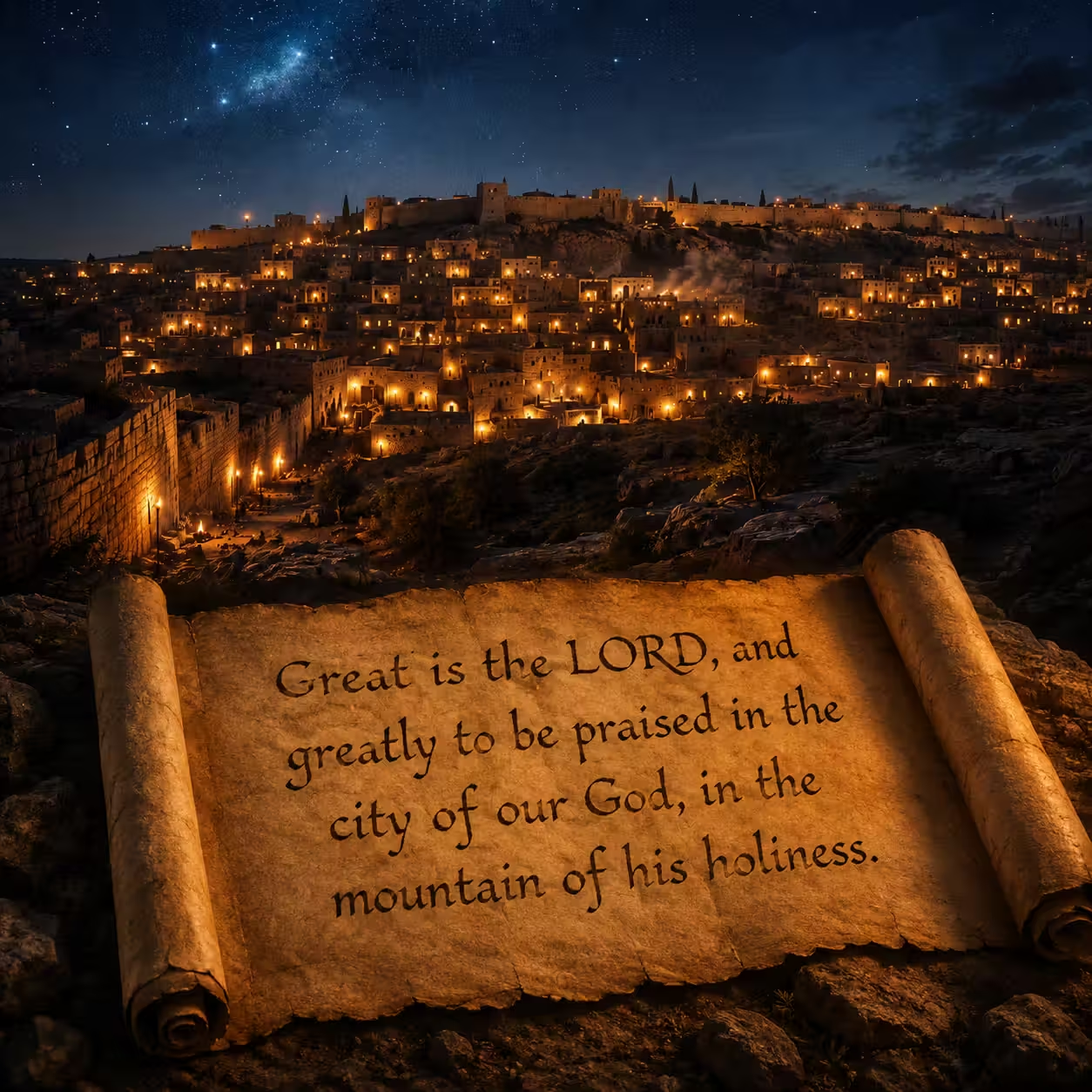
Then Solomon began to build the house of the LORD at Jerusalem in mount Moriah, where the LORD appeared unto David his father. — 2 Chronicles 3:1
Moriah is the temple mount. The ridge Abraham climbed with the wood on Isaac's back became the place where a nation brought its sacrifices every morning and every evening for the better part of a thousand years. The altar was not built somewhere convenient. It was built where the ram had been provided.
It is still there, and people are still digging in it. The debris sifted from that platform has given up seal impressions from the men who served in the house Solomon built — the kind of find the Biblical World Tracker follows.
Outside the wall, on the same ridge
Centuries after the last lamb, on the same limestone spine of the city and a short walk outside its northern wall, it happened again.
And he bearing his cross went forth into a place called the place of a skull, which is called in the Hebrew Golgotha. — John 19:17
A Father and an only Son. Wood carried up a hill on the Son's own back. And this time there is no ram in the thicket, because this time the Son is the lamb that Abraham promised on that mountain and did not live to see.
Behold the Lamb of God, which taketh away the sin of the world. — John 1:29
Abraham was stopped. God was not.
He that spared not his own Son, but delivered him up for us all, how shall he not with him also freely give us all things? — Romans 8:32
In the mount of the LORD it shall be seen. It was. Isaac walked down that mountain with his father because a ram died in his place. Every one of us who walks free does so for the same reason, on the same ridge, with a different Lamb. Jehovah-jireh does not mean God gives us what we ask for. It means that on the hill where the demand was made, God Himself supplied what the demand required.
If you want the whole story in its place, why Jesus had to die takes up the question this mountain asks.