
Scripture
What Even Is the Bible? A Beginner's Guide to the Greatest Story Ever Told
Ever opened a Bible and felt instantly lost? You're not alone. Welcome to a brand-new beginner-friendly series that starts at the very beginning — no insider language, no dumb questions.

If you've ever opened a Bible and felt instantly overwhelmed, you are in good company. It's thick. The chapters jump from ancient laws to poetry to letters to strange visions. People quote it like they have a map you were never handed. And somewhere along the way, a lot of us quietly decided the Bible was a club we didn't have the password to.
Here at Ark Life, we want to hand you the password.
This is the first article in a brand-new series we're calling "What Is the Bible, Really?" — a beginner-friendly walk through the most important book in human history. No assumptions. No insider language. Just honest answers to the questions a lot of people are afraid to ask out loud.
Start Here: It's Not One Book
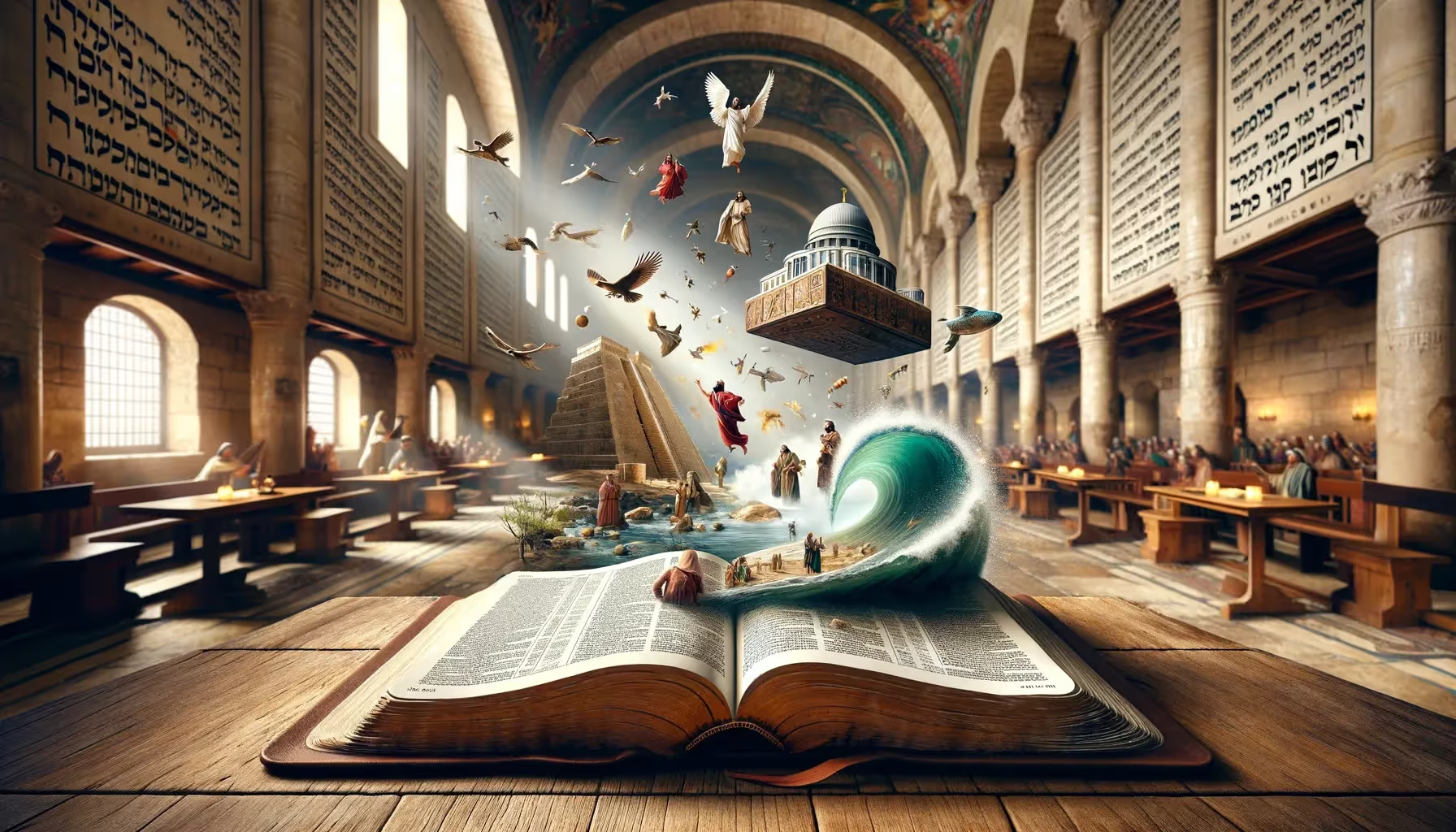
The single most helpful thing a new reader can learn is this: the Bible is not one book. It's a library.
The word "Bible" comes from the Greek word biblia, which simply means "books" — plural. What you're holding in your hands is a collection of 66 different books, written by around 40 different authors, across roughly 1,500 years, on three continents, in three languages. Kings wrote parts of it. So did shepherds, fishermen, a doctor, a tax collector, and prisoners.
So when the Bible feels like it's shifting gears — from a history book to a song to a letter to a vision of the future — that's because it literally is. You're walking through a whole library, shelf by shelf.
Two Big Sections: Old and New
That library is divided into two main parts.
The Old Testament is the larger first section — the story of God and the people of Israel, beginning with creation itself. It contains the law, the history of a nation, deeply human poetry, and the words of prophets who pointed toward something — Someone — still to come.
The New Testament is the second section, centered entirely on Jesus of Nazareth: His life, His death, His resurrection, and the movement that exploded outward from there. It's made up of accounts of His life, letters to early churches, and a closing vision of how the whole story ends.
Here's the part that surprises people: those two testaments, written centuries apart, are telling one connected story. The Old Testament is full of promises. The New Testament is the keeping of them.
Why It Still Matters
For billions of people across thousands of years, this collection of books has been the place they go to understand who God is, who they are, and what life is actually about. It has comforted the dying and confronted the powerful. It has been the most translated, most printed, most studied book in existence — and people are still discovering it for the first time every single day.
Including, maybe, you.
Where We're Going From Here
Over the coming weeks, this series will tackle the questions one at a time, in plain language:
Who actually wrote the Bible — and how do we know? How did 66 books get chosen and bound together? Why are there so many translations, and which one should you read? Can we really trust that it's accurate? And how does a total beginner actually start reading it without getting lost in chapter three?
You don't need a seminary degree to understand the Bible. You just need someone willing to start at the beginning with you. That's what we're here to do.
So take a breath. The door is open, the password is yours, and there's no such thing as a dumb question here.
Next in the series: Who Wrote the Bible — and How Do We Know?
Welcome to Ark Life. Let's explore the greatest story ever told, together.
Continue the Story
Scripture
Why Are There Different Versions of the Bible?
So why are there different versions of the Bible? Is there one that's best to read? The question of "why are there different versions of the Bible" often arises, particularly in the context of concerns about the Bible’s accuracy over time.
Scripture
What Does the Bible Say About Love? Scripture's Most Powerful Verses and Teachings
Few topics appear more consistently throughout Scripture than love. From the first chapters of Genesis to the final pages of Revelation, the Bible speaks of love — God's love for humanity, the love humans are called to show one another, and the nature of love…