
Prophecy & End Times
Beyond the Greek: 5 Surprising Secrets the Ancient Hebrew New Testament Reveals About the Rapture
1. Introduction: The Translation Gap You Didn’t Know Existed For centuries, the academic and theological world has operated under a singular assumption: the New Testament was composed almost exclusively in Greek.

1. Introduction: The Translation Gap You Didn’t Know Existed
For centuries, the academic and theological world has operated under a singular assumption: the New Testament was composed almost exclusively in Greek. While these manuscripts are the bedrock of our faith, a compelling question remains: how much high-definition nuance is lost when we move from the Semitic thought-world of the first century into the linguistic structures of the West?
When we translate through multiple layers—from Hebrew thought to Greek text to English prose—vibrant idioms and specific legal or ritual meanings often fade into generalities. However, recent investigative research into the Salkinson-Ginsburg Hebrew New Testament, championed by Dr. Ken Johnson, is pulling back the curtain on these "hidden" meanings. By examining these ancient Hebrew texts, we gain a "high-definition" view of Pauline theology that the Greek text alone simply cannot provide. It is a journey from the general to the clinical, revealing a timeline and a mechanism for the Rapture that is far more specific than most believers realize.
2. The "Salkinson-Ginsburg" Discovery: More Than Just a Translation
Approximately 130 years ago, two Jewish scholars who had converted to Christianity, Isaac Salkinson and David Ginsburg, compiled a Hebrew version of the New Testament. For decades, secular scholars dismissed this work as a "backward translation"—a mere modern exercise in translating Greek back into Hebrew. However, the evidence suggests a much more profound, ancient origin.

The text is saturated with "Aramaicisms" and specific Hebrew idioms that were unique to the Second Temple period. These linguistic markers essentially "died out" after the destruction of the Temple in 70 AD. Furthermore, the Salkinson-Ginsburg manuscripts contain extra words and specific sentence variations that match manuscript variants dating to 120–140 AD—details that do not appear in the standard Greek Textus Receptus or even the Sinaiticus.
Historically, we have seen this skepticism before. The Shapi Scroll and the Testaments of the 12 Patriarchs were both initially dismissed as fakes because they contained a style of Hebrew that scholars claimed didn't exist—until the discovery of the Dead Sea Scrolls in 1947 proved that this specific "kind" of Hebrew was, in fact, authentic to the era. The Salkinson-Ginsburg text appears to be a faithful copy of an ancient Hebrew source, preserving details that the Greek tradition overlooked.
3. Takeaway 1: From "Delivered" to "Raptured" (The Power of Natal)
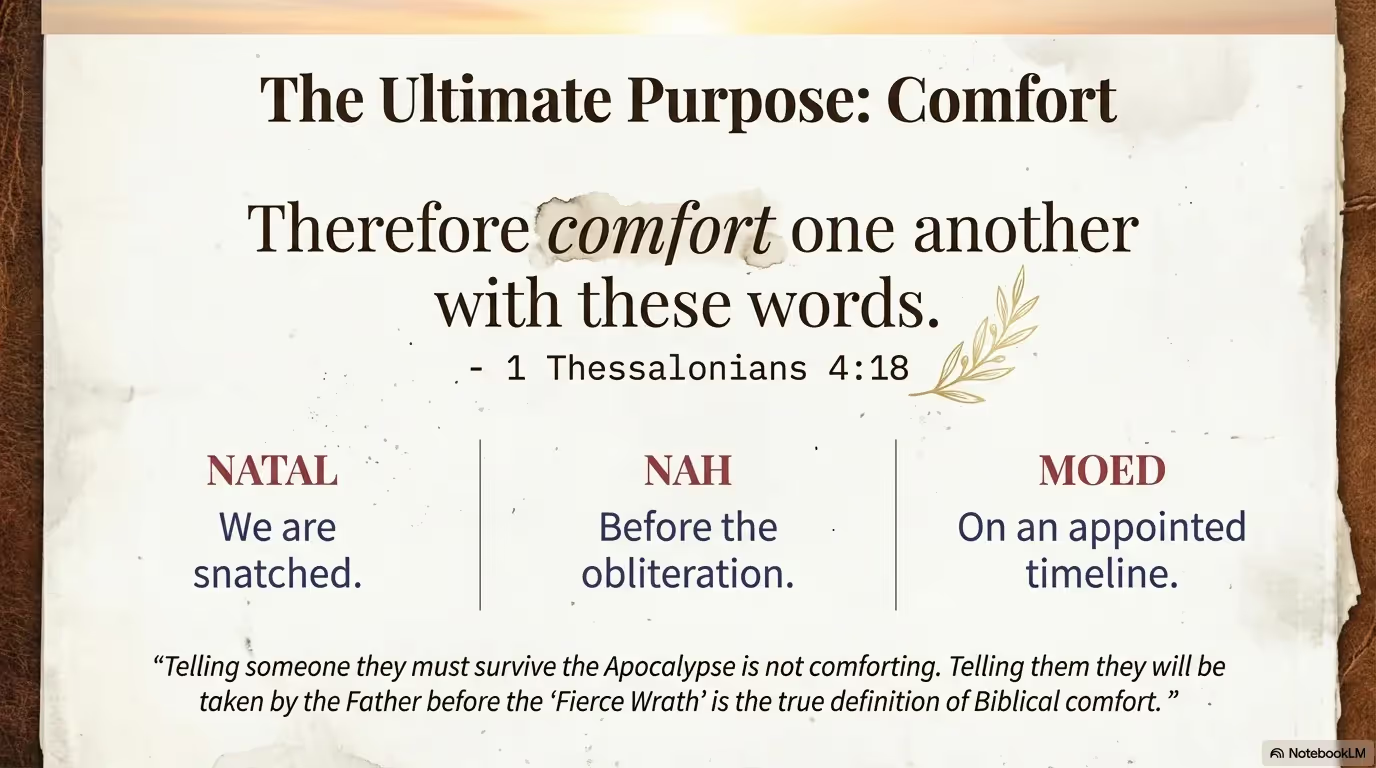
In the Greek text of 1 Thessalonians 1:10, we are told that Jesus "delivered" us from the wrath to come. In English, "delivered" is a broad, somewhat passive term. However, the Hebrew manuscripts strip away the ambiguity of the Greek, utilizing the explosive and specific word natal.
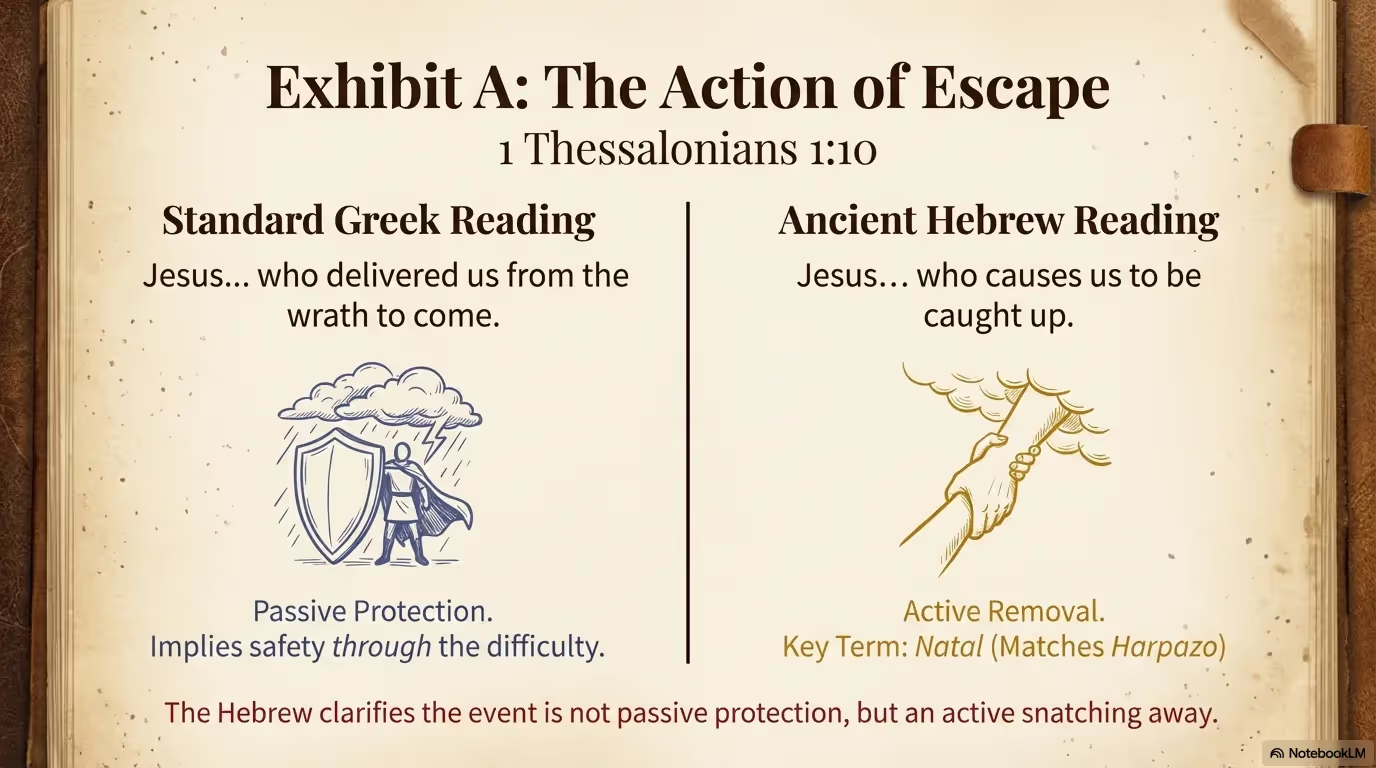
While the Greek uses Harpazo (to snatch away), the Hebrew natal is specifically causative and active. It describes an event where the subject is entirely passive, and the initiator is the driving force. In the Hebrew version of 1 Thessalonians, Jesus isn't just a figurehead of salvation; He is the active catalyst of physical movement.
"It is extremely clear in the Hebrew... Jesus is causing the dead to rise and causing us to be caught up. It’s not 'delivered'; it’s raptured—natal—the Hebrew equivalent of harpazo." — Dr. Ken Johnson
This shift reinforces the Pre-Tribulation narrative: the Church is not merely "saved" in a spiritual sense from the concept of judgment; they are physically, forcefully snatched away by a causative act of the Messiah.
4. Takeaway 2: Defining "Fierce Wrath" as Total Obliteration
The Hebrew text clarifies exactly what the faithful are being snatched away from. While the Greek refers to "wrath," the Hebrew uses the specific term Nah. In the Old Testament context, Nah is never used to describe an individual dying and going to hell. Instead, it refers to a clinical description of total physical obliteration in history.
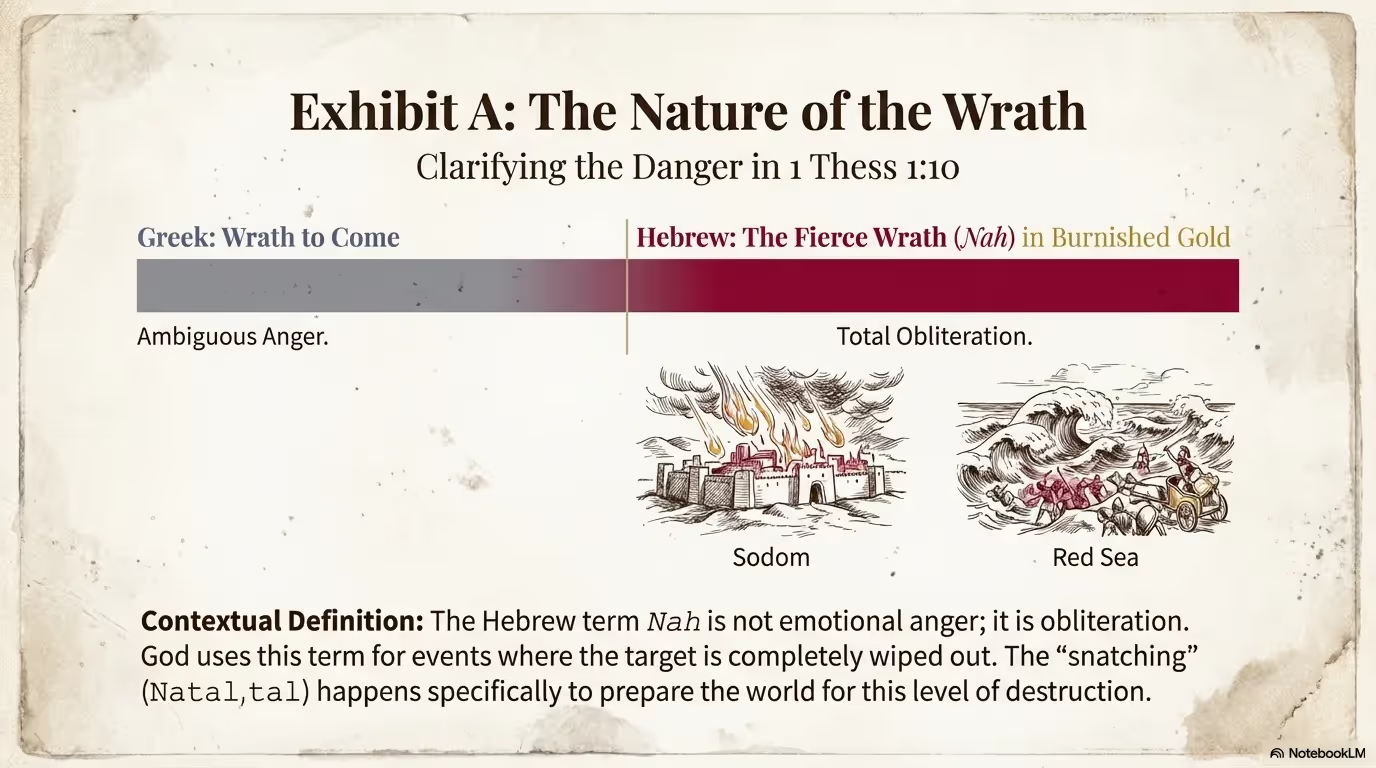
The word Nah appears approximately six or seven times in the Old Testament, always in the context of God stepping into history to wipe a slate clean:
- The fire that consumed Sodom and Gomorrah.
- The water that drowned the Egyptian army during the Exodus.
- The total devastation of the Great Flood.
By using Nah, the text suggests that the "wrath to come" is not a general reference to spiritual judgment, but a specific period of physical, historical destruction—the Tribulation. This reinforces the Rapture as a rescue mission intended to remove the faithful before a literal, physical "obliteration" begins on Earth.
5. Takeaway 3: The Secret Link to the "Day of Terua"
One of the most significant "wow factors" in the Hebrew text of 1 Thessalonians 4:16-17 is the addition of the word Moed. While the Greek refers generally to the "coming" of the Lord, the Hebrew specifies the Moed (appointed festival) of His coming.
This linguistic bridge connects the Rapture directly to the Hebrew calendar:
- The "Shout": The Hebrew uses the word Terua, which specifically means an "awakening blast."
- The "Appointed Time": The use of Moed indicates this is a scheduled appointment on God’s calendar.
- The Festival: This points directly to Yom Terua (The Feast of Trumpets), the "Day of the Awakening Blast."
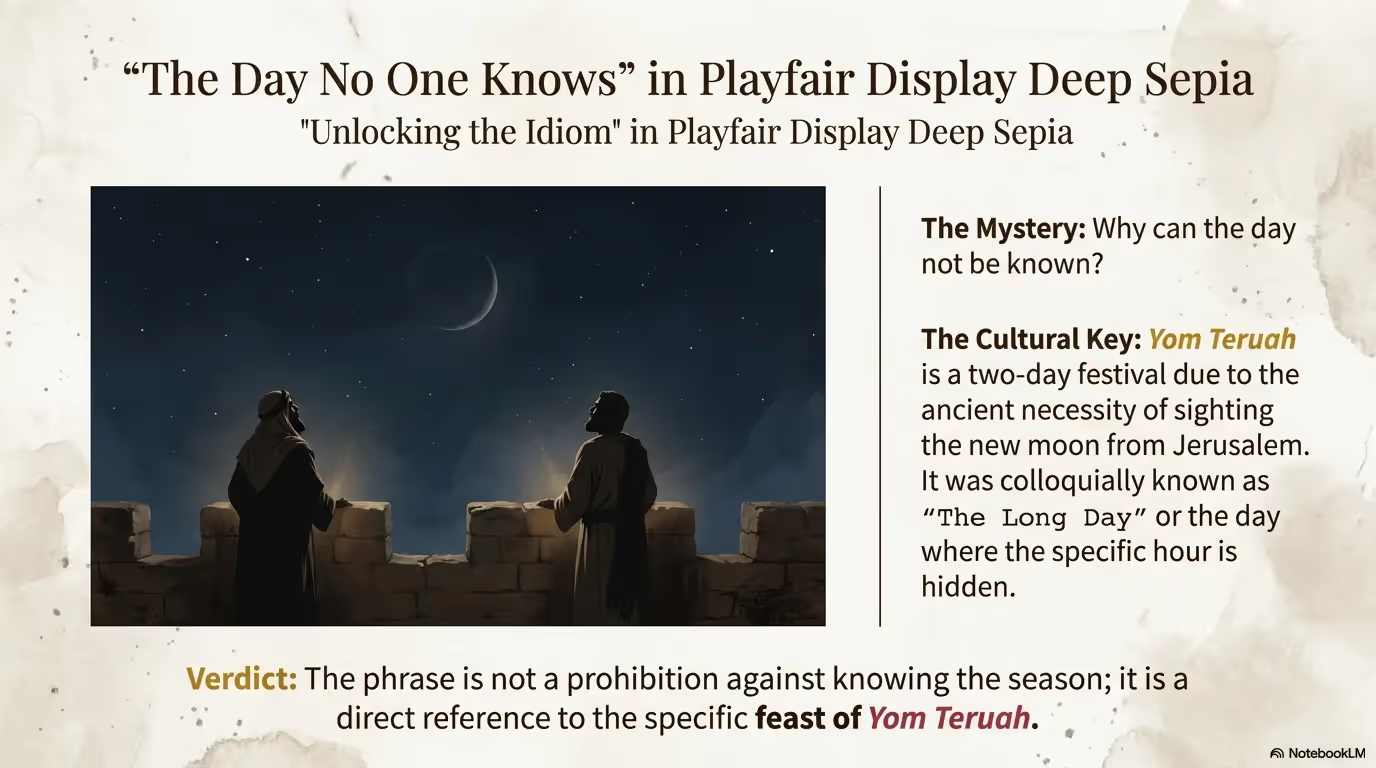
Furthermore, this solves the "no one knows the day or hour" mystery. In ancient Israel, Yom Terua was a unique two-day festival because its start depended on the sighting of the new moon. Because it spanned two days, the idiom "of that day and hour no one knows" became a specific reference to this festival. The Hebrew text implies the Rapture isn't a random event, but a ritual appointment scheduled for the Moed of the Awakening Blast.
6. Takeaway 4: "Sons of Light" and the Missing "Refugees"
In 1 Thessalonians 5, the writer uses the terms "Sons of Light" and "Sons of Darkness." These are not generic metaphors; they are specific sectarian "pet names" found in the Dead Sea Scrolls used by the Essenes.
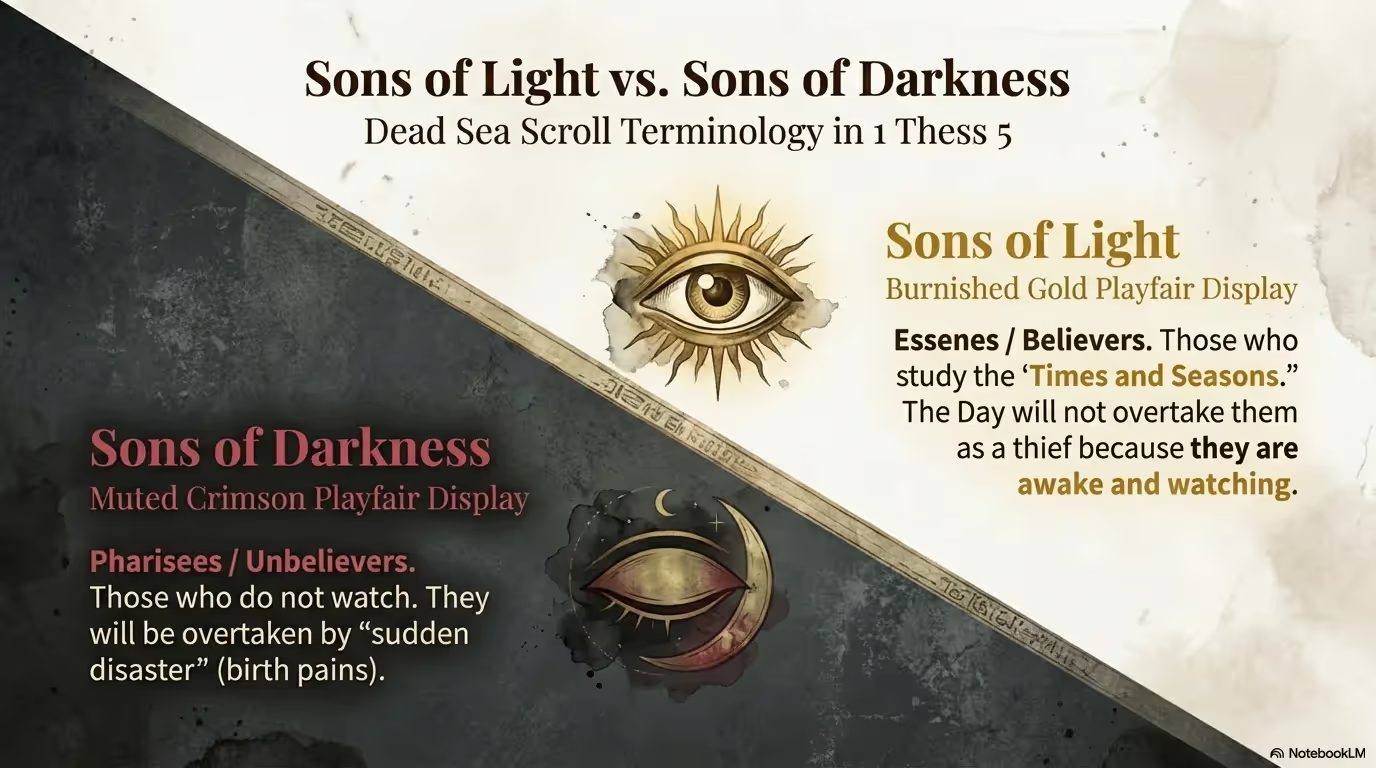
The "Sons of Darkness" was a label for the Pharisees and Sadducees—those who believed the spiritual gifts had stopped or that the Messiah was not who He claimed to be. In contrast, the "Sons of Light" were those watching the prophetic calendar.
However, the most stunning investigative find in this section is in 1 Thessalonians 5:3. While the Greek implies "none shall escape," the Hebrew provides a startling variation: "None of the refugees will escape." This implies that some form of displacement or trouble has already begun before the Nah (obliteration) is poured out.
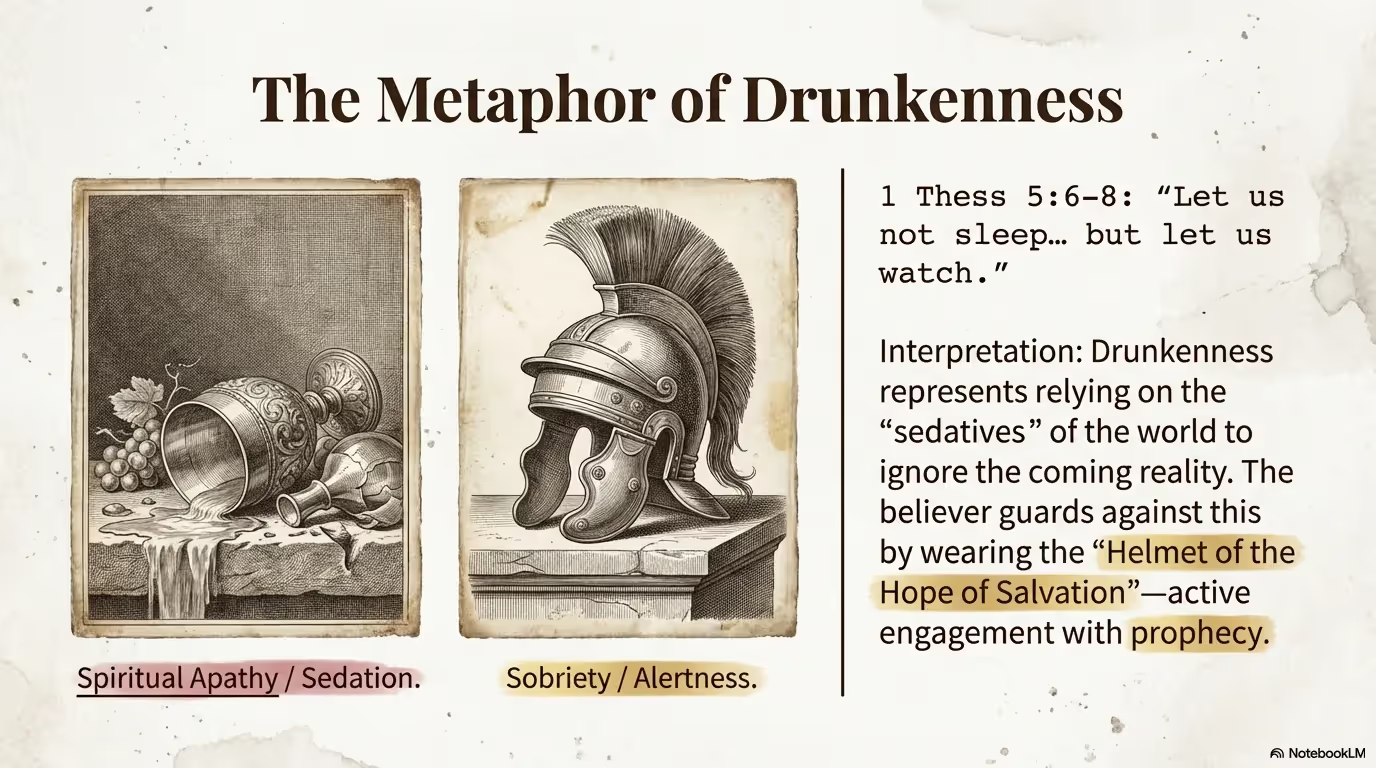
The text also warns against "drunkenness," which in this Hebrew context is an idiom for spiritual sedation—a "Nyquil-like" state where one is spiritually asleep. It is a direct warning to be "wise virgins" who are not sedated by the world's systems when the "Awakening Blast" occurs.
7. Takeaway 5: The "Hand of Jesus" and Divine Comfort
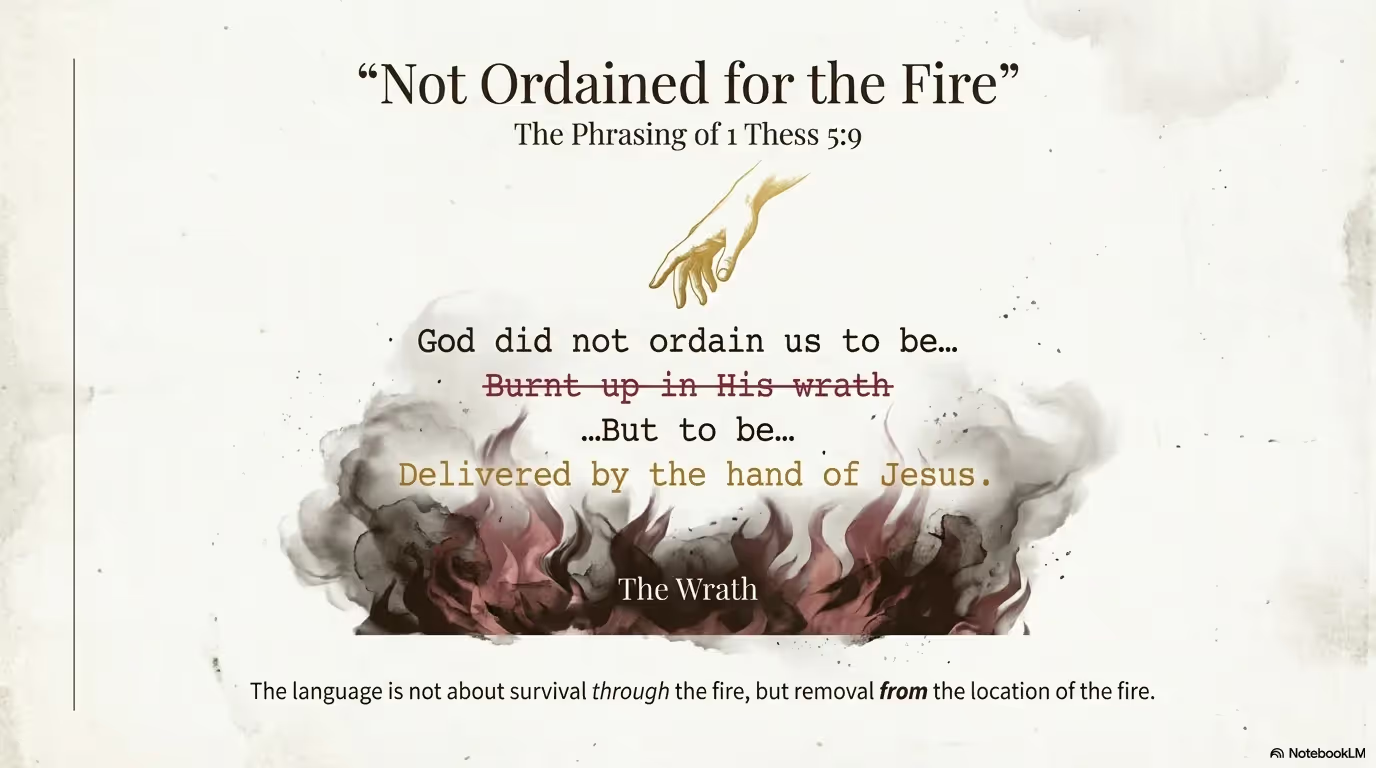
The Hebrew text of 1 Thessalonians 5:9-10 includes a unique phrase missing from the Greek: we are delivered "by the hand of Jesus Christ." This paints a picture of direct, physical intervention. The Greek is passive; the Hebrew is a rescue.
This physical "snatching" is presented as the only logical source of comfort. If the Church were to remain through the Nah (obliteration), Paul’s command to "comfort one another" would be hollow. The Hebrew imagery provides a powerful metaphor for this security.
"You’re his kid and he just snatched you by the nap of the neck and you’re coming home one way or the other. Dad’s just taking you home." — Dr. Ken Johnson
This "nap of the neck" imagery—divine parentage in action—underscores the suddenness and safety of the Pre-Tribulation Rapture. It is the active Hand of Jesus reaching into history to pull His children out of the path of the coming obliteration.
8. Conclusion: A New Lens on Ancient Words
The discovery of these Hebrew nuances offers a paradigm shift for our understanding of the end times. By looking beyond the Greek, we find a text that is more culturally grounded and significantly more specific. The inclusion of terms like Moed, Natal, and Nah transforms the Rapture from a vague theological hope into a precise, scheduled rescue mission.
If a single word like Moed can clarify the timing of the most anticipated event in human history, it forces us to wonder what other secrets are still sitting on library shelves. As we consider the "Awakening Blast" mentioned in these ancient texts, one question remains: Are you watching the "appointed times," or will the "Day of Terua" catch you in a state of spiritual sedation?
Continue the Story

Prophecy & End Times
The Rapture: Main Views and Key Passages
The Blessed Hope The Rapture—the catching away of the Church to meet Christ in the air—is one of the most encouraging doctrines in Scripture. Paul called it our "blessed hope" (Titus 2:13).
Prophecy & End Times
The Mark of the Beast: Fear vs. Biblical Understanding
A Topic Shrouded in Fear Few prophetic topics cause more anxiety than the Mark of the Beast.